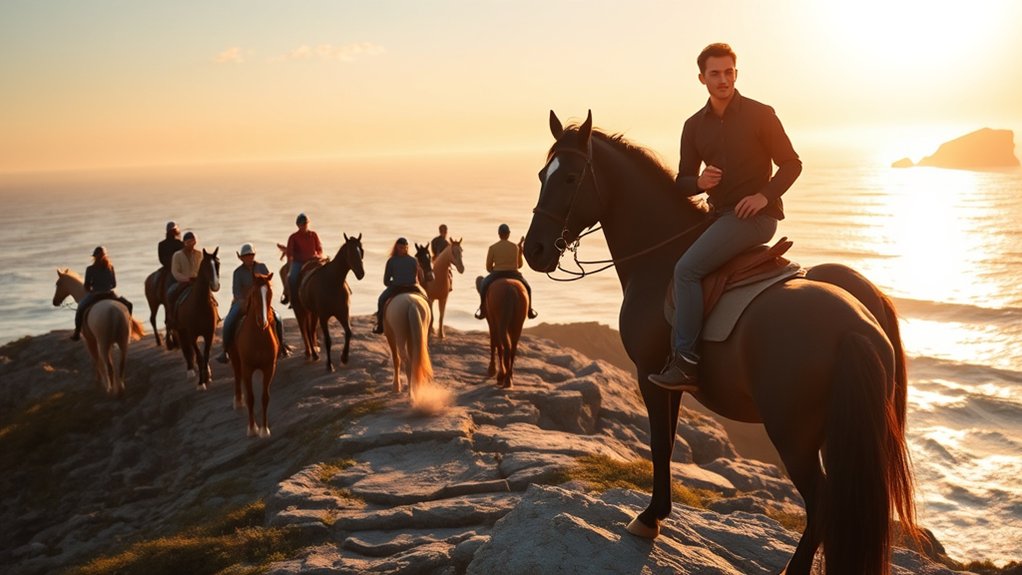
10 Best Places to Ride Horses
You’ll find top horseback riding spots across the U.S., like Colorado’s Rocky Mountain National Park and Texas’ Palo Duro Canyon, offering scenic mountain trails and forest paths. For beginners, try Texas’ Arbor Hills Tower Trail or Ohio’s Chapin Forest.
If you’re experienced, challenge yourself on rugged routes in the Grand Canyon or Arizona’s deserts. Internationally, explore Iceland’s volcanic landscapes or Mongolia’s vast steppes for cultural immersion.
Keep exploring to uncover trails, gear tips, and guided tours tailored to every rider.
Best Horseback Riding Trails Across the United States
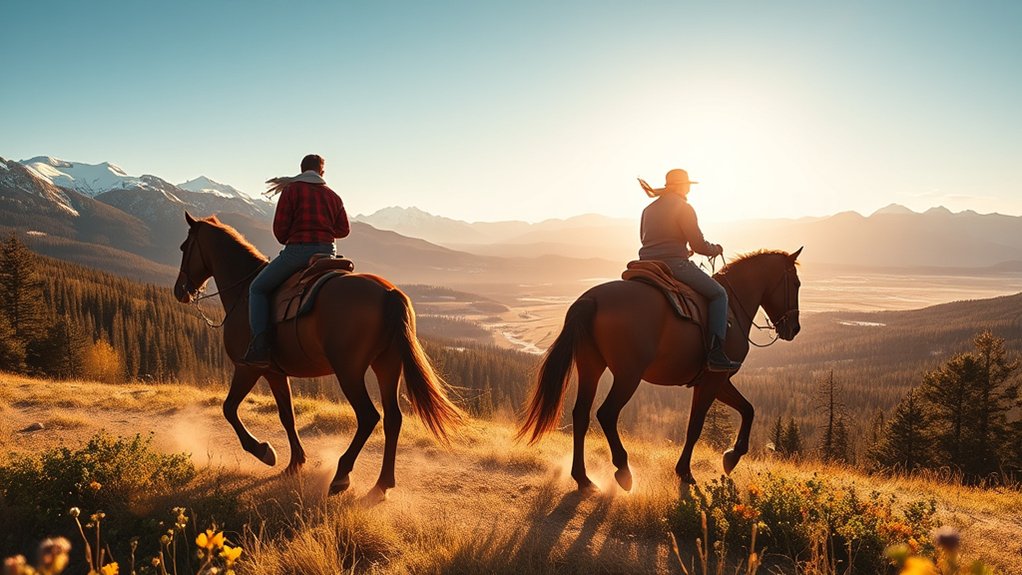
When you’re ready to explore horseback riding trails across the United States, you’ll find a diverse range of landscapes and challenges to suit every skill level.
In Colorado’s Rocky Mountain National Park, you can navigate scenic routes like Alberta Falls Trail or tackle the demanding Chasm Lake Trail.
Arizona’s Catalina State Park offers the easy Sutherland and Canyon Loop Trail alongside the moderately challenging Romero Canyon Trail to Romero Pools.
Texas presents variety with the rugged Palo Duro Canyon Lighthouse Trail and the urban Arbor Hills Tower Trail.
Maryland’s Gunpowder Falls State Park features well-marked trails such as Sweathouse Branch and Falling Branch Trail, highlighting waterfalls and marshes.
In Utah, Bryce Canyon’s horseback riding trails reveal vibrant rock formations and ancient hoodoos, perfect for guided rides through stunning terrain.
Top Beginner-Friendly Horseback Riding Spots
Exploring horseback riding trails can offer a range of experiences, but if you’re new to riding, choosing the right spot is key to building confidence and enjoying the journey.
For beginner-friendly horseback trail riding, Maxwell Falls Trail in Colorado provides a moderate ride through lush forests and waterfalls, perfect for a gentle introduction.
In Texas, Arbor Hills Tower Trail offers a paved, shaded route that’s both relaxing and accessible.
Ohio’s Chapin Forest Trail features an easy gravel path with scenic Lake Erie views, ideal for novices.
Arkansas’ Pea Ridge National Military Battlefield Loop is flat and historically rich, making it a straightforward choice.
Ultimately, Georgia’s Kennesaw Mountain Miller Lake via East Mulberry Equestrian Loop combines gentle terrain with woodlands and open pastures, ensuring a comfortable ride for newcomers.
Challenging Trails for Experienced Equestrians
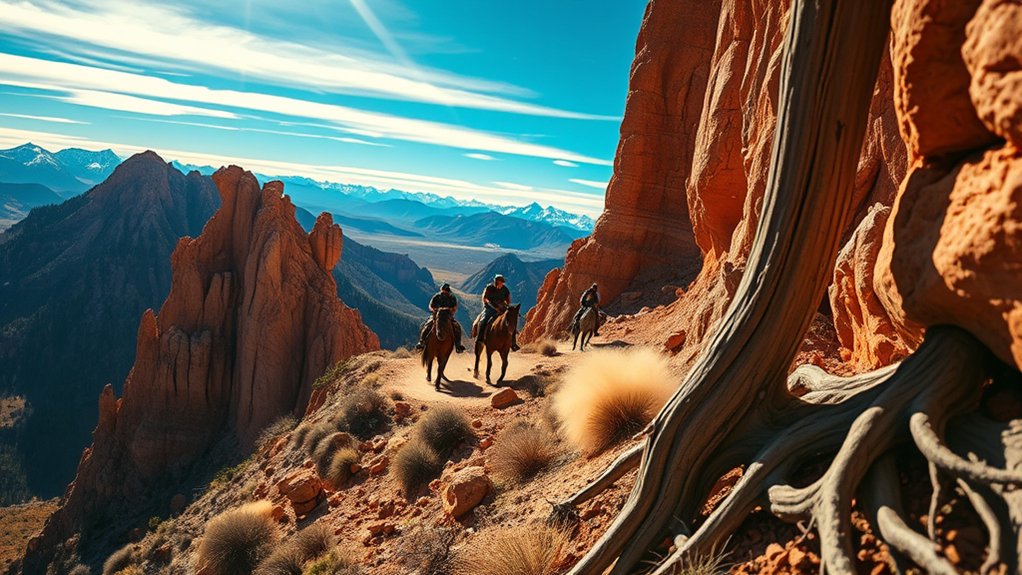
You’ll find rugged mountain routes that really put your skill and stamina to the test. Think steep ascents with rocky footing that demand precise control.
Then, when you’re ready, there are rocky canyon challenges that require sharp focus. These narrow, uneven paths wind through some truly striking geological formations.
And if you’re up for pushing your endurance even further, long-distance trails offer extensive rides across diverse terrain. It’s a perfect blend of physical challenge and breathtaking scenery.
Rugged Mountain Routes
Although rugged mountain routes demand advanced riding skills and caution, they reward you with some of the most thrilling equestrian experiences available. These mountain trails feature challenging terrain, including steep inclines, rocky paths, and narrow segments that test your abilities and your horse’s surefootedness.
Trails like Alberta Falls and Chasm Lake in Colorado’s Rocky Mountain National Park showcase this perfect blend of technical difficulty and stunning scenery. To safely navigate these routes, you’ll need proper safety gear and a keen understanding of mountain trail hazards such as loose rocks and sudden drop-offs.
Here’s what you can expect:
- Steep, rocky ascents and descents
- Narrow, exposed trail sections
- Breathtaking panoramic mountain views
- Remote, high-altitude riding environments
- A true sense of accomplishment for seasoned equestrians
Rocky Canyon Challenges
Moving from the high mountain trails, the Rocky Canyon Challenges demand a different set of skills with their steep, rocky terrain and narrow paths. This trail ride requires you to navigate loose rocks, steep descents, and uneven footing carefully.
The rugged, narrow trails reward experienced equestrians with breathtaking views of canyon depths and remote landscapes. You’ll appreciate the solitude here, as these routes are less crowded, providing an exhilarating experience for skilled riders prepared for unpredictable conditions.
| Feature | Difficulty Level | Rider Requirement |
|---|---|---|
| Steep Rocky Terrain | High | Advanced skills |
| Narrow Paths | High | Precise control |
| Elevation Changes | Moderate-High | Endurance needed |
| Trail Conditions | Unpredictable | Alertness required |
| Rider Experience | Expert Only | Essential |
Long-Distance Endurance Trails
When tackling long-distance endurance trails like the Tevis Cup in California, you’ll push both your stamina and your horse’s across more than 100 miles of diverse and demanding terrain. These challenging terrains demand advanced riding skills and thorough conditioning.
You’ll navigate mountains, deserts, and forests, which means you need precise pacing and hydration strategies to protect your horse’s welfare. Endurance trails involve strict vet checks to monitor health and guarantee safety throughout multi-day rides.
Key considerations include rigorous pre-ride training and conditioning, mastery of navigation across varied landscapes, and adherence to pacing and rest protocols.
You also need to pay close attention to your horse’s hydration and nutrition, plus understand and respect vet check requirements.
Exploring iconic endurance routes like the Arabian Desert or Australian Outback will test and refine your equestrian expertise on the world’s toughest challenging terrains.
Scenic Mountain and Forest Horseback Riding Trails
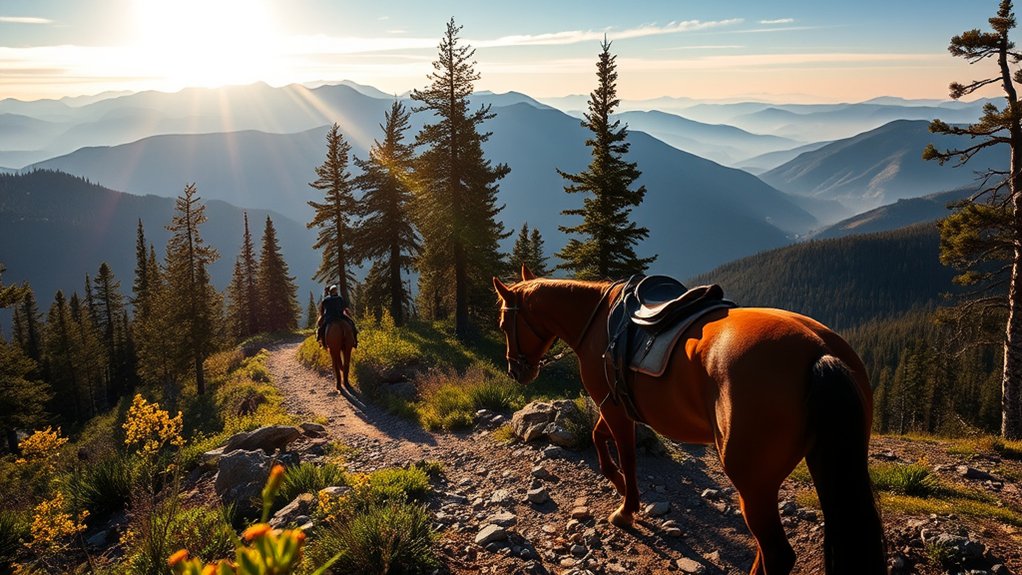
You’ll find scenic mountain vistas and dense forest paths that offer a variety of trail difficulties to match your riding skills. Trails like Alberta Falls in Colorado and Sweathouse Branch in Maryland combine breathtaking views with manageable terrain.
Whether you prefer open meadows or wooded routes, these trails provide immersive natural experiences tailored to your comfort level. So, no matter what kind of ride you’re looking for, there’s something here to enjoy.
Mountain Vista Trails
- Panoramic mountain and valley views
- Varied trail distances and difficulty
- Opportunities to observe wildlife and flora
- Rocky, steep terrain for skilled riders
- Guided rides with interpretive nature stops
Forest Path Experiences
Several forest path experiences offer riders the chance to explore lush, dense woodlands filled with towering trees and vibrant foliage. As you navigate these well-maintained forest trails, you’ll enjoy ample shade and scenic views that create a tranquil riding atmosphere.
These routes typically suit all skill levels, making them accessible whether you’re a novice or seasoned rider. Along the trail, you might spot local wildlife like deer, birds, and small mammals, adding to the immersive nature experience.
Many trails feature interpretive signs that provide insights into the surrounding flora and fauna, enriching your journey. Moreover, picturesque overlooks, waterfalls, and streams often punctuate these forest paths, offering perfect moments to pause and appreciate the natural beauty around you.
Trail Difficulty Levels
Exploring forest paths rich with wildlife and scenic features naturally leads to contemplating the difficulty levels of various trails. When choosing your ride, understanding trail difficulty helps match your skills with the terrain, whether on gentle forest paths or rugged mountain paths.
For example, Colorado’s Alberta Falls Trail suits beginners with its flat, scenic route, while Chasm Lake Trail challenges experienced riders with steep ascents and wildlife encounters. Mountain paths often reveal panoramic vistas and unique formations, requiring careful navigation.
Consider these key aspects of trail difficulty:
- Terrain steepness and elevation gain
- Trail surface conditions (rocky, smooth, or uneven)
- Presence of obstacles like fallen trees or narrow passages
- Length and estimated riding time
- Trail markers guiding your route and difficulty level
Choosing wisely ensures a safe, enjoyable horseback ride.
Desert and Canyon Horseback Riding Adventures
You’ll find some of the most breathtaking horseback riding adventures in desert and canyon landscapes like the Grand Canyon, Bryce Canyon, and Wadi Rum. Canyon horseback riding here lets you navigate narrow trails, steep rock formations, and vast desert flats. This reveals striking geological features and colorful rock layers.
Guided by experienced locals, you’ll encounter desert adventures rich with wildlife: desert foxes, lizards, and diverse bird species—all framed by stunning natural scenery. Terrain varies from smooth sandy paths to rugged rocky sections, accommodating riders from beginners to experts.
These rides immerse you in the unique atmosphere of each location, enhancing your connection with nature. Whether exploring the vastness of the Grand Canyon or the dramatic cliffs of Wadi Rum, these desert and canyon horseback riding experiences offer unforgettable moments of adventure and discovery.
Historical and Cultural Horseback Riding Trails
After experiencing the raw beauty of desert and canyon horseback riding, shifting your focus to historical and cultural trails reveals a different kind of richness. These horseback rides immerse you in the past, passing ancient ruins, castles, and landmarks steeped in history. You’ll connect with indigenous cultures and centuries-old equestrian traditions, making every ride a journey through time.
Explore these remarkable trails:
- Ring of Kerry, Ireland: Ancient sites and castles
- Inca Trail, Peru: Archaeological wonders
- Cowboy Heritage Trail, Montana: Western ranching legacy
- Wadi Rum, Jordan: Cultural and geological marvels
- Mongolia’s Steppe: Authentic nomadic horseback rides
Each trail offers a unique blend of natural beauty and historical significance, enriching your riding experience beyond the expected.
How to Choose the Right Horseback Riding Trail
When choosing the right horseback riding trail, start by honestly evaluating your riding skill level to guarantee the route matches your experience. Whether you’re a beginner seeking gentle paths or an expert ready for challenging terrain, this step is key.
Next, examine the trail characteristics carefully. Consider terrain type, length, and scenery to make sure they suit your preferences and physical condition.
Consider terrain, length, and scenery to ensure the trail fits your preferences and physical abilities.
Don’t overlook safety aspects like clear trail markings, potential vehicle sharing, and the availability of guides or group rides. These can really enhance your security.
These safety considerations are important to ensure a secure riding experience.
Always check weather forecasts and trail maintenance updates to avoid hazardous or slippery conditions.
Finally, factor in amenities like picnic spots or scenic overlooks that can enrich your ride. Matching trail characteristics to your riding skill ensures a safe, enjoyable horseback adventure every time.
Essential Gear for Comfortable and Safe Trail Riding
Because the right gear directly impacts both your safety and your horse’s comfort, assembling essential equipment is a critical step before any trail ride. Start with a properly fitted saddle, bridle, and girth to guarantee secure tack that prevents slipping and discomfort.
Incorporate protective gear like fly sheets and sunscreen to shield you and your horse from insects and sun exposure. Regularly inspect and maintain your equipment to avoid accidents caused by worn-out tack.
Don’t forget comfort items such as saddle pads and sturdy footwear that improve stability and reduce soreness.
Finally, carry safety essentials to handle emergencies promptly.
- Well-fitted saddle and bridle
- Protective gear including fly sheets and insect repellent
- Regular equipment maintenance
- Comfortable saddle pads and appropriate boots
- First aid kit, emergency whistle, and cell phone
Guided Horseback Riding Tours and Events to Join
You’ll find guided horseback riding tours that take you through stunning landscapes, from national parks to coastal trails. They’re designed for all skill levels, so whether you’re a beginner or more experienced, there’s something for you.
Plus, joining upcoming equestrian events like ranch rodeos or themed sunset rides gives you a great chance to connect with local culture and wildlife.
These guided experiences come with expert support, essential gear, and safety briefings, making every ride both enjoyable and secure.
Popular Guided Riding Tours
Guided riding tours offer an exceptional way to explore stunning landscapes while enjoying expert-led horseback adventures tailored to various skill levels. These tours often take you along scenic routes through iconic locations like Bryce Canyon, Utah, and Torres del Paine, Chile.
Whether you’re a beginner or an experienced rider, you’ll find options suited to your skills, including unique activities like cattle herding or wildlife safaris. Expert guides enrich your journey with cultural, historical, and natural insights.
To secure your spot on popular rides, booking in advance is essential.
- Scenic routes through national parks and diverse terrains
- Suitable for all skill levels with specialized activities
- Seasonal tours, such as winter rides in Iceland or desert treks in Jordan
- Knowledgeable guides offering enriching commentary
- Flexible durations, from a few hours to multi-day adventures
Upcoming Equestrian Events
Several premier equestrian events throughout the year offer thrilling opportunities to join guided horseback riding tours and engage with the vibrant horse-riding community.
At the Winter Equestrian Festival (WEF) in Wellington, Florida, for example, you can experience top-level competition alongside guided horseback riding tours, especially during WEF Week 10 in March 2026.
Similarly, the 2025 All American Quarter Horse Congress in Ohio, from October 10, features diverse events including performance showcases and therapy programs.
These festivals often include educational clinics and live demonstrations, allowing you to deepen your horsemanship skills.
To participate, check official event websites or local equestrian organizations for detailed schedules, registration details, and safety protocols.
Whether you’re a novice or experienced rider, these equestrian events provide unmatched chances to immerse yourself in the horse-riding world.
Benefits Of Guided Rides
Joining a horseback riding tour led by an expert can transform your outdoor adventure into a safe, educational, and enjoyable experience. Guided rides provide you with expert-led tours that prioritize safety while offering valuable local insights about terrain and wildlife.
Whether you’re a beginner or an experienced rider, these tours tailor the route to your skill level, guaranteeing a perfect fit. You’ll also benefit from provided safety gear, trail maps, and clear instructions, making unfamiliar areas accessible and stress-free.
Plus, the educational commentary enhances your understanding of the environment, history, and horse care.
Finally, group events foster social connections and organized outings.
- Safety assured through expert guidance
- Tailored routes for all skill levels
- Included safety equipment and trail information
- Informative environmental and historical insights
- Opportunities to connect with fellow riders
Unique International Horseback Riding Destinations to Explore
When you venture beyond familiar trails, horseback riding transforms into an unforgettable journey through some of the world’s most extraordinary landscapes. In Iceland, ride Viking-bred horses with a unique tolt gait, gliding swiftly over volcanic terrain and glaciers.
Andalucia, Spain, offers noble Andalusian stallions for scenic beach and forest rides, showcasing traditional Spanish styles. Botswana’s Okavango Delta lets you encounter elephants and leopards on horseback amid lush waterways.
Mongolia’s Hovsgol Province challenges you with vast steppes where nomadic horsemen herd reindeer, immersing you in authentic culture. Chile’s Torres del Paine National Park delivers eco-tours on horseback through towering mountains and glacial valleys, revealing Patagonia’s breathtaking wilderness.
These destinations promise the world’s most breathtaking horse experiences, blending nature, culture, and adventure into every ride.
Frequently Asked Questions
What Is the Average Cost of Horseback Riding Lessons?
You’ll find horseback riding lessons typically cost between $45 and $75 per hour.
Group sessions are cheaper, around $30 to $50, while private lessons can go up to $100 or more.
Keep horse riding safety in mind when selecting a trainer, and seek equine training tips to improve your skills efficiently.
Prices vary by location and lesson type, so consider package deals to save money and get consistent practice.
How Do I Care for a Horse After a Trail Ride?
After a trail ride, you’ll need to care for your horse like tending a delicate garden after a storm. Start with thorough horse grooming. Use a curry comb to loosen dirt, then a stiff brush to clear sweat and mud.
Rinse legs and hooves with clean water. Check for cracks or debris, and apply conditioner if needed.
Finally, offer fresh water and balanced post-ride nutrition to restore energy and hydration.
What Are Common Horse Breeds Used for Trail Riding?
You’ll find Quarter Horses popular for trail riding thanks to their calm temperament and strong build, which enhances trail riding safety.
Arabian Horses offer stamina and endurance, perfect for longer rides.
Mustangs bring agility and adaptability, ideal for varied terrains.
Gaited breeds like Tennessee Walkers provide smooth rides, reducing rider fatigue.
Understanding these horse breed characteristics helps you choose the right mount, ensuring a safer, more enjoyable trail ride.
How Can I Improve My Horseback Riding Skills Safely?
Improving your horseback riding skills safely is like building a sturdy house. Start with a solid foundation. Focus on mastering riding technique through lessons with certified instructors who prioritize horse safety.
Always wear proper gear like helmets and boots. Practice in controlled environments before venturing out. Increase difficulty gradually, stay alert to your horse’s behavior, and communicate clearly with consistent cues.
This approach guarantees steady, safe progress and deeper trust with your horse.
Are There Health Benefits to Regular Horseback Riding?
Yes, regular horseback riding offers significant horseback health benefits. You’ll improve your cardiovascular system through low-impact aerobic exercise and boost your riding wellness by strengthening your core, legs, and hips.
The activity enhances your balance, coordination, and proprioception as you sync with the horse’s movements. Plus, it reduces stress and promotes mental relaxation by connecting you with nature and animals, making horseback riding a holistic way to improve both physical and mental wellness.
Conclusion
Whether you’re a beginner or an expert, horseback riding offers incredible experiences across diverse terrains. Did you know that over 7 million Americans enjoy horseback riding each year?
Choosing the right trail and gear guarantees your adventure is safe and memorable. From scenic mountain paths to desert canyons and international destinations, there’s a perfect ride waiting for you.
So saddle up, explore new trails, and embrace the freedom only horseback riding can give.