What Is a Morgan Horse?
A Morgan horse is a compact, muscular breed known for its athleticism, intelligence, and versatility across riding and work disciplines. You’ll find them standing 14.1 to 15.2 hands high, with strong conformation supporting durability and agility.
Originating from a single 18th-century sire, Morgans served as farm horses, military mounts, and modern pleasure horses. They have a friendly, reliable temperament suitable for all riders.
Explore further to uncover their rich history, bloodlines, and unique health traits.
Morgan Horse Origins and History
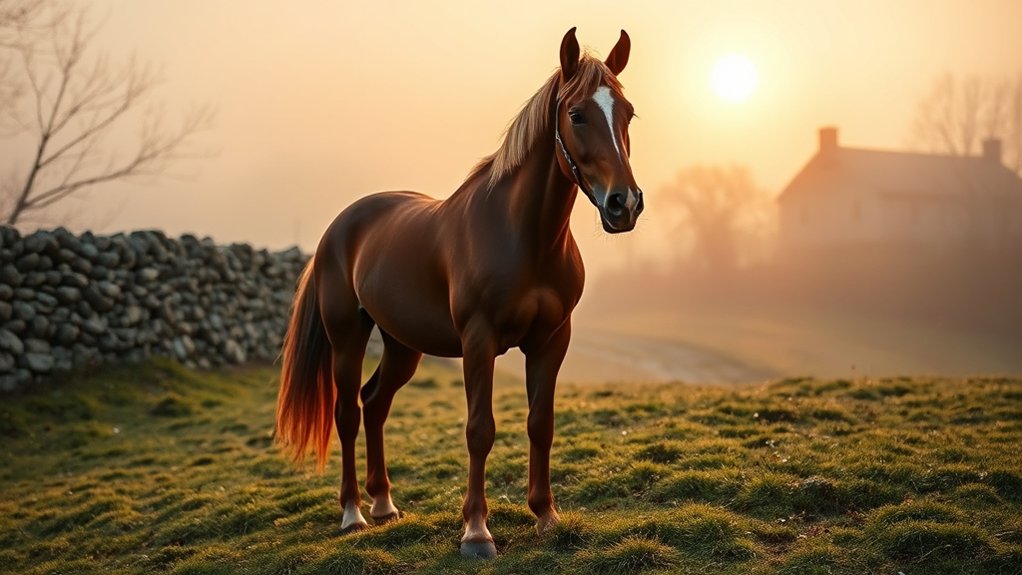
Where did the Morgan horse originate, and how did it become a distinct breed? The Morgan traces back to a single foundation sire named Figure, born in 1789 in the United States. Owned by Justin Morgan, a Vermont teacher and horseman, Figure exhibited exceptional athleticism, intelligence, and versatility.
These traits defined the breed history, as selective breeding preserved and enhanced them across generations. The Morgan quickly became recognized among early American breeds for its adaptability in roles such as cavalry mounts, harness racers, and farm work.
In 1909, breeders formalized the breed’s status by establishing the Morgan Horse Club, later renamed the American Morgan Horse Association, which continues to oversee breed standards.
As a versatile horse, the Morgan’s influence extends beyond its lineage, contributing to breeds like the Quarter Horse.
Key Physical Traits That Define Morgan Horses
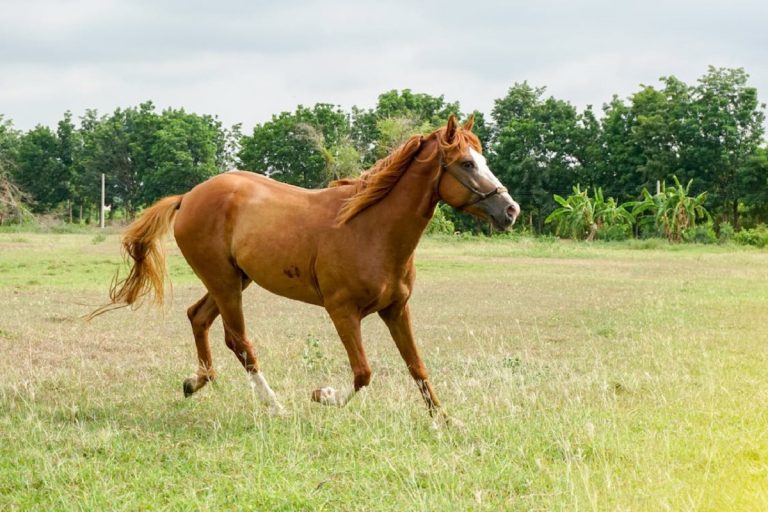
Although Morgan horses vary in color and size, their physical traits consistently reflect a compact and muscular build. They typically stand between 14.1 and 15.2 hands high.
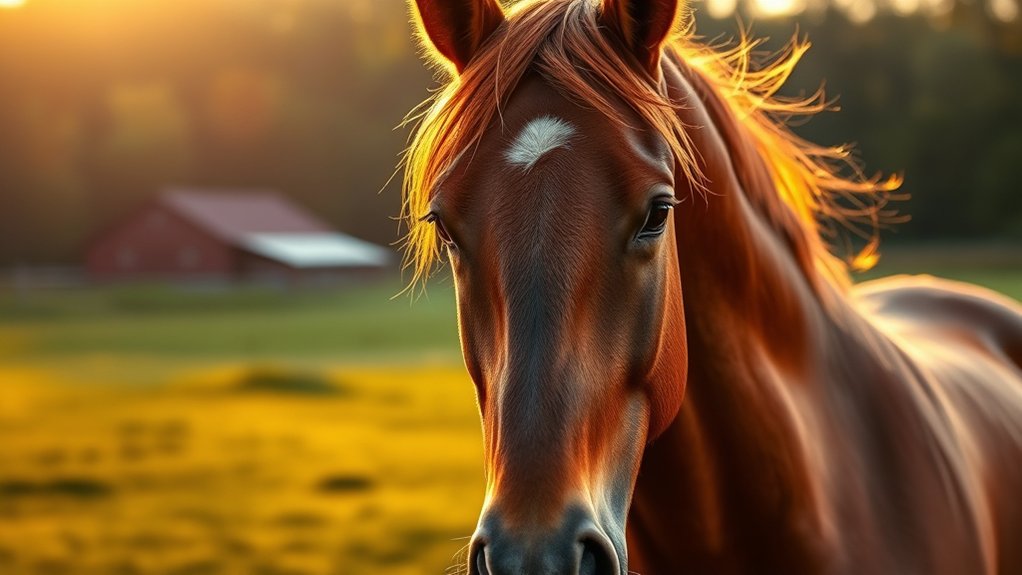
You’ll notice their expressive head characterized by a broad forehead, large eyes, and a slightly dished face, which enhances their alert appearance.
Their conformation is particularly compact, featuring a short back and powerful, muscular hindquarters that contribute to their athleticism. The long, arched neck adds to their refined silhouette, improving balance and elegance.
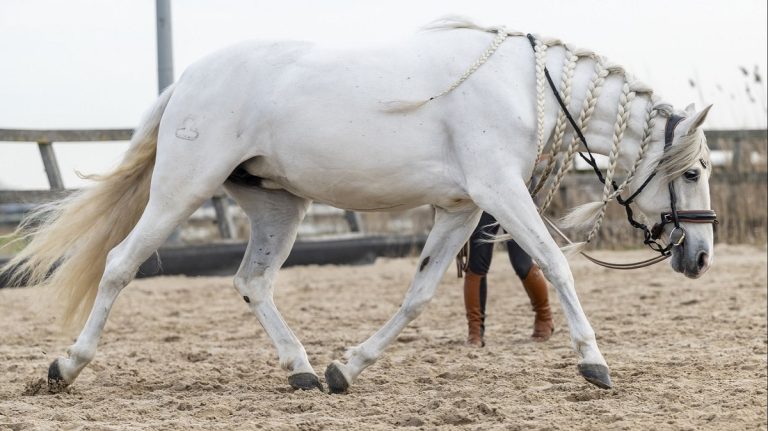
Morgans display a variety of colors, including bay, black, chestnut, gray, and pinto, each complementing their overall appearance.
This precise combination of features defines the Morgan’s distinctive, robust yet refined physique. It’s essential for their versatility and performance.
The Unique Temperament and Personality of Morgan Horses
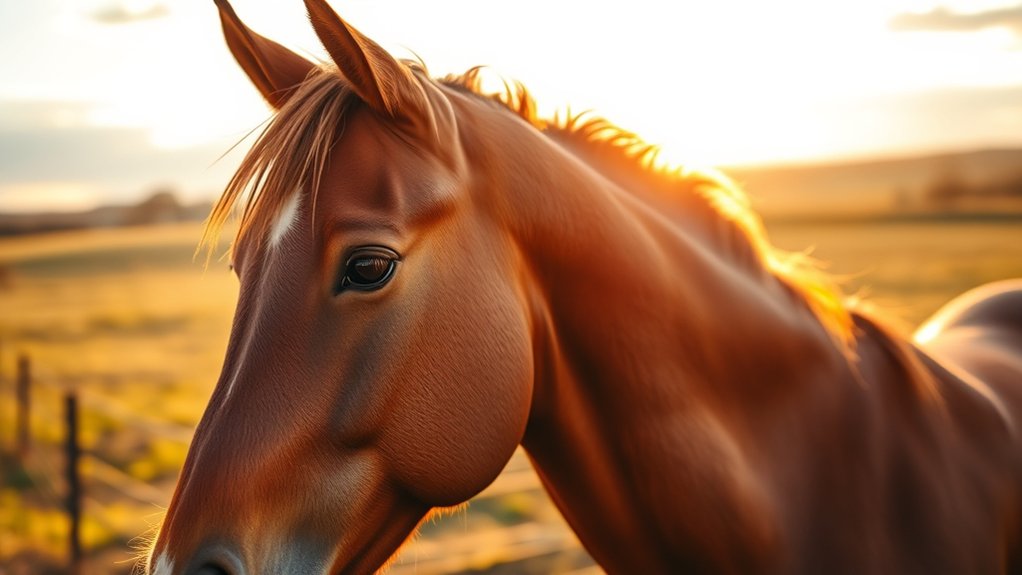
Beyond their distinct physical attributes, Morgan horses stand out for their exceptional temperament and personality traits. You’ll find them friendly and cooperative, making them ideal for riders at any skill level. Their eager-to-please nature simplifies training, as they quickly grasp commands and respond reliably.
Morgan horses are friendly, cooperative, and eager to please, making them perfect for riders of all skill levels.
Morgan horses exhibit a confident demeanor, balancing spirited energy with calm composure across disciplines. This temperament ensures they’re steady and safe, often preferred for children and beginners.
Moreover, their alertness and lively personality contribute to a strong bond, earning them the reputation as “the horse that chooses you.”
When working with Morgans, you can expect a consistent, dependable partner who adapts well to varying environments while maintaining their affectionate and engaging character.
Morgan Horse Bloodlines and Breed Development
You’ll find the Morgan breed built around four main bloodlines—Brunk, Lippitt, Government, and Western Working. Each one was developed for different performance traits, which makes the breed pretty diverse.
If you dig into the history of the breed registry, you’ll see how these lines were carefully preserved and standardized through detailed record-keeping.
Plus, there are specialized breed organizations that still oversee breeding practices today, making sure the Morgan’s unique characteristics stay consistent and true to type.
Four Main Bloodlines
Four distinct bloodlines, Brunk, Lippitt, Government, and Western Working, form the foundation of the Morgan horse breed. Each has unique breeding goals and historical origins.
The Lippitt bloodline exemplifies breed purity, maintaining traditional Morgan traits without modern outcrosses. You’ll find the Brunk line, originating in Illinois, prized for soundness, athleticism, and superior conformation.
The Government bloodline traces directly to stock bred at the U.S. Morgan Horse Farm. It features influential sires like General Gates, which shaped the breed’s development.
The Western Working bloodline descends from Government stock. It is selectively bred for agility and cow sense to excel in stock work.
Understanding these Morgan bloodlines helps you appreciate how distinct breeding objectives preserve the breed’s versatile qualities while ensuring genetic integrity.
Breed Registry History
Understanding the distinct bloodlines of the Morgan horse sets the stage for appreciating how breed standards and registries shaped its development. The breed registry began with the Morgan Horse Club in 1909, evolving into the American Morgan Horse Association (AMHA).
The foundation sire, Figure, born in 1789, anchors the breed’s lineage. The stud book, closed to outside blood in 1948, guarantees a purebred standard. Four primary bloodlines—Brunk, Lippitt, Government, and Western Working—define the breed’s genetic structure, with the Lippitt line maintaining strict purity.
| Bloodline | Key Characteristic |
|---|---|
| Lippitt | Purebred, no modern outcrosses |
| Brunk | Historic, versatile lineage |
| Government | Military and working roots |
Specialized Breed Organizations
Although the Morgan breed shares a common ancestry, specialized organizations have emerged to preserve and promote its distinct bloodlines and development goals. The Morgan Horse Club, established in 1909, evolved into the American Morgan Horse Association (AMHA), which now oversees breed standards and registry.
You should understand the four primary bloodlines: Brunk, Lippitt, Government, and Western Working. Each has unique traits and historical significance.
The Lippitt line, regarded as the purest, adheres to strict breeding protocols excluding modern outcrosses.
Meanwhile, the Government bloodline traces directly to horses bred at the U.S. Morgan Horse Farm, including notable sires like General Gates. Since closing the stud book to outside blood in 1948, the AMHA has registered over 179,000 Morgans. This reflects the efficacy of these specialized organizations in maintaining breed history and integrity.
Historical Roles: Workhorse to Military Mount
You’ll see that Morgan horses really shined as early farm and freight workhorses, hauling plows, wagons, and supplies all across rural America. Their stamina and agility made them go-to cavalry mounts during the Civil War, where they reliably transported troops and equipment.
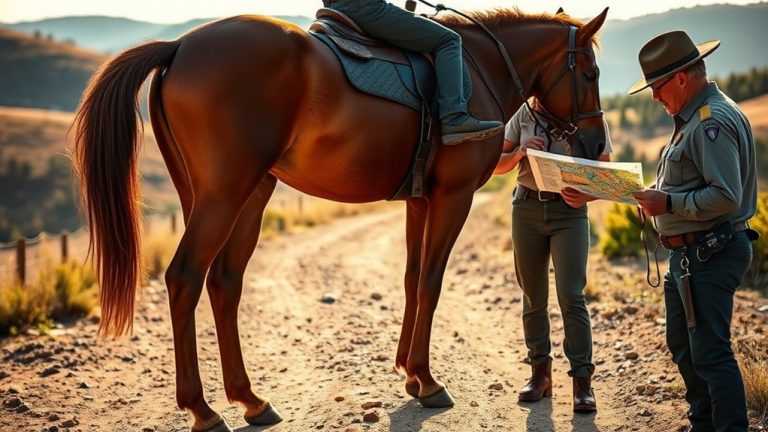
Plus, Morgans played a key role in westward expansion, handling light driving and transport tasks during the California Gold Rush.
Early Farm and Freight Work
Because of their strength and stamina, Morgan horses played an essential role in early American agriculture, hauling freight, plowing fields, and performing heavy farm labor. You’ll find that their compact, muscular build made them ideal draft horses, capable of enduring long hours of strenuous work.
As crucial workhorses, Morgans contributed markedly to the efficiency of early rural economies.
You can count on Morgan horses for:
- Pulling wagons and carts loaded with produce or supplies in freight tasks
- Plowing and tilling fields with sustained stamina and power
- Performing diverse heavy farm work requiring durability and agility
Their versatility as draft horses positioned them as indispensable assets in farm work and freight during early American agriculture.
Cavalry and Military Service
How did Morgan horses shift from farm work to battlefield service? Their compact, muscular build and spirited nature made them ideal cavalry horses for the U.S. Army during the Civil War. You’ll find their stamina, agility, and trainability essential in adapting to rigorous military service.
As historic mounts, Morgans excelled in reconnaissance, patrol, and messenger roles, showcasing versatility in diverse combat scenarios. Their intelligence and calm disposition allowed soldiers to train them quickly, ensuring readiness for complex tasks.
Throughout military campaigns, Morgan horses proved to be dependable workhorses, consistently demonstrating bravery and reliability. Understanding their role in military history highlights how these horses transitioned seamlessly from agricultural labor to key components of battlefield operations.
Gold Rush and Expansion
Why were Morgan horses indispensable during the California Gold Rush and westward expansion? Their unique combination of durability and endurance made them essential across multiple demanding roles.
During the Gold Rush, these horses excelled in light driving and riding, fundamental for steering California’s rugged terrain. As the frontier expanded, their adaptability increased, supporting transportation and farm labor crucial for development.
Furthermore, their proven performance as cavalry mounts during and after the Civil War highlighted their military value.
You relied on Morgan horses for:
- Hauling freight and performing farm work on the expanding frontier
- Serving as agile, durable cavalry mounts in military operations
- Providing reliable transportation across varied and challenging landscapes
Their versatility directly influenced the success of 19th-century American expansion and the Gold Rush’s logistical needs.
Common Uses of Morgan Horses Today
Although Morgan horses have a rich historical background, their modern applications demonstrate remarkable versatility across multiple equestrian disciplines. You’ll find Morgans excel in pleasure riding, both Western and English, due to their adaptable nature and calm temperament.
Their versatility extends to competitive arenas including dressage, where precision and athleticism are paramount. Trail riding and endurance riding benefit from their stamina and sure-footedness, making long distances manageable.
Therapeutic riding programs rely on their gentle disposition and cooperative attitude, enhancing rider confidence and safety.
Furthermore, Morgans perform stock work efficiently, showcasing their historical role in ranch riding and reenactments.
When you choose a Morgan, you engage with a breed capable of excelling in diverse roles, combining strength, agility, and temperament to meet varied equestrian demands.
Common Genetic Disorders and Health Issues in Morgan Horses
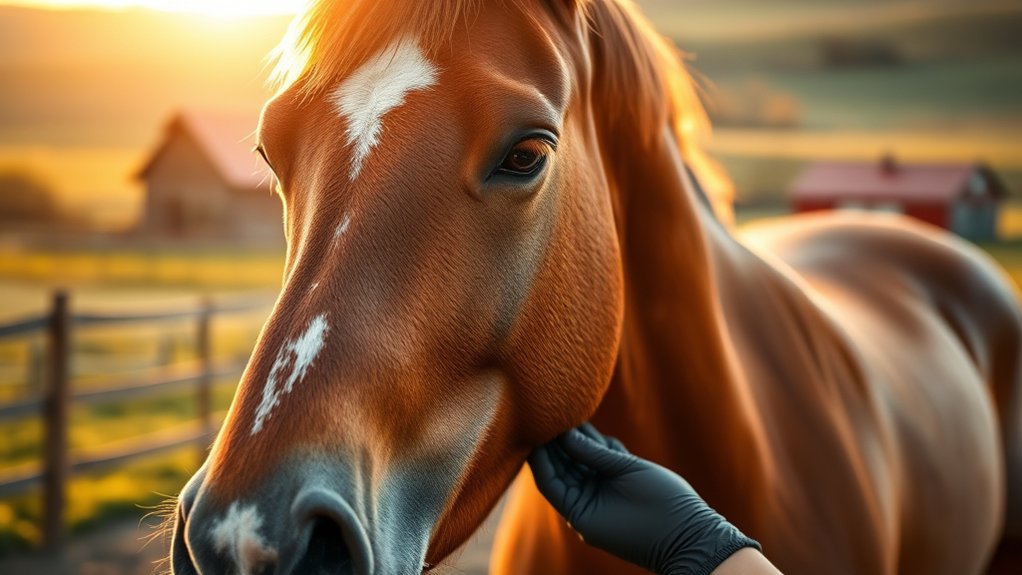
When managing Morgan horses, you need to consider several genetic disorders that can impact their health and performance. Genetic testing is vital to identify carriers and avoid risky breeding combinations, especially related to coat color and congenital issues.
Key concerns include the silver dapple gene. Particularly in homozygous individuals, it can cause severe eye abnormalities and vision loss.
Polysaccharide storage myopathy (Type 1 PSSM) shows up as muscle soreness and tying-up, which affects exercise capacity.
Also, homozygous frame overo patterns risk lethal white syndrome, leading to fatal intestinal complications in foals.
Additionally, Morgans may carry the MCOA gene, linked to congenital anterior uveitis and other ocular problems.
How Morgan Horses Are Registered and Organized
Since its establishment in 1909, the American Morgan Horse Association (AMHA) has maintained the official stud book and governed the registration of Morgan horses. They ensure breed integrity through a closed registry policy implemented in 1948. This breed registry restricts entries to horses descending from recognized Morgan bloodlines, preserving purity.
The AMHA defines a single breed standard applicable across all bloodlines like Brunk, Lippitt, Government, and Western Working. This standard emphasizes consistent conformation and performance traits.
Beyond the AMHA, specialized breed organizations such as the Rainbow Morgan Horse Association and Lippitt Morgan Horse Registry support specific bloodlines and regional interests. They complement the centralized registration.
When you register a Morgan Horse with the AMHA, you align with stringent criteria that uphold the breed standard. This ensures the horse’s pedigree and characteristics meet established Morgan Horse expectations.
Morgan Horses in Popular Culture and Media
You’ll find Morgan horses prominently featured across various forms of popular culture and media, highlighting their historical and cultural significance. This breed’s prominence in children’s literature and entertainment reflects its gentle temperament and versatility.
Disney’s 1972 animated film “The Morgan Horse,” adapted from the 1946 Newbery Honor Book, expanded the breed’s recognition beyond equestrian circles. Morgan horses also appear in numerous horse shows, solidifying their status as a symbol of American heritage.
Disney’s 1972 film brought Morgan horses widespread recognition, cementing their place as a symbol of American heritage.
Key representations include:
- Ellen Feld’s children’s book series emphasizing the breed’s intelligence and friendly nature
- Robert Frost’s poem “The Runaway,” portraying the Morgan as an emblem of American heritage
- Frequent showcases in horse shows and media events, reinforcing their cultural relevance
These appearances affirm the Morgan Horse’s enduring role in popular culture and media.
Why Morgan Horses Are Ideal for Riders of All Levels
You’ll love the Morgan horse’s friendly nature—it makes them super cooperative no matter your riding experience.
Plus, they’re really versatile, easily adapting to everything from trail rides to dressage, so they fit whatever training style you’re into.
On top of that, their balanced size and strength mean they’re a safe and manageable ride for beginners and pros alike.
Friendly Temperament Traits
Although Morgan horses exhibit a strong and athletic build, their most notable attribute lies in their friendly and cooperative temperament. This makes them exceptionally suitable for riders of varying skill levels.
You’ll find their calm and gentle nature fosters a trusting bond, which is essential for effective rider communication.
Their temperament is consistently reliable, enabling you to confidently engage with them whether you’re a beginner or an experienced rider.
Key friendly temperament traits include:
- Cooperative behavior that supports quick learning and responsiveness
- Gentle disposition ideal for children and therapeutic programs
- Calm demeanor that promotes safety and trust during riding sessions
Versatile Riding Abilities
Building on their cooperative and calm temperament, Morgan horses demonstrate exceptional versatility in riding disciplines, making them suitable for riders at every skill level. Their innate trainability allows you to develop skills across dressage, Western pleasure, and jumping with relative ease.
You’ll appreciate their natural athleticism as it supports smooth changes and balanced gaits, essential for technical riding tasks.
This breed’s endurance and strong work ethic ensure consistent performance during extended trail rides or competitive endurance events.
Additionally, their adaptability enables seamless adjustment between various riding styles, whether recreational or competitive.
Whether you’re a beginner or an experienced rider, a Morgan horse’s versatile abilities provide a reliable, responsive partner that enhances your riding experience across multiple disciplines.
Suitable Size And Strength
When selecting a horse that balances manageability with performance, the Morgan breed’s size and strength stand out. Typically standing between 14.1 and 15.2 hands, their moderate size assures the horse remains manageable for riders of all levels.
The Morgan’s compact, muscular build delivers notable strength and agility, providing excellent balance and support. This combination makes them suitable for various disciplines without compromising rider comfort or control.
Their sound conformation guarantees durability, allowing you to depend on them for years.
Key attributes include:
- Manageable size ideal for beginners and experienced riders alike
- Muscular build offering strength and agility for diverse activities
- Durable frame ensuring longevity and consistent performance
These qualities make Morgans a reliable choice, blending size, strength, and balance efficiently.
Frequently Asked Questions
How Much Does a Morgan Horse Typically Cost?
You’ll typically spend between $3,000 and $10,000 on a Morgan horse, depending on factors like horse breeding quality, training level, and discipline.
When budgeting, consider health maintenance, nutritional needs, and pasture management costs.
Proper saddle fitting and riding gear are essential for performance and comfort.
If you’re interested in breeding programs, prices may increase for well-bred, show-quality Morgans with championship titles, reflecting their superior genetics and training.
What Is the Average Lifespan of a Morgan Horse?
Want to know the average lifespan of a Morgan horse? You can expect 25 to 30 years, sometimes stretching into the early 30s with diligent care.
Maintaining a balanced horse diet, regular exercise routines, and proper hoof maintenance are essential. Using effective riding techniques minimizes injury risk.
Veterinary care should address metabolic disorders, while understanding social behavior improves well-being.
Breeding considerations also impact longevity, so stay proactive for a healthy, long-lived horse.
How Do You Groom and Care for a Morgan Horse?
You’ll focus on horse grooming by regularly using a curry comb and soft brush to remove dirt and loose hair.
For health maintenance, perform daily hoof care with a hoof pick, checking for injuries.
Follow strict feeding routines tailored to energy needs.
Use proper bathing techniques with horse-specific shampoos, especially before a show.
Trim the mane to prevent tangles.
Schedule dental checks biannually to maintain oral health and overall well-being.
What Are Common Training Methods for Morgan Horses?
You’ll focus on gentle horse training, starting with groundwork like lunging and desensitization to build trust and address behavioral issues early.
Precise saddle fitting guarantees comfort, enhancing rider communication during conditioning exercises.
Use training tools thoughtfully to reinforce clear cues, maintaining consistency.
Incorporate varied activities to stimulate your Morgan’s intelligence and athleticism, preventing boredom while developing responsiveness and strength essential for both dressage and Western disciplines.
Can Morgan Horses Compete in Specific Horse Shows or Events?
You’ll find that over 70% of Morgan horses actively compete in diverse events. They excel in show jumping and dressage competitions, showcasing agility and precision.
Their versatility extends to western riding disciplines like trail riding and pleasure shows, where their responsiveness shines.
Moreover, Morgans participate in harness racing and endurance events, demonstrating stamina and speed.
This adaptability makes them a top choice for riders seeking multi-discipline competition success.
Conclusion
Understanding the Morgan horse is like revealing a finely tuned machine. Every trait, from its muscular build to its steady temperament, is engineered for versatility and endurance.
Whether you’re a beginner or an expert rider, you’ll appreciate its balanced conformation, rich lineage, and reliable health profile. Morgan horses aren’t just animals; they’re carefully bred partners. They combine history, genetics, and temperament to offer unmatched performance across disciplines and roles.