Best Hay for Horses?
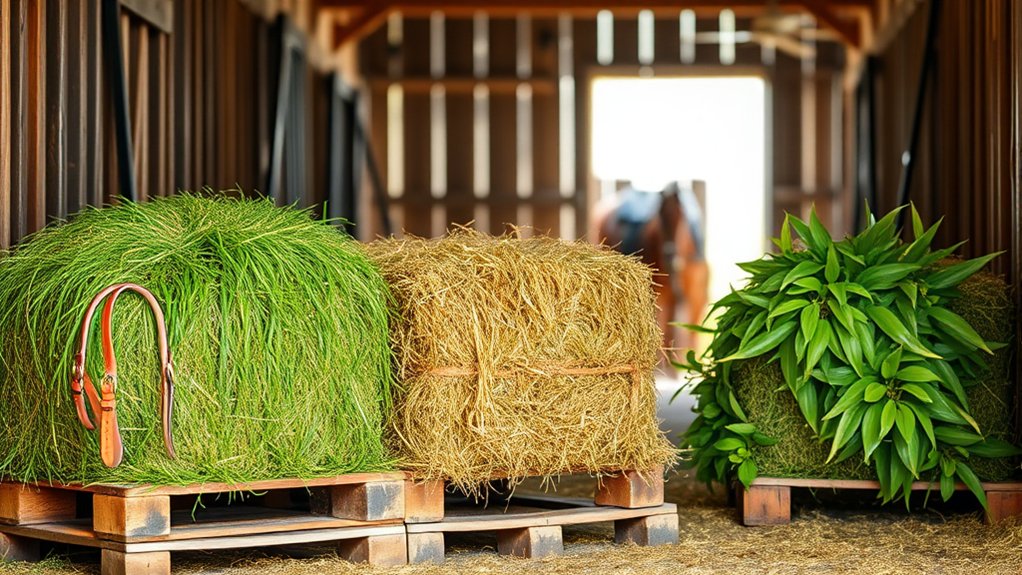
You want hay that balances nutrition, digestibility, and safety for your horse’s needs. Legume hays like alfalfa offer high protein and calcium, which is ideal for growth or performance. Grass hays provide moderate energy for maintenance.
Harvest maturity greatly affects hay quality. Early cut yields more nutrients. Check for bright green color, fresh smell, and soft texture to verify quality. Proper storage prevents spoilage and nutrient loss.
Exploring these factors can help you optimize your horse’s diet.
Nutritional Profiles of Common Hay Types
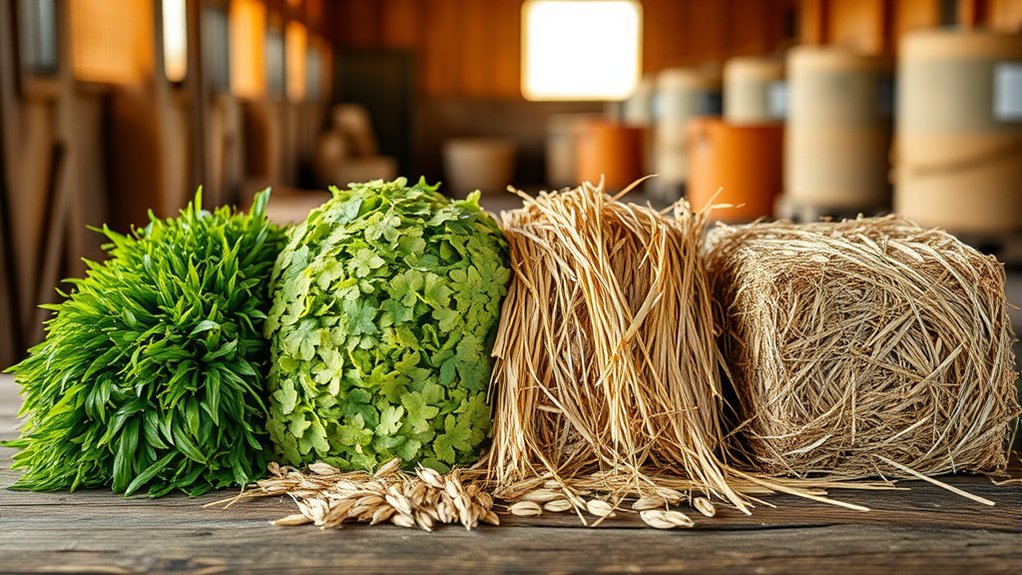
Although choosing the right hay depends on your horse’s specific needs, understanding the nutritional profiles of common hay types is essential.
Legume hay, such as alfalfa and clover, offers a high crude protein content, typically ranging from 16-22%, alongside significant calcium. This supports growth, lactation, or high-energy demands.
Legume hay like alfalfa provides high protein and calcium, ideal for growth and high-energy needs.
Grass hay, like Timothy, provides moderate protein and energy levels, making it suitable for maintenance and most working horses.
Warm-season grass hay, including bermudagrass, has lower crude protein (8-12%) and energy, ideal for easy keepers or horses with metabolic issues.
Mixed hay, combining grasses and legumes, balances fiber, protein, and minerals, enhancing the overall nutritional profile.
Key Criteria for Choosing Hay for Your Horse
When selecting hay for your horse, you should prioritize factors that directly influence its nutritional quality and safety. Visual assessment helps gauge hay quality by examining color, texture, and absence of mold or dust.
The stage of maturity at harvest substantially affects digestible nutrients. Early bloom for alfalfa and the vegetative stage for grasses maximize protein content. Leaf to stem ratio is essential; aim for 50-60% leaves to maximize horse nutrition.
Forage testing via chemical analysis precisely measures crude protein, fiber, and non-structural carbohydrates. This helps ensure balanced feed.
| Criterion | Importance |
|---|---|
| Color | Bright green signals freshness |
| Leaf to stem ratio | Higher leaves mean better nutrients |
| Stage of maturity | Early stages yield ideal protein |
| Visual assessment | Detects mold, dust, and debris |
| Chemical analysis | Confirms nutrient content |
Alfalfa Vs. Grass Hay: Pros and Cons
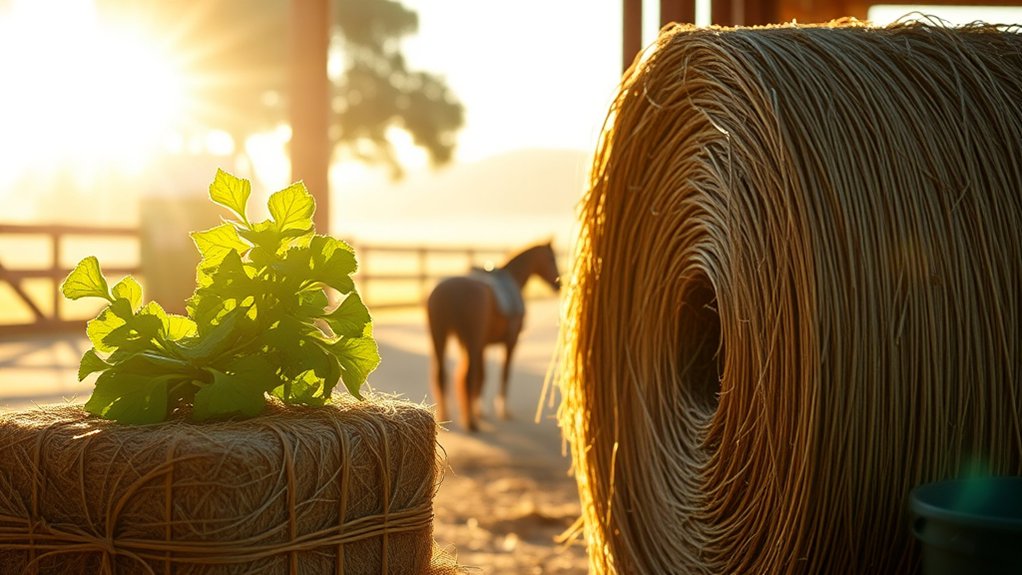
You’ll find that alfalfa hay offers higher protein and calcium levels, which is great for horses with increased nutritional needs.
On the other hand, grass hay provides moderate energy and comes with fewer risks of metabolic issues.
When winter rolls around and forage quality starts to drop, alfalfa’s nutrient density can really help support your horse’s maintenance.
But if you’re worried about your horse taking in too many calories, grass hay might be the better choice.
Getting a good handle on how each type of hay affects your horse’s consumption and digestibility will make it easier to tailor feeding strategies that fit your horse’s unique needs.
Nutritional Differences
Because alfalfa hay contains considerably higher levels of crude protein (16-22%) and calcium compared to grass hay, it suits horses with greater nutritional demands, such as those that are growing, lactating, or performing.
The nutritional value of forage species varies with plant maturity and hay quality, influencing digestible nutrients and fiber content.
Grass hay, with 8-16% crude protein and lower calcium, better meets maintenance and weight management needs due to its fibrous, lower-energy profile.
When selecting between alfalfa and grass hay, consider:
- Energy requirements: Alfalfa provides more calories and protein but risks overfeeding.
- Fiber content: Grass hay offers more fiber, aiding digestion and weight control.
- Nutritional balance: Match hay type to your horse’s age, health, and activity for ideal forage quality.
Winter Feeding Benefits
How does the choice between alfalfa and grass hay impact your horse’s winter nutrition and comfort? During winter feeding, alfalfa hay provides high-quality hay rich in protein (16-22%) and calcium. It supports growing or performance horses with increased digestible nutrients.
Its high nitrogen content promotes metabolic heat production, which is beneficial in cold weather but can be problematic for horses with metabolic issues.
Conversely, grass hay offers lower energy and protein but contains more fibrous material that enhances microbial fermentation in the hindgut.
This fermentation generates internal heat and helps keep your horse warm. Combining alfalfa hay with grass hay balances hay quality and optimizes microbial fermentation, improving horse nutrition and thermoregulation during winter.
Selecting the right mix based on your horse’s condition and activity ensures effective winter feeding strategies that maintain health and comfort.
Consumption and Digestibility
Although both alfalfa and grass hay serve as primary forage options, their differences in consumption rates and digestibility profoundly affect how your horse utilizes these feeds. When considering hay quality and feed quality, these forage types vary considerably in nutrient density and fiber content, influencing forage digestibility and overall horse diet balance.
Alfalfa hay offers higher digestible nutrients, including protein (16-22%) and calcium, enhancing growth and performance. However, it requires careful hay selection to avoid overnutrition.
Grass hay contains more fiber, which slows consumption and promotes steady digestion. This makes it suitable for maintenance horses with lower energy needs.
The softer texture of alfalfa may benefit horses with dental issues, while grass hay’s coarser fiber supports gut motility.
Understanding these factors ensures suitable forage digestibility tailored to your horse’s specific nutritional requirements.
Why Hay Maturity Matters for Quality and Nutrition
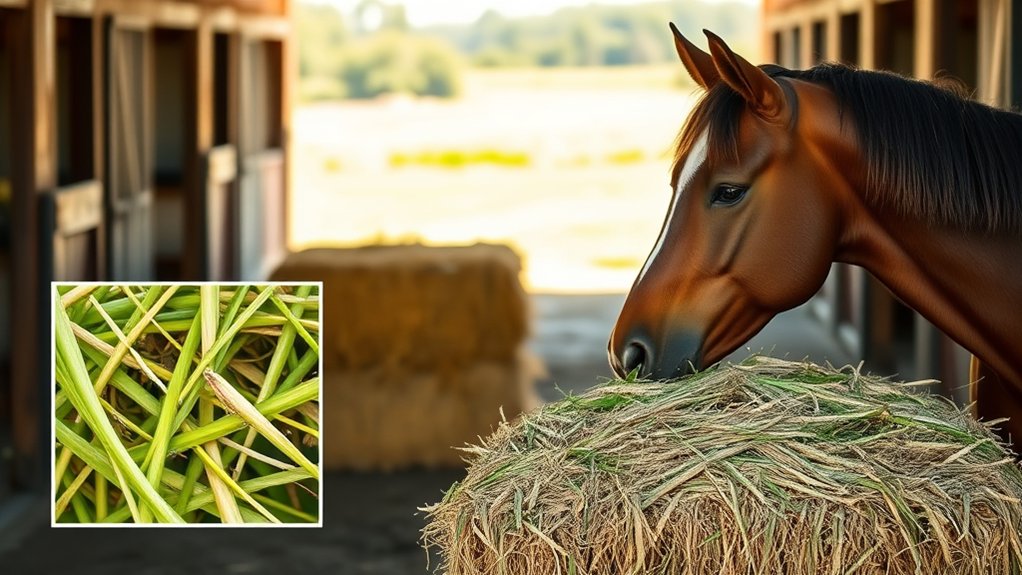
When you harvest hay during the early flowering or bud stage, you capture higher nutrient levels, including more leaves and digestible fibers. This directly enhances its quality and nutritional value. Hay maturity strongly influences nutrient content; as the stage of harvest progresses, stem fibers increase while crude protein and carotene decline.
This reduces nutrient retention and overall hay quality. Maintaining an ideal leaf-to-stem ratio ensures better digestibility and nutrient delivery for horses.
| Stage of Harvest | Nutrient Levels | Hay Quality Impact |
|---|---|---|
| Early Bud | High protein & fiber | Superior digestibility |
| Early Flowering | High carotene & leaves | Optimal nutrient retention |
| Late Flowering | Increased stem fibers | Reduced digestibility |
| Mature Seed Head | Low protein | Coarse, low digestibility |
| Overmature | Low nutrient levels | Poor hay quality |
Sensory Signs of High-Quality Hay: Color, Smell, and Texture
You can tell a lot about hay quality just by checking its color, smell, and texture. Bright green hay usually means it was harvested at the right time and cured properly. Plus, if it smells fresh and sweet, that’s another good sign.
When you feel the hay, it should be soft and flexible. Also, look for a high leaf-to-stem ratio because leaves pack more nutrition.
On the other hand, steer clear of hay that looks dull, smells musty, or feels brittle and dusty. Those traits often mean the hay isn’t great quality and could even be risky for your horse’s health.
Color Indicators
Since color gives you immediate visual clues about hay quality, you can use it to effectively assess nutritional value and freshness. Hay color indicators serve as reliable sensory signs to identify quality hay and potential issues like spoilage or over-ripeness.
Focus on these key points:
- Bright green hay shows early harvesting during the vegetative stage. This preserves ideal nutritional value and palatability thanks to effective hay curing.
- Sun-bleached or golden-yellow hay suggests over-ripeness, which lowers both palatability and nutrient content.
- Brown or dark patches often come with moldy-smelling hay. This signals spoiled hay caused by improper curing or mold growth.
Odor Characteristics
Although color provides immediate visual clues, odor plays an equally crucial role in evaluating hay quality. A fresh aroma resembling new-mown hay signals proper curing and minimal mold growth, serving as a primary quality indicator.
During odor assessment, you should detect a clean, sweet scent without any musty or sour notes. Such unpleasant hay smell suggests mold or spoilage, making the hay unfit for feeding.
Bright green hay often carries a pleasant grassy odor, while stale or musty scents indicate weather damage or age.
Furthermore, a caramelized or roasted hay smell points to overheating during baling, which can compromise nutritional value.
Proper hay storage minimizes mold growth and spoilage, preserving the fresh aroma essential for high-quality hay.
Always prioritize odor characteristics alongside color for accurate hay evaluation.
Texture and Leafiness
When evaluating hay quality, texture and leafiness offer essential sensory clues beyond color and smell. Premium hay features a soft, pliable texture, not brittle, reflecting ideal curing conditions. You’ll notice leaves remain attached upon opening the bale, signaling freshness and minimal leaf loss.
Consider these three factors:
- Leaf-to-stem ratio: Aim for 50-60%, as leaves contain the majority of protein and nutrient content.
- Bright green color: Indicates early harvest and proper curing, correlating with higher nutrient retention.
- Hay maturity: Excessive coarse stems or seed heads point to late maturity and reduced quality.
How Lab Testing Helps You Pick Better Hay
To accurately evaluate hay quality, you need laboratory testing that measures critical nutrients such as crude protein, fiber fractions (NDF and ADF), and non-structural carbohydrates (NSC). Lab testing provides precise nutrient analysis, enabling you to assess hay quality beyond visual inspection.
Laboratory testing reveals essential nutrients like protein and fiber, ensuring accurate hay quality assessment beyond appearance.
By sampling multiple bales, you guarantee the results represent the entire forage batch. This analysis identifies nutrient deficiencies or excesses, allowing you to adjust your horse’s diet accordingly.
Additionally, lab testing detects mold and contaminants invisible to the naked eye, enhancing forage safety. Regular testing helps prevent health issues like laminitis or colic, especially in horses with specialized dietary needs.
Incorporating lab testing into your hay selection process ensures informed decisions, optimizing your horse’s nutrition and overall well-being.
Different Forms of Hay: Bales, Pellets, and Cubes
Understanding the nutrient content of your hay through lab testing helps you choose the most suitable form of forage for your horse. Baled hay, including grass hay (40-80 lbs) and alfalfa hay (around 110 lbs), offers high nutritional value but requires handling equipment and careful storage strategies.
Alternatively, processed forms like pelleted hay and hay cubes provide efficient intake and reduced waste.
- Baled hay delivers ideal digestible nutrients but demands specialized equipment for large bales.
- Pelleted hay costs approximately 50% more, improves feeding efficiency, but may not satisfy chewing instincts.
- Hay cubes enable precise portioning, can be soaked for horses with dental issues, and offer a practical alternative.
Each form varies in handling, cost, and digestible nutrients, so select based on your horse’s needs and facility capabilities.
Best Practices for Storing Hay to Preserve Quality
Properly storing hay considerably influences its nutritional quality and safety for your horse. Effective hay storage requires cool, dry, and well-ventilated conditions to prevent mold and preserve nutrients.
Keep hay off the ground by using pallets or concrete to avoid moisture absorption, which is critical for moisture control. When storing hay outdoors, cover it with breathable tarps that allow ventilation and prevent humidity buildup.
Regular hay inspection is essential. Check for mold, musty odors, or moisture accumulation to maintain quality. Proper bale handling also minimizes damage and exposure to contaminants.
Maintaining low humidity levels reduces the risk of mold growth and spontaneous combustion.
Matching Hay Quality to Your Horse’s Activity and Health
Since your horse’s nutritional needs vary with their activity level and health status, selecting the appropriate hay quality is crucial for ideal wellbeing. Hay testing is critical to match digestible nutrients to your horse’s specific requirements. This enhances horse nutrition and helps prevent metabolic health issues. Consider these guidelines:
- Performance horses require high protein and energy hay, such as alfalfa or early-cut grass hays. This supports intense activity and muscle recovery.
- Maintenance or easy keepers benefit from low-NSC hay, like timothy or orchardgrass. It helps maintain weight and metabolic balance.
- Pregnant or lactating mares need nutrient-dense hay rich in calcium and protein. Older horses with dental issues may require softer hay forms.
Accurate hay quality assessment ensures ideal feed selection aligned with your horse’s health and activity level.
How to Reduce Hay Waste and Feed More Efficiently
Selecting the right hay quality sets the foundation for your horse’s nutrition, but minimizing waste guarantees that you maximize the benefits of your feed investment. To reduce hay waste and improve feeding efficiency, use slow-feed hay nets; they extend grazing time and prevent trampling or spillage.
Choose hay with a high leaf-to-stem ratio to enhance nutrient retention and reduce uneaten material. Store hay bales off the ground on pallets or gravel to avoid moisture absorption and spoilage, preserving hay quality.
Adopt feeding practices that deliver smaller, frequent meals to mimic natural grazing and minimize leftovers.
Furthermore, handle appropriately sized hay bales with efficient equipment to limit losses during transport and storage. These strategies collectively promote waste reduction and optimize nutrient intake for your horse.
Frequently Asked Questions
How Often Should I Rotate Hay Sources for My Horse?
You should rotate hay sources every 6 to 12 months to optimize nutrient variation and manage seasonal availability. Proper hay storage in airtight containers prevents pests and preserves quality.
Regular hay testing and quality assessment help adjust feeding schedules based on harvest timing and nutrient profiles. This rotation minimizes toxin buildup and nutrient depletion, ensuring balanced nutrition.
Maintaining clean storage containers and monitoring hay condition supports consistent feed quality and horse health.
Can Horses With Allergies Eat Alfalfa Hay?
You might wonder if horses with allergies can eat alfalfa hay safely. Alfalfa’s high protein and calcium can trigger hay allergy symptoms like allergic dermatitis or respiratory issues in sensitive horses.
Conduct hay allergy testing to identify specific hay ingredient sensitivities and monitor for allergic reactions.
Effective allergy management includes hay allergy prevention strategies, such as feeding dust-free or soaked alfalfa to reduce immune response and minimize hay allergy symptoms.
What Are Signs of Moldy or Spoiled Hay in Storage?
You detect moldy or spoiled hay by performing a thorough visual inspection for fungal growth and hay discoloration, such as yellow, brown, or black patches.
Spoilage smells, including a distinct moldy smell or musty odor, signal mold detection.
Check hay moisture levels because damp or sticky hay encourages mold spores to thrive.
Excessive dust or powdery residue also indicates contamination.
These precise indicators help you identify unsafe hay effectively.
Is It Safe to Mix Different Types of Hay in One Feeding?
Think of your hay mix like a well-tuned orchestra. Each type plays a unique role in achieving nutritional balance.
Yes, it’s safe to mix different hays if you guarantee proper hay storage, monitor moisture content, and perform thorough hay testing.
This careful hay selection supports allergy management and optimizes feeding frequency.
Use clean feeding equipment to prevent contamination.
Following storage tips preserves hay quality, making your feeding routine both safe and scientifically sound.
How Does Hay Quality Affect a Horse’s Dental Health?
Hay quality directly impacts your horse’s dental wear and gum health. Leafier, finer hay improves chewing efficiency and boosts saliva production, which reduces bacterial growth and tartar buildup.
Coarse, mature hay increases tooth fractures and uneven wear, risking tooth decay and mouth ulcers.
Poor-quality hay may cause irritation that promotes bacterial infections and gum inflammation.
Feeding high-quality hay supports balanced dental wear, preventing painful conditions and maintaining ideal oral health for your horse.
Conclusion
Choosing the best hay for your horse is like finding the perfect key to open their health and performance. By understanding nutritional profiles, sensory cues, and storage methods, you can guarantee each bite fuels peak vitality.
Remember, hay maturity and type directly impact digestion and energy, so tailor your choice to your horse’s unique needs. With precise selection and smart feeding, you’ll cultivate a thriving equine partner, grounded in science and nature’s best.