Is a Horse a Ruminant?
No, a horse isn’t a ruminant. Unlike ruminants with four-chambered stomachs, horses have a single-chambered stomach designed for enzymatic digestion before fiber fermentation occurs in the hindgut.
This means horses don’t regurgitate or cud chew like cows do. Their digestive system requires constant grazing of small meals to maintain gut health and prevent issues like colic.
Understanding these key differences helps you appreciate how to support healthy equine digestion and feeding.
Is a Horse a Ruminant? The Quick Answer
Although horses share a herbivorous diet with ruminants, they aren’t ruminants themselves. You’ll find that horses have a simple, single-chambered stomach instead of the multi-chambered stomach characteristic of ruminants.
This means they don’t perform microbial fermentation in a rumen like ruminants do. Instead, horses rely on hindgut fermentation, where microbial fermentation occurs primarily in the cecum and large colon, helping digest fibrous plant material.
Unlike ruminants, horses don’t regurgitate and re-chew their food. Their digestion depends on enzymatic breakdown in the stomach and small intestine before microbial fermentation in the hindgut.
Understanding these differences helps you appreciate why horses, despite their plant-based diet, are classified as non-ruminant herbivores with a fundamentally distinct digestive process from ruminants.
What Defines a Ruminant Animal?
When you examine ruminant animals, you’ll notice their defining feature is a complex stomach divided into four compartments: the rumen, reticulum, omasum, and abomasum. Each compartment is specialized to support microbial fermentation of fibrous plant material.
The rumen, the largest chamber, hosts a dense population of symbiotic microbes that break down cellulose, a tough plant carbohydrate. This microbial fermentation process enables efficient cellulose digestion and produces volatile fatty acids that serve as a primary energy source for the animal.
The multi-chambered stomach facilitates this fermentation by sequentially processing ingested forage, maximizing nutrient extraction.
Unlike other herbivores, ruminants regurgitate and re-chew cud to enhance microbial activity and digestion further.
These anatomical and physiological adaptations collectively define ruminant animals and distinguish them from non-ruminant herbivores.
How Many Stomachs Does a Horse Have?
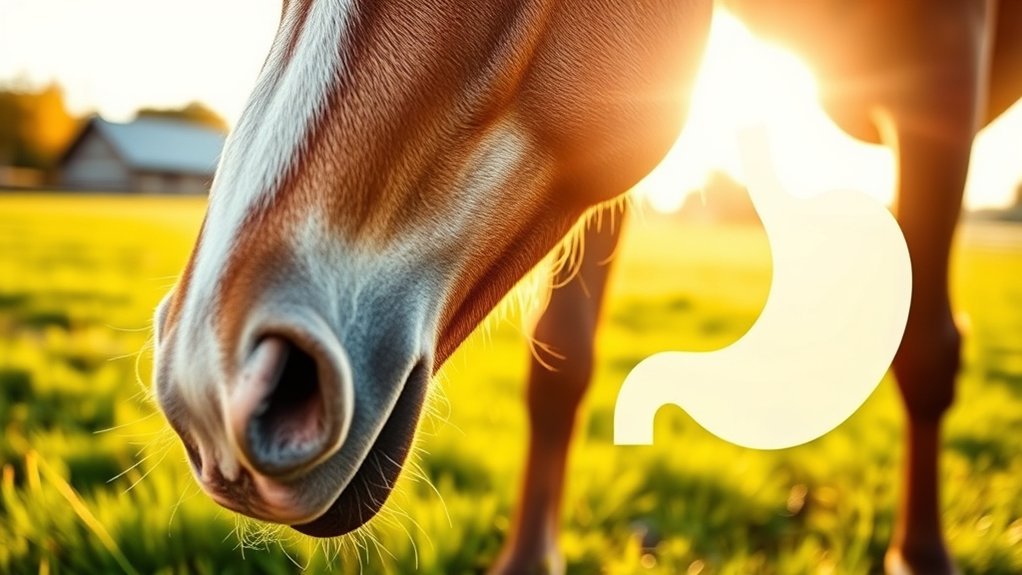
Ruminants process their food through a complex, four-chambered stomach designed for microbial fermentation, but horses digest differently. In horse anatomy, the digestive system features a single stomach, categorizing horses as monogastric animals. Here’s what you need to know:
- Horses have one simple stomach, unlike ruminants with four compartments.
- The single stomach has a limited capacity of about 9-15 liters.
- This small capacity means horses require frequent, smaller meals to optimize digestion.
- Due to this design, the horse’s digestive system is prone to ulcers if feeding is irregular.
Understanding this highlights how the horse’s single stomach shapes its nutritional needs and digestive health, setting it apart from ruminants.
How Horses Chew and Digest Their Food
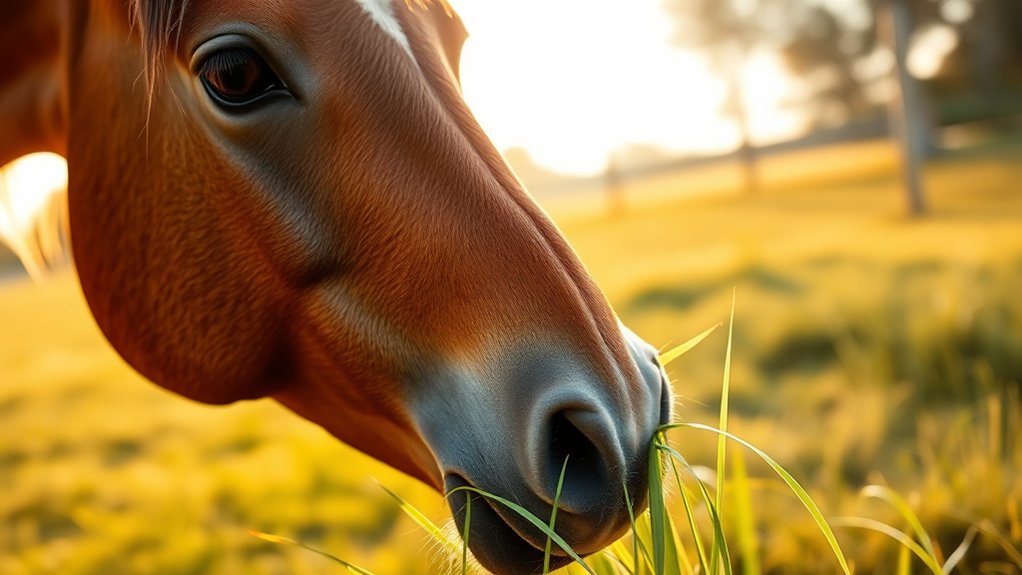
When your horse eats, it uses its lips, tongue, and teeth to grab and chew food. The jaw moves in complex ways, making up to 60,000 sweeps every day.
Saliva is super important because it moistens the feed and helps balance stomach acid, even though it doesn’t have many enzymes for digestion.
Chewing properly is really important, too. If your horse doesn’t chew well, big pieces of food can get stuck and cause choke, which is a common problem when they don’t chew enough.
Chewing Mechanics Explained
Although horses don’t ruminate like cows, they employ complex chewing mechanics to process fibrous plant material efficiently. Their mastication involves precise coordination of teeth, lips, and tongue to guarantee effective breakdown and safe food passage.
Here’s how their chewing mechanics work:
- Horses use large incisors to cut forage and robust molars to grind it thoroughly.
- Their chewing motions include lateral, forward, backward, and vertical sweeps, averaging 60,000 jaw movements daily.
- Continuous tooth wear maintains ideal grinding surfaces for effective mastication.
- Saliva lubricates food, facilitating smooth swallowing and reducing choke risk.
This intricate process allows horses to mechanically digest tough plant fibers, compensating for their lack of rumination and enabling efficient nutrient extraction.
Saliva’s Digestive Role
Beyond the mechanical breakdown of forage through chewing, saliva plays an essential role in the horse’s digestive process. You produce between 20 to 80 liters of saliva daily, which contains bicarbonate to buffer pH and neutralize stomach acid, protecting the stomach lining and optimizing digestion.
While saliva’s amylase activity is minimal, meaning it contributes little to carbohydrate digestion, its primary function remains buffering. As you chew, saliva mixes with feed, facilitating smooth swallowing and preventing gastric irritation caused by excess acidity.
Proper salivation also lubricates the bolus, ensuring efficient transit through the esophagus. Understanding saliva’s role highlights why thorough chewing is critical, not only for mechanical breakdown but also for initiating chemical defense against stomach acid and supporting overall digestive efficiency in horses.
Preventing Choke Risks
How exactly do horses avoid choking on their food? Proper chewing and mastication play critical roles in preventing choke by breaking feed into smaller, manageable pieces. This makes swallowing safer and easier.
You can reduce choke risks by focusing on these factors:
- Maintain the horse’s teeth to ensure effective chewing motions like lateral, forward, and vertical movements. Horses average 60,000 jaw sweeps daily, so healthy teeth are key.
- Provide appropriate feed texture. Smaller, well-processed feed reduces the chance of large boluses getting stuck in the esophagus.
- Use slow feeding techniques such as adding chaff or large stones. These help limit rapid ingestion and encourage thorough chewing.
- Monitor swallowing efficiency closely to catch early signs of choke and intervene quickly if needed.
Anatomy and Function of the Horse’s Foregut Compared to Ruminants
Because horses lack the multi-chambered stomach found in ruminants, their foregut anatomy and function differ markedly. The horse’s foregut consists of a simple, single-chambered stomach and small intestine, where enzymatic digestion and nutrient absorption primarily occur.
In contrast, ruminants possess a complex reticulorumen designed for extensive microbial fermentation within their foregut. You’ll notice the horse’s stomach is comparatively small, holding about 9-15 liters, optimized for frequent, small feedings rather than continuous fermentation.
Unlike ruminants, horses don’t rely on microbial fermentation in the foregut but instead depend on enzymatic processes to break down nutrients before forage passes to the hindgut.
This fundamental anatomical difference in the stomach and foregut function underpins why horses aren’t classified as ruminants.
How Hindgut Fermentation Powers the Horse’s Digestion
Although horses lack the multi-chambered stomach characteristic of ruminants, they efficiently digest fibrous plant material through hindgut fermentation. This process occurs primarily in the cecum, where microbial digestion breaks down cellulose.
Here’s how hindgut fermentation powers your horse’s digestion:
- The cecum acts as a fermentation chamber, housing microbes that degrade fiber.
- Microbial digestion produces volatile fatty acids (VFAs) like acetate, propionate, and butyrate.
- VFAs supply up to 70% of your horse’s energy requirements.
- Feed passes through the cecum in approximately 2-3 hours, allowing efficient fiber digestion.
Through this specialized hindgut fermentation, your horse extracts essential nutrients from high-fiber forage, supporting its herbivorous lifestyle without a ruminant’s complex stomach system.
Major Digestive Differences Between Horses and Ruminants
You’ll notice that horses have a simple, single-chambered stomach. On the other hand, ruminants have a more complex system with four compartments.
In horses, fermentation mainly happens in the hindgut, whereas in ruminants, it takes place in the reticulorumen.
Because of these anatomical differences, their feeding behaviors are quite distinct. Horses tend to graze continuously, while ruminants chew their cud.
Stomach Structure Differences
How does the stomach structure of horses differ so drastically from that of ruminants? The horse’s stomach structure is simple and single-chambered, unlike the complex, multi-compartmented stomach of ruminants. Here are key distinctions:
- Horses have one stomach chamber, while ruminants have four: rumen, reticulum, omasum, and abomasum.
- The ruminant abomasum acts as the “true stomach,” secreting hydrochloric acid and enzymes; horses lack this specialized compartment.
- Microbial fermentation occurs extensively in the ruminant reticulorumen, a feature absent in the horse’s digestive system.
- The horse’s stomach is smaller, designed for rapid digestion of frequent small meals without relying on fermentation chambers.
These differences in stomach structure highlight fundamental variations in digestive strategy between horses and ruminants.
Fermentation Location Contrast
When comparing horses and ruminants, the main difference is where fermentation happens in their digestive systems. Ruminants use microbial fermentation mostly in the rumen, a special stomach compartment. This produces volatile fatty acids that get absorbed right through the stomach lining.
Horses, on the other hand, do hindgut fermentation. Microbial fermentation takes place in the caecum and large colon after food passes through their simple stomach. This difference plays a big role in how nutrients are absorbed and how efficient digestion is.
| Feature | Horse (Non-Ruminant) | Ruminant (e.g., Cattle) |
|---|---|---|
| Stomach Compartments | Single-chambered | Multi-chambered (Rumen) |
| Fermentation Site | Hindgut (Caecum) | Rumen |
| Microbial Fermentation | Post-gastric | Pre-gastric |
| VFA Absorption | Large intestine | Stomach lining |
| Fiber Digestion | Caecal fermentation | Rumen fermentation |
Feeding Behavior Variations
Understanding where fermentation occurs in horses and ruminants sets the stage for examining how their feeding behaviors differ. The distinct digestive anatomy directly influences their feeding behavior and microbial population management.
You’ll notice horses consume small meals frequently, optimizing hindgut fermentation. Ruminants take larger, less frequent meals to maximize rumen fermentation. Key feeding behavior variations include:
- Horses rely on hindgut fermentation; ruminants ferment primarily in the rumen.
- Horses have a simple stomach; ruminants possess a four-chambered stomach.
- Horses don’t regurgitate or rechew food; ruminants do.
- Horses’ smaller stomachs necessitate continuous feeding; ruminants handle bulk meals.
Common Digestive Problems in Horses and How They Differ From Ruminants
Why do horses face unique digestive challenges compared to ruminants? Horses have a simple stomach and rely on hindgut fermentation for microbial digestion, unlike ruminants with their multi-chambered stomachs. This anatomical difference makes horses prone to specific digestive problems such as colic, gastric ulcers, and hindgut acidosis.
Their small stomach limits feed volume, increasing risks of impaction and choke. Also, their hindgut fermentation is sensitive to high grain diets, which can lead to acidosis.
| Digestive Issue | Horses |
|---|---|
| Stomach structure | Simple, small |
| Microbial digestion | Hindgut fermentation |
| Common issues | Colic, gastric ulcers, impaction |
| Acidosis risk | High (hindgut acidosis) |
These problems contrast with ruminants’ more efficient microbial digestion and lower acidosis risk.
Feeding Strategies to Support Healthy Equine Digestion
You should feed your horse small, frequent meals because this mimics its natural grazing behavior and helps reduce gastric stress.
It’s a good idea to prioritize a fiber-rich diet made up of quality forage. This kind of diet helps maintain a healthy balance of gut microbes and supports overall digestion.
Also, always introduce any dietary changes gradually. Doing so can prevent disruptions in the hindgut and lower the risk of colic.
Small Frequent Meals
How often you feed your horse considerably impacts its digestive health. Horses are non-ruminant herbivores relying on hindgut fermentation, so offering small meals throughout the day supports their natural grazing behavior and optimizes digestion.
Feeding large, infrequent meals disrupts stomach pH, increasing acid buildup and ulcer risk.
To improve digestive health, follow these guidelines:
- Provide multiple small meals daily to mimic grazing patterns.
- Ensure continuous forage access to stimulate saliva production, which buffers stomach acid.
- Avoid sudden diet changes to maintain stable hindgut microflora.
- Monitor meal size and frequency to prevent excessive acid accumulation in the stomach.
Fiber-Rich Diets
Because horses rely on hindgut fermentation rather than a multi-chambered stomach, their diet must be rich in fiber to support microbial digestion in the cecum and large colon. You should prioritize forage-based, long-stemmed roughage to optimize fiber digestion and maintain a stable hindgut environment.
This promotes continuous saliva production, which buffers hindgut pH and supports microbial populations essential for fermenting fibrous material. Feeding strategies focused on fiber help prevent disruptions in microbial balance and reduce gastrointestinal disorders.
| Aspect | Recommendation |
|---|---|
| Fiber Source | Long-stemmed forage |
| Meal Frequency | Small, frequent meals |
| Hindgut Health | Maintain stable pH |
| Microbial Support | Consistent fiber intake |
Avoid Sudden Changes
Although a horse’s digestive system is highly efficient at processing fiber, sudden changes in diet can disrupt the delicate balance of hindgut microbes. This microbial imbalance negatively impacts hindgut fermentation, increasing colic risk.
To maintain microbial balance and support healthy digestion, implement gradual feeding strategies when introducing dietary changes.
Key points to avoid digestive disturbances:
- Introduce new feeds gradually over 7-10 days to allow microbial adaptation.
- Avoid sudden increases in grains or concentrates that overwhelm hindgut fermentation.
- Maintain consistent feeding times and forage quality to stabilize stomach pH.
- Monitor for signs of colic during dietary shifts and adjust feeding accordingly.
Why Understanding Horse Digestion Matters to Owners
Since horses have a unique digestive system that relies on hindgut fermentation rather than a multi-chambered stomach like ruminants, you need to tailor their diet carefully.
Understanding these digestive processes is essential because horses ferment fiber in the cecum and large colon, not the stomach. This distinction impacts feeding practices greatly.
By managing feed size, frequency, and forage quality, you optimize nutrient absorption and maintain digestive health. Without this knowledge, horses risk colic, ulcers, and choke.
Properly designed diets support efficient hindgut fermentation, improving performance and reducing health risks.
Ultimately, grasping horse digestion enables you to implement feeding strategies that align with their physiology, ensuring their well-being and longevity.
Frequently Asked Questions
Can Horses Digest Cellulose as Efficiently as Ruminants?
You can’t expect horses to digest cellulose as efficiently as ruminants because their digestive anatomy differs considerably. Horses rely on microbial fermentation in the hindgut, where gut pH balance plays an essential role.
Enzymatic digestion is limited compared to ruminants’ rumen.
This slower, less efficient fermentation reduces nutrient absorption.
Do Horses Produce Methane Like Ruminants During Digestion?
You should know horses produce less than 1% of the methane ruminants emit during digestion. Their anatomy features a simple stomach and relies on hindgut microbial fermentation in the cecum and large colon, not a rumen.
This digestive process supports gut health by efficiently extracting energy with minimal methane.
Adjusting feeding strategies can optimize this fermentation, reducing environmental impact while maintaining digestive efficiency and overall equine wellbeing.
How Does Exercise Affect a Horse’s Digestive Efficiency?
Exercise enhances your horse’s digestive efficiency by stimulating gut motility. This movement helps the enzymatic digestion and fermentation of dietary fiber within its unique hindgut anatomy.
This increased activity supports a balanced gut microbiome, which optimizes nutrient absorption. But intense exercise can divert blood flow away from digestion, temporarily impairing efficiency.
With proper exercise management, your horse’s digestive system maintains effective enzymatic activity and microbial fermentation. These processes are essential for breaking down fiber.
Are There Specific Supplements to Aid Hindgut Fermentation?
You might think all digestive aid comes from probiotics alone, but probiotic supplements paired with digestive enzymes create a powerful combo to boost hindgut health. These supplements help maintain microbial balance, ensuring efficient fiber fermentation in your horse’s cecum and colon.
Can Horses Survive Solely on Forage Without Grain?
Yes, you can support your horse solely on forage if the quality meets all nutritional needs.
In horse nutrition, proper forage digestion guarantees sufficient dietary fiber, fueling hindgut fermentation vital for equine metabolism. This fiber maintains gut health and energy levels.
However, you must carefully balance the diet to avoid deficiencies in protein, minerals, and vitamins.
This is especially important for high-performance or growing horses that may require additional supplements beyond forage alone.
Conclusion
You might picture a horse’s digestive system as a streamlined engine, efficient yet unlike the complex multi-chambered fermenters of ruminants. Unlike cows, horses don’t chew cud or have multiple stomachs. Their single-chambered stomach and hindgut fermentation set them apart.
Understanding these differences helps you tailor feeding strategies that keep your horse’s digestive “machinery” running smoothly. This prevents common issues and promotes ideal health. Knowing this anatomy is key to mastering equine nutrition.