Horse Trail Ride Outfit: 10 Things to Wear
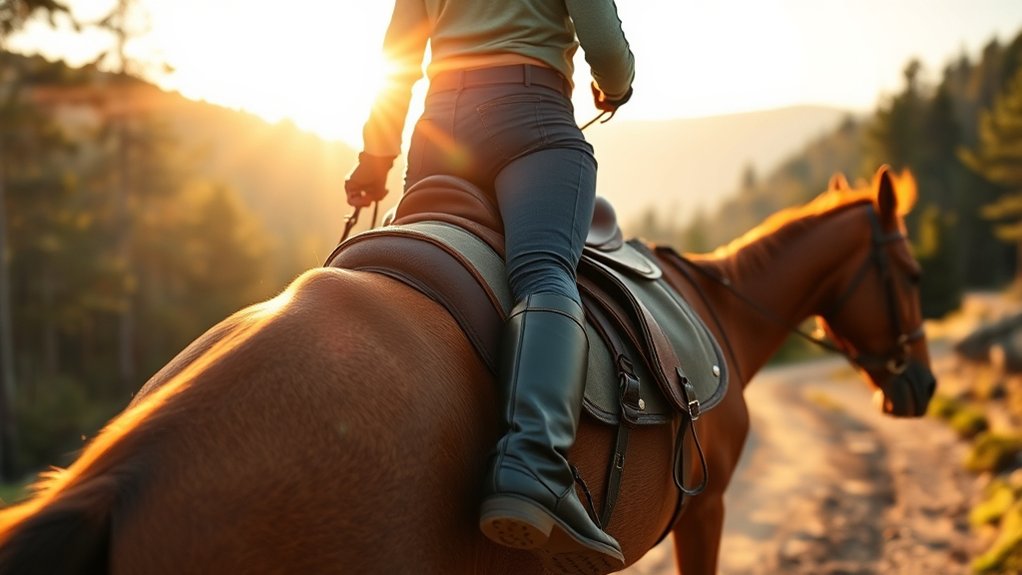
For a safe, comfortable horse trail ride, wear long, durable pants and closed-toe riding boots with a small heel to prevent slipping. Choose a fitted, breathable shirt and layer weather-appropriate outerwear, including waterproof or insulating pieces.
Always wear an ASTM/SEI-certified helmet, secure long hair, and minimize jewelry to avoid snagging. Gloves with reinforced palms help maintain grip and prevent blisters.
Avoid shorts, open-toed shoes, and loose clothing that can catch on branches. Stay prepared to adapt as conditions change and discover how to optimize every element of your outfit.
Choose Long, Durable Pants for Horseback Riding
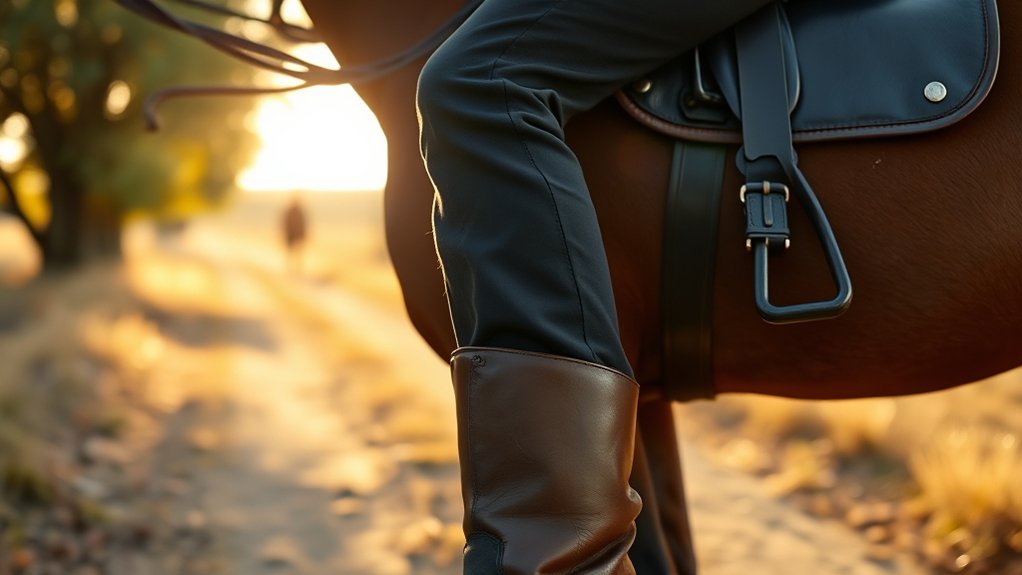
When you head out for a horse trail ride, choosing long, durable pants is essential to protect your legs from saddle chafing and brush along the trail. Opt for long pants made from durable fabrics like denim or reinforced riding tights to withstand rough terrain and prevent tearing.
Full-length coverage shields your skin from scratches, insect bites, and environmental elements, ensuring comfort throughout your ride.
Pants with reinforced knees not only add extra durability but also improve mobility, allowing you to move freely and confidently in the saddle.
Avoid shorts or thin leggings, as they offer little protection and can cause discomfort or injury.
Selecting well-fitted, sturdy long pants is a practical step toward a safer, more enjoyable horseback trail riding experience.
Pick Closed-Toe Riding Boots With a Small Heel
Although choosing the right pants is essential, selecting closed-toe riding boots with a small heel is just as important for your safety and control on the trail.
Closed-toe boots with about a 1-inch heel prevent your foot from slipping through the stirrup, which reduces the risk of accidents.
Closed-toe boots with a 1-inch heel keep your foot secure in the stirrup, enhancing safety.
The small heel also keeps your foot from catching on brush or branches during trail riding.
When picking your boots, focus on these key features:
- A sturdy, non-slip sole for grip on uneven terrain
- A well-fitted design that supports your foot comfortably
- A small heel that ensures secure foot placement in stirrups
These boots optimize your safety, stability, and control, making your trail riding experience much safer and more enjoyable.
Wear a Fitted, Breathable Shirt for Comfort and Safety
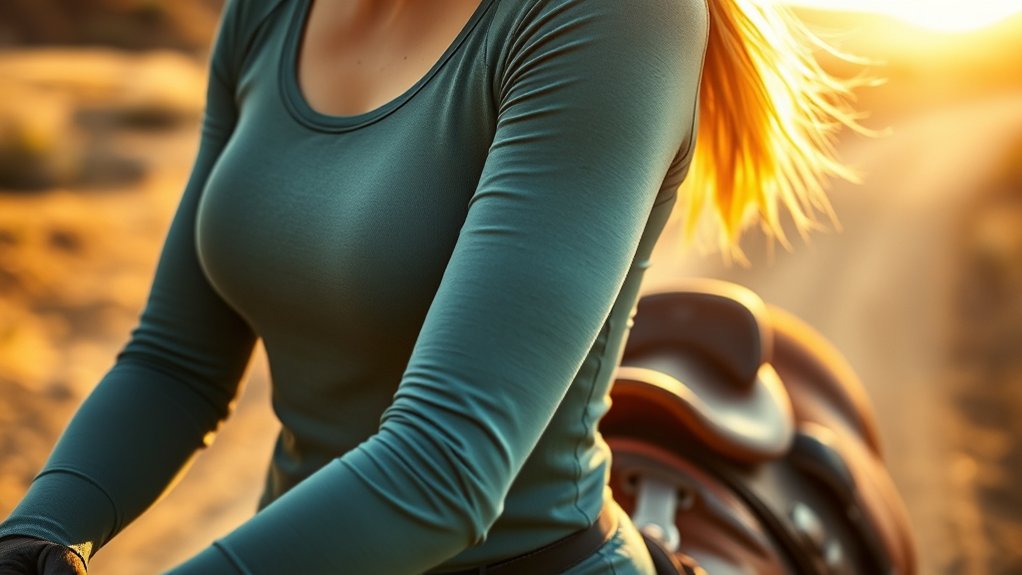
Because your comfort and safety depend heavily on your clothing, wearing a fitted, breathable shirt made from moisture-wicking fabrics is essential for trail riding. Choose a shirt that fits close to your body to prevent excess fabric from catching on branches or saddle parts.
Opt for lightweight, breathable materials like cotton or technical performance fabrics to enhance ventilation and comfort throughout your ride. A moisture-wicking breathable shirt keeps sweat away from your skin, helping you stay dry and comfortable even during intense activity.
Consider long or short sleeves with UPF protection to shield yourself from harmful sun exposure. Avoid loose or flowy tops, as they can tangle in tack or restrict your movement. Prioritizing these features guarantees you stay safe and comfortable on the trail.
Wear an ASTM/SEI-Certified Helmet for Protection
After choosing the right shirt for comfort and safety, the next step is protecting your head with a properly certified helmet. An ASTM/SEI-certified helmet is tested to meet strict safety standards. It’s designed to absorb impact and minimize injury during falls. Wearing one isn’t just smart, it’s often required.
Protect your head with an ASTM/SEI-certified helmet to absorb impact and ensure safety on every ride.
To guarantee maximum protection, remember to:
- Choose a helmet that fits snugly without tilting forward or backward.
- Inspect your helmet regularly and replace it after any significant impact or every few years.
- Prioritize certified helmets regardless of your riding level to reduce risks effectively.
Don’t underestimate the importance of a quality helmet. It’s your best defense against serious head injuries while enjoying your horse trail ride.
Layer Up With Weather-Appropriate Outerwear
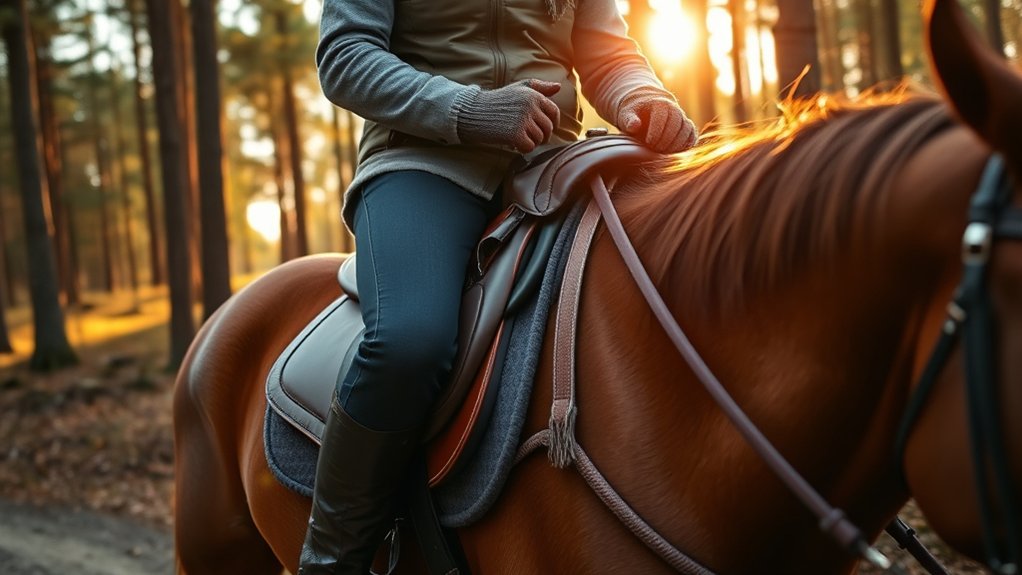
When you prepare for a horse trail ride, layering with weather-appropriate outerwear helps you stay comfortable and adapt to changing conditions. Start with breathable, wind-resistant shells that block wind chill while allowing ventilation.
Add a fleece or insulated vest underneath for extra warmth during chilly mornings or cooler evenings.
For unpredictable weather, bring a lightweight, waterproof rain jacket or vest to guard against rain and wind without restricting your movement.
Layering offers flexibility, letting you adjust your clothing as temperatures fluctuate along the trail. This practical approach to outerwear guarantees you regulate your body temperature effectively and remain comfortable throughout your ride, no matter how the weather changes.
Use Sunscreen and Protective Accessories Like Hats and Sunglasses
You should apply sunscreen with at least SPF 30 and remember to reapply it every two hours to keep your skin protected from harmful UV rays during your ride. It’s a simple step, but it makes a big difference.
Also, think about wearing a wide-brimmed hat or a baseball cap. These help shield your face and neck from the sun’s rays.
And don’t forget UV-protected sunglasses—they cut down glare and keep your eyes safe.
Together, these accessories not only prevent sun damage but also make your ride more comfortable and improve your visibility on the trail. It’s all about staying protected and enjoying the outdoors!
Importance Of Sunscreen
How can you best protect your skin during a horse trail ride under the sun? The key is using sunscreen with at least SPF 30 to block harmful UV rays effectively. Outdoor riding exposes you to prolonged sunlight, so reapplying sunscreen every two hours is crucial, especially if you sweat heavily.
To keep safe and comfortable, remember these essentials:
- Apply broad-spectrum sunscreen generously before and during your ride.
- Wear sunglasses with UV protection to shield your eyes from glare and damage.
- Use hats or caps to add shade, reducing direct sun on your face and neck.
Combining these steps ensures strong UV protection, letting you enjoy your ride without risking sunburn or long-term skin damage.
Protective Hats Selection
Although sunscreen forms the foundation of sun protection, selecting the right hat and sunglasses considerably enhances your defense against harmful UV rays during horse trail rides.
When choosing protective hats, opt for wide-brimmed designs or helmets with built-in sun protection to shield your face and neck effectively.
Confirm your hat meets recognized safety standards such as ASTM/SEI certification to provide necessary impact resistance in case of falls.
Look for breathable, moisture-wicking materials to keep you comfortable and dry throughout your ride.
Pair your hat with UV-protective sunglasses to reduce glare and improve visibility.
Together, these protective hats and accessories deliver all-encompassing sun protection, combining safety and comfort to help you enjoy your trail ride without compromising on health or performance.
Benefits Of Sunglasses
Pairing a high-quality hat with UV-protective sunglasses considerably boosts your overall sun defense on a horse trail ride. Sunglasses with UV protection shield your eyes from harmful UVA and UVB rays, which is vital for maintaining long-term eye safety. They also reduce glare, enhancing your visibility and comfort amid bright sunlight.
Here are three key benefits you’ll appreciate:
- Protect your vision – Sunglasses block up to 100% of harmful rays, lowering cataract risks.
- Reduce eye strain – Proper shading helps you focus longer without fatigue.
- Enhance trail enjoyment – Clearer vision means safer, more confident riding.
Combine sunglasses with sunscreen and a hat to guarantee complete protection against sun damage during your outdoor adventures.
Secure Long Hair and Minimize Jewelry for Safety
When you secure your long hair with a hair tie, braid, or even a hairnet under your helmet, you reduce the risk of it getting caught in the horse’s tack or nearby branches. Keeping your long hair neatly contained prevents distractions and potential accidents during your ride.
In addition, minimize jewelry for safety by removing all earrings, necklaces, and bracelets before mounting. Dangling jewelry can easily tangle with reins or snag on vegetation, posing injury risks.
Opt for no accessories or keep them minimal and secure to maintain focus on riding and control. Prioritizing these simple steps ensures you stay safe and comfortable while enjoying your horse trail ride.
Safety starts with thoughtful preparation, including managing long hair and limiting jewelry.
Opt for Gloves to Prevent Reins From Rubbing Hands
You’ll want gloves that protect your hands from the reins rubbing and causing blisters or discomfort during those long rides. It’s best to look for breathable, moisture-wicking materials because they keep your hands dry and comfortable.
Also, gloves with reinforced palms are great—they make sure your gloves last longer and give you a better grip.
And don’t forget about fit! Your gloves should feel snug but not too tight, and they definitely shouldn’t slip around. That way, you can keep precise control over the reins without any hassle.
Benefits of Wearing Gloves
Although some riders may underestimate their importance, wearing gloves during horseback riding plays a crucial role in preventing the reins from rubbing against your hands and causing painful blisters or calluses. Gloves not only protect your skin but also improve your grip, ensuring you maintain control even in wet or sweaty conditions, which enhances safety.
Furthermore, gloves boost your comfort by reducing hand fatigue on long trail rides.
Here are three key benefits you’ll appreciate:
- Prevent painful blisters and calluses by shielding your hands from direct friction with reins.
- Maintain a secure grip on the reins, improving control and reducing the risk of slipping.
- Enhance comfort by minimizing hand soreness, allowing you to enjoy longer, more enjoyable rides.
Choosing the Right Material
How do you choose the right gloves to keep your hands comfortable and protected on a trail ride? Focus on breathable material that offers both durability and flexibility. Gloves made from leather or synthetic fabrics provide a good grip while preventing reins from rubbing your hands raw.
Breathable gloves also help manage sweat, keeping your hands dry and comfortable during long rides. Moreover, the right material protects against sunburn, wind, and minor scrapes.
| Material Type | Key Benefits |
|---|---|
| Leather | Durable, good grip, breathable |
| Synthetic | Stretchable, lightweight, breathable |
| Mesh Inserts | Enhanced breathability |
| Reinforced Palm | Extra protection and grip |
| Sun Protection | Shields skin from UV rays |
Choose gloves with these features to ensure comfort and control on every trail.
Proper Glove Fit
When selecting gloves for your trail ride, make sure they fit snugly without feeling too tight to maintain both grip and dexterity. Properly fitted gloves prevent the reins from rubbing against your hands, reducing blisters and discomfort. Avoid gloves that are too loose, as they can bunch up and interfere with your control.
To ensure the perfect fit, consider these points:
- Choose gloves that offer reinforced fingertips and palms for durability during long rides.
- Opt for breathable, flexible materials to keep your hands comfortable and sweat-free.
- Confirm the gloves fit securely to prevent reins from slipping, enhancing your riding precision.
With the right glove fit, you’ll protect your hands and maintain a confident hold on the reins throughout your trail ride.
Avoid Unsafe Clothing Like Shorts, Open-Toed Shoes, and Loose Garments
Because horseback riding demands both safety and comfort, you should avoid wearing shorts, open-toed shoes, and loose garments. Shorts leave your legs exposed to saddle chafing and trail hazards. Open-toed shoes lack foot protection and risk slipping from stirrups.
Loose garments can snag on tack or branches, posing significant dangers.
| Clothing Item | Risk Factor | Safety Concern |
|---|---|---|
| Shorts | Expose legs | Saddle chafing, scrapes |
| Open-toed Shoes | Insufficient foot coverage | Slipping, ankle injury |
| Loose Garments | Can catch on objects | Movement restriction, injury |
Choosing fitted pants, closed-toe boots, and well-fitted clothes guarantees your safety and comfort throughout your horse trail ride.
Prepare Your Outfit for Seasonal Changes and Weather
You’ll want to layer lightweight, breathable fabrics like moisture-wicking shirts with fleece or vests so you can easily adjust as the temperatures shift. It’s all about staying comfortable no matter what the weather throws at you.
For your legs, go with full-length riding pants made from durable materials—they’ll protect you and keep you comfortable throughout your ride.
And don’t forget to always have some weather-resistant outerwear on hand. That way, you’ll stay dry and warm if you get caught in unexpected rain or chilly mornings.
Seasonal Layering Strategies
As temperatures shift throughout your ride, layering lightweight, moisture-wicking base garments made from breathable fabrics like performance shirts or leggings helps you stay comfortable and dry. To adapt effectively, focus on these key layering strategies:
- Add insulating layers such as fleece or thermal vests to trap warmth during cooler moments. These layers are easily removable as conditions change.
- Wear weather-resistant outer layers like waterproof jackets or vests to shield yourself from rain, wind, and mud without sacrificing mobility.
- Use versatile accessories like neck warmers, hats, and gloves that you can quickly add or remove to regulate your body temperature.
Weather-Appropriate Fabrics
Managing layers effectively sets the foundation for selecting the right fabrics to match your trail ride conditions. Start with lightweight, moisture-wicking materials like performance polyester or nylon to keep sweat away and maintain comfort.
Add insulating layers such as fleece or thermal base layers to stay warm without adding bulk during colder rides.
On wet or windy days, include weather-resistant pieces like waterproof shells or windbreakers to shield you from rain and chill.
For warmer months, choose breathable fabrics featuring mesh or perforated details to enhance airflow and prevent overheating.
Don’t forget versatile options like rain ponchos or lightweight vests, which let you quickly adjust to sudden weather changes.
Frequently Asked Questions
How Should I Pack a Trail Ride Emergency Kit?
You should pack a trail ride emergency kit by prioritizing trail ride safety and weather preparedness. Include essential first aid supplies, weather-appropriate gear like a rain poncho and extra layers, and trail navigation tools such as a fully charged phone with GPS.
Add a multi-tool, spare halter, and hoof pick for quick fixes. Organize everything in a compact, waterproof bag for easy access, ensuring you’re ready for any unexpected situations on the trail.
Can I Wear Makeup on a Horse Trail Ride?
Yes, you can wear makeup on a horse trail ride, but focus on makeup longevity tips like using waterproof, oil-free products to withstand sweat and weather.
Choose suitable makeup products such as lightweight mascara, tinted sunscreen, and a subtle blush for a natural look rather than bold looks that may smudge or irritate.
Keep it minimal to guarantee comfort and safety while maintaining a fresh, effortless appearance throughout your ride.
What Type of Saddlebag Is Best for Trail Rides?
Don’t worry about bulky bags throwing off your ride. The best saddlebag for trail rides combines durable materials like waterproof nylon or leather with a balanced capacity. It should be enough to carry essentials but light enough not to burden your horse.
Prioritize saddlebag security. Adjustable straps keep it firmly in place without bouncing. Choose multiple compartments to stay organized.
And if you ride early or late, reflective strips boost your visibility and safety on the trail.
How Do I Clean My Riding Boots After a Trail Ride?
After your trail ride, start by wiping your boots with a damp cloth to remove dirt. Use a soft brush for stubborn grime, just like you do during horse grooming to keep equipment clean.
If your boots are leather, apply leather conditioning to maintain flexibility and shine. Don’t forget boot waterproofing to protect them from moisture.
Let your boots air dry naturally, avoiding direct heat.
Store them properly to keep their shape and durability.
Are There Specific Colors to Avoid for Trail Riding Outfits?
About 70% of horses get startled by bright colors, so you should avoid neon shades when picking your trail riding outfit. Focus on color coordination tips that favor solid, muted tones to keep your horse calm.
Choose breathable clothing materials for comfort and consider sun protection essentials like UV-blocking fabrics and hats.
This practical approach guarantees you stay comfortable and safe while preventing distractions during your ride.
Conclusion
Saddle up with confidence by choosing gear that fits like a second skin: durable pants, trusty boots, and a helmet that guards your crown. Think of your outfit as your armor, shielding you from the elements and mishaps alike.
Layer smartly, tuck away loose strands, and keep your hands protected to ride smoothly through any trail. With these essentials, you’re not just dressed—you’re ready to conquer the ride safely and comfortably.