What Does a Horse Trainer Do?
As a horse trainer, you’ll assess each horse’s temperament and condition to tailor training that improves behavior and physical fitness. You’ll use consistent cues and positive reinforcement to teach obedience, groundwork, and riding skills, while monitoring stress to adjust methods.
Collaboration with owners and vets guarantees the horse stays healthy and progresses safely. Balancing patience with expertise, you guide horses toward performance goals.
There’s much more to explore about how you can master these essential skills and roles.
The Role of a Horse Trainer
What exactly does a horse trainer do to shape a horse’s behavior and skills? As a horse trainer, you carefully assess each horse’s temperament and physical condition to choose the best training methods.
You observe how the horse responds to commands and exercises, adjusting your approach to suit its unique needs.
Your role goes beyond teaching basic obedience. You prepare horses for competitions or daily handling by building on their skills progressively.
Monitoring horse behavior closely helps you spot stress or discomfort early, ensuring safety and effectiveness.
You also work alongside owners, riders, veterinarians, and farriers, creating a network that supports the horse’s overall health and performance.
Through attentive observation and thoughtful training, you guide horses toward their full potential.
How Trainers Create Training Plans That Work
When you create a training plan, you begin by taking a close look at the horse’s temperament, physical condition, and skill level. It’s all about understanding what makes that horse unique.
Then, you tailor the program to fit those specific needs, making sure the exercises help build strength and confidence without risking injury.
As you go along, you keep an eye on how the horse responds, so you can tweak the routine as needed to keep progress steady and effective.
Assessing Horse Needs
Before creating an effective training plan, a horse trainer carefully evaluates each horse’s temperament, physical condition, and behavioral responses. This thorough assessment helps you understand the horse’s unique needs and capabilities.
You’ll consider factors like age, discipline, and prior training to select suitable exercises and progression levels. Observing behavior during groundwork and riding sessions reveals strengths and areas needing improvement, guiding your approach.
You also assess physical condition closely, noting any lameness, injury, or illness, and collaborate with veterinarians to adjust training plans accordingly.
Regular monitoring lets you track progress and make data-driven changes to guarantee the horse develops effectively and stays healthy.
This detailed evaluation forms the foundation for effective, personalized training plans tailored to each horse’s needs.
Tailoring Training Programs
Although every horse responds differently, you can create an effective training plan by carefully tailoring exercises to its temperament, physical condition, and skill level.
By evaluating horse needs thoroughly, you develop personalized training plans that set measurable goals, like improving gait or strength, based on the horse’s discipline and age.
Incorporate a mix of groundwork, lunging, and riding to build strength and confidence step by step.
You’ll monitor progress closely, adjusting the program as needed to address behavioral changes or physical concerns.
Remember to balance workload and recovery to prevent injury and support long-term development.
This observant, patient approach ensures your training plans not only meet each horse’s unique needs but also promote steady, meaningful progress throughout their training journey.
Teaching Basic Obedience and Groundwork to Horses
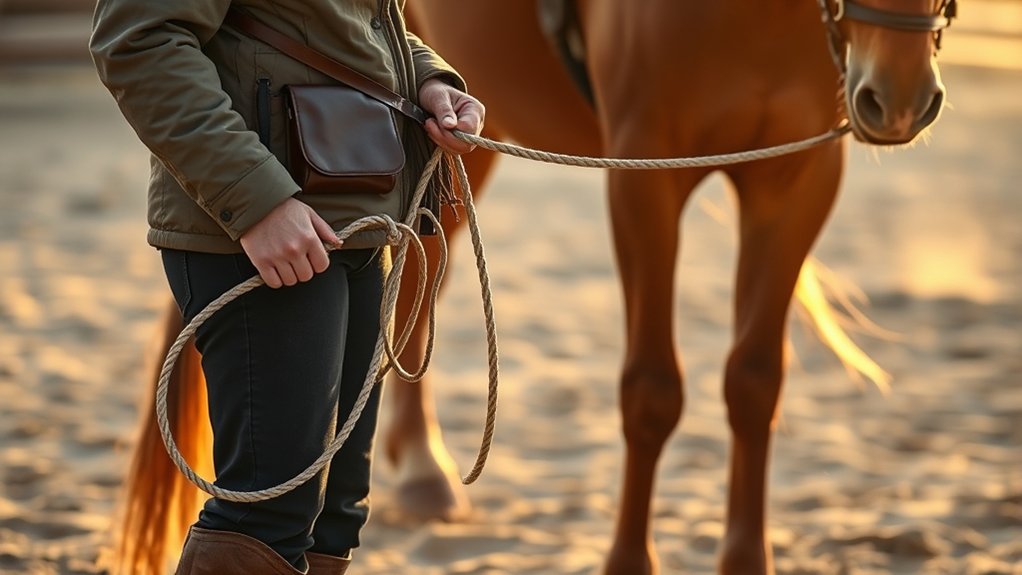
How do you begin building a strong relationship with a horse? You start by teaching essential ground manners, such as leading politely, standing still, and picking up feet. These basics guarantee safe handling and set clear expectations.
Using positive reinforcement, you reward the horse for polite behavior, which helps build trust and encourages cooperation. Incorporating groundwork exercises like lunging develops the horse’s balance and responsiveness, reinforcing respect for your commands.
Basic obedience training also includes desensitizing the horse to new objects and environments, reducing fear and resistance.
Managing Horse Behavior and Conditioning
Once your horse understands basic obedience and groundwork, the next step is managing its behavior and building physical conditioning. You’ll develop conditioning routines tailored to improve stamina, strength, and overall physical fitness.
Pay close attention to your horse’s temperament and responses during training. Adjust methods to address issues like fear or resistance through desensitization techniques.
Consistent cues and positive reinforcement help shape desired horse behavior, fostering cooperation. Regularly monitor your horse’s health to prevent injuries and support steady progress.
By balancing behavioral management with physical conditioning, you create a foundation for a well-rounded, responsive horse.
This patient, observant approach guarantees your training not only builds fitness but also encourages trust and reliability in your horse’s behavior.
How Horse Trainers Prepare Horses for Riding and Performance
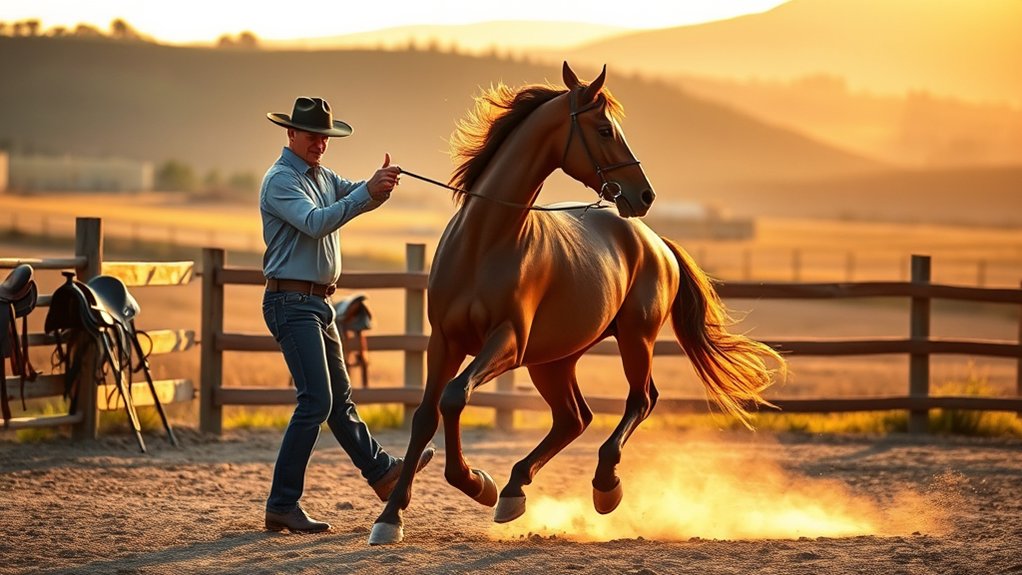
Preparing a horse for riding and performance requires carefully designed routines that build obedience, balance, and responsiveness both on the ground and under saddle. You’ll use horse training methods like ground work to introduce new movements, gaits, and obstacles gradually.
Evaluating the horse’s physical condition and temperament lets you customize sessions that improve performance safely. Positive reinforcement and desensitization boost confidence and reduce fear, helping the horse stay calm and focused.
| Training Focus | Techniques Used | Expected Outcome |
|---|---|---|
| Obedience | Ground work, cues | Reliable responsiveness |
| Balance | Riding exercises | Improved stability |
| Confidence | Desensitization | Reduced fear, calmness |
| Performance | Discipline-specific | Ready for competition |
You’ll monitor progress closely and adjust training as needed to ensure steady improvement.
Where Horse Trainers Work and Train Horses
You’ll find horse trainers working in all kinds of places. Some are at well-equipped barns or riding academies, while others train horses on private ranches or at racetracks. They usually have specialized arenas and pens right there on-site, which makes training more convenient.
But that’s not all—they often travel too. Whether it’s heading to competitions or visiting clients’ properties, trainers adapt to wherever they need to be.
Knowing about these different settings gives you a better idea of how trainers change up their methods depending on the location and what the horse or rider needs.
Training Facilities Overview
Where do horse trainers spend most of their time honing equine skills? They work primarily in training barns and stables designed to provide a safe, controlled environment for both horses and trainers.
Indoor arenas offer a reliable space for riding and ground exercises regardless of weather, while outdoor paddocks allow horses to move freely. Trainers rely on specialized equipment like round pens, lunging areas, and riding arenas to develop obedience and refine skills.
These facilities often include grooming stations and veterinary care areas to maintain horse health. Safety features such as secure fencing and appropriate footing ensure effective training sessions.
On-Site And Off-Site
Although horse trainers spend much of their time at specialized facilities like barns, arenas, and paddocks, they also frequently travel to off-site locations such as competitions, client farms, and racing tracks. You’ll find yourself working daily in training barns where horses develop skills and fitness.
However, off-site training is equally important. You often transport horses using trailers to attend horse shows, competitions, or veterinary appointments. Balancing on-site routines with off-site commitments requires careful coordination of your schedule.
This dual approach lets you provide consistent training while adapting to various environments, whether at your home facility or a client’s location. Understanding the nuances of both settings enhances your ability to prepare horses effectively for diverse challenges and guarantee their peak performance.
Skills Every Horse Trainer Should Master
Mastering certain skills is essential if you want to become an effective horse trainer. Training horses requires a deep understanding of horse behavior to read subtle cues accurately.
You’ll need physical fitness to manage the demands of handling and keep control safely. Strong communication skills also play a crucial role, enabling you to convey instructions clearly and empathetically to both horses and handlers.
Focus on these core skills:
- Interpreting equine body language for precise training adjustments
- Exercising patience and consistency when shaping behaviors
- Maintaining physical fitness for safety and endurance
- Developing clear, empathetic communication with riders and staff
Working With Owners and Veterinarians: Trainer’s Role
You’ll work hand-in-hand with owners and veterinarians to make sure the horse stays healthy while you customize training plans. It’s all about keeping the lines of communication open—sharing progress updates and raising any concerns as they come up.
This way, everyone knows what’s going on and expectations stay clear.
When everyone’s on the same page, it really helps keep the horse feeling good and moving toward those training goals. Teamwork like this makes all the difference!
Coordinating Horse Health
When coordinating horse health, trainers play a crucial role by working closely with owners and veterinarians. This teamwork guarantees each horse remains fit and sound for training and competition.
You need to monitor health continuously and adjust training routines based on veterinary guidance. This helps address any injuries or illnesses promptly.
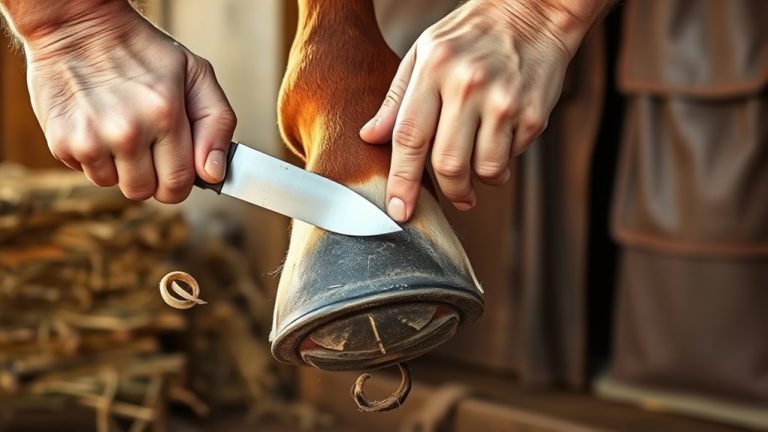
Preventive care is key, so you prioritize regular health checks and early problem detection. Maintaining communication with farriers and saddle fitters also prevents hoof or equipment issues that can impact performance.
Here are essential tasks you manage:
- Collaborate with veterinarians on diagnosis and treatment plans.
- Adapt training routines following veterinary advice.
- Implement preventive care strategies to maintain overall horse health.
- Coordinate with farriers and saddle fitters to prevent related health problems.
Communicating Training Progress
Coordinating health is just one part of your role; keeping owners and veterinarians informed about training progress is equally important. You regularly communicate detailed updates on milestones, fitness levels, and any behavioral changes to owners, helping them stay connected to their horse’s development.
At the same time, you collaborate closely with veterinarians, sharing observations to address potential health issues swiftly. This partnership allows you to adjust training plans based on medical advice and guarantees the horse’s well-being throughout the process.
Managing Owner Expectations
How do you guarantee owners stay confident and realistic about their horse’s progress? Managing owner expectations requires clear communication and a well-structured training plan.
You must keep owners informed of training milestones while incorporating veterinary advice to adjust regimens as needed.
Acting as a bridge between veterinarians and owners, you translate medical insights into practical strategies.
Focus on these key steps:
- Regularly update owners on progress and health status.
- Explain realistic timelines based on the horse’s condition.
- Collaborate with veterinarians to tailor the training plan.
- Set achievable goals aligned with the horse’s temperament and age.
Education, Apprenticeships, and Licensing for Horse Trainers
Although formal education isn’t always mandatory, gaining practical experience through apprenticeships is essential for developing the hands-on skills you’ll need as a horse trainer. Working under seasoned professionals allows you to observe techniques and build confidence with horses.
While courses in equine science or animal behavior can deepen your knowledge, many trainers rely primarily on apprenticeships to learn the trade.
Depending on where you work, licensing or certifications may be required to operate legally and boost your credibility.
Programs offered by organizations like the Certified Horsemanship Association (CHA) or the American Association of Professional Horsemen (AAPH) provide valuable credentials.
Combining apprenticeships, ongoing education, and meeting licensing standards will prepare you well and enhance your professional standing in this field.
What Influences a Horse Trainer’s Earnings and Career Growth
When you consider what influences a horse trainer’s earnings and career growth, several key factors come into play. As a trainer, your income and opportunities largely depend on your experience and success in the field. Here’s what shapes your career:
- Experience and Reputation: The more you train and succeed, especially with high-profile horses, the higher your earnings.
- Location: Earnings vary considerably by region, with some areas offering better pay.
- Certification and Licensing: Formal qualifications can open doors to advanced roles and increased income.
- Additional Income Streams: Prize money, sponsorships, and specialized coaching fees boost your financial potential.
Understanding these factors helps you strategically grow as a horse trainer, maximizing both your earnings and career longevity.
Frequently Asked Questions
How Do Horse Trainers Handle Emergencies During Training Sessions?
When emergencies arise during training, you stay alert to horse behavior changes and act swiftly. You follow emergency protocols by stopping all activity, calming the horse, and evaluating the situation carefully.
Wearing safety gear like helmets and gloves is part of your trainer responsibilities to protect yourself. You’re ready to administer basic first aid and communicate rapidly with veterinary professionals to ensure the horse’s safety and well-being throughout the session.
What Daily Health Checks Are Performed on Horses by Trainers?
You start daily health checks by performing behavioral assessments to spot any changes in mood or movement.
You monitor nutrition planning closely, ensuring each horse eats well and shows no appetite issues.
Hoof care is essential too; you inspect for cracks or discomfort.
You also review vaccination schedules regularly, making sure everything’s up to date.
These steps, combined with observing for injuries or illness, keep your horses healthy and ready to train.
How Do Trainers Decide When a Horse Needs Rest Instead of Training?
You decide a horse needs rest by closely watching for horse fatigue, injury signs, and behavioral cues like resistance or reluctance during sessions.
When the horse slows down or shows soreness despite meeting training milestones, it’s a clear signal to pause.
You also consider its age and training history to avoid overtraining.
What Specific Equipment Do Trainers Use During Horse Training?
You know the saying, “Don’t put the cart before the horse.” When training, you rely on essential equipment like bridles, saddle pads, side reins, and lunging lines to shape behavior and apply training techniques effectively.
You focus on horse grooming and equipment maintenance to keep your horse comfortable and responsive.
Observing behavior closely, you adjust your methods, ensuring every piece of gear supports clear communication and a smooth training session.
How Do Trainers Communicate With Riders About a Horse’s Progress?
You’ll experience clear horse communication as trainers use rider feedback and progress assessment to keep you informed. They observe your horse closely, sharing insights about behavior and responsiveness.
Trainers discuss training techniques tailored to your horse’s needs, providing detailed updates and coaching tips.
Through regular meetings and honest dialogue, you’ll understand your horse’s development fully.
This lets you adjust your approach and improve both your riding skills and your horse’s performance.
Conclusion
As a horse trainer, you blend timeless wisdom with modern techniques, much like a knight wielding both sword and smartphone. You craft tailored plans, guide horses patiently, and coordinate with owners and vets to guarantee peak performance.
Mastering these skills takes dedication, education, and hands-on experience. Remember, your role shapes not just the horse’s behavior but the bond you build, proving that training is as much an art as it is a science.