What Do Friesian Horses Eat?
You feed your Friesian horse primarily high-quality grass hay and fibrous forage, ensuring they get 1.5 to 2.5% of their body weight daily to support digestion. Avoid alfalfa hay due to its high protein and calcium, which can cause metabolic issues.
Grain supplements can be added cautiously, limiting starch intake and shifting gradually. Fresh water and salt are essential for balance.
Understanding these basics sets the stage for optimizing your Friesian’s overall diet and health.
What Is the Natural Diet of Friesian Horses?
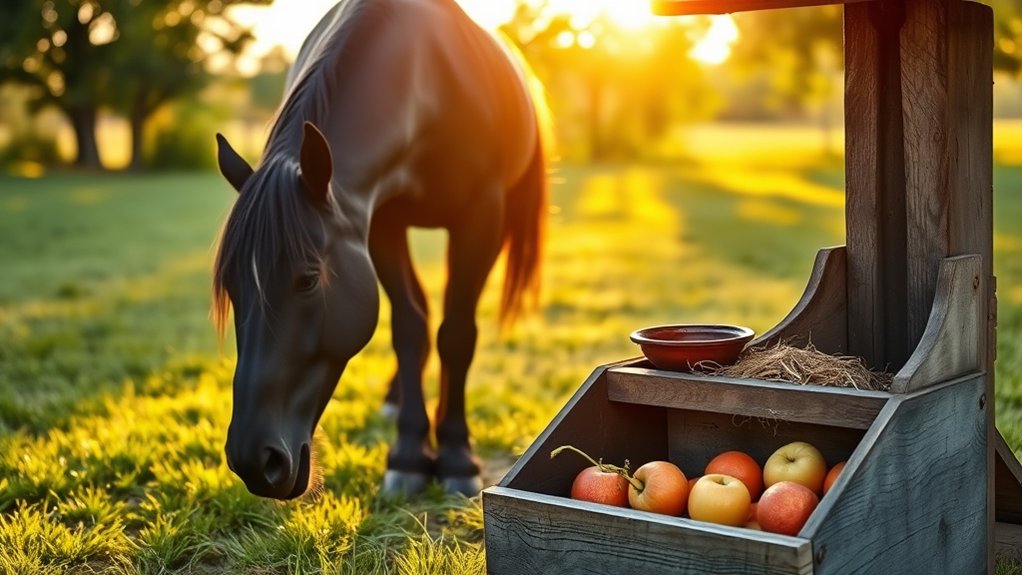
Although Friesian horses are often admired for their striking appearance, their natural diet plays a crucial role in maintaining their health and vigor. You’ll find that Friesians, as herbivores, primarily consume high-quality grasses and fibrous forage like grass hay.
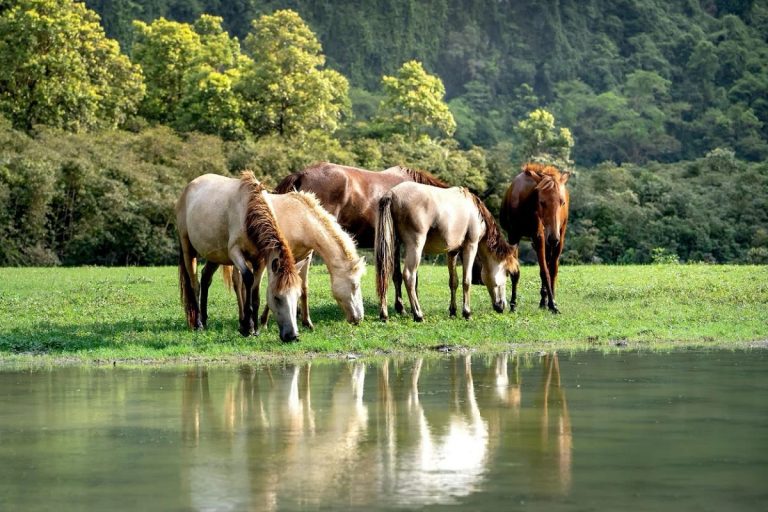
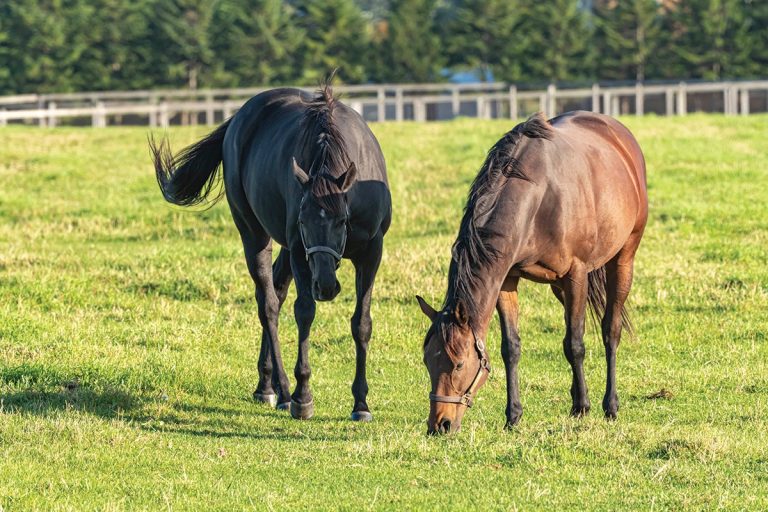
Their digestive system relies heavily on microbial fermentation in the large intestines to break down these fibrous plants efficiently. In the wild, they graze continuously on various plants, including legumes and herbs, but grasses and fibrous forage remain the foundation of their diet.
This high-fiber, low-starch diet suits their digestive adaptations, promoting ideal nutrient absorption and gut health. When feeding Friesians, it’s essential to replicate this natural intake of grass hay and quality forage to support their well-being effectively.
How Much Forage Should a Friesian Eat Daily for Optimal Feeding?
You should give your Friesian about 1.5 to 2.5% of its body weight in good-quality forage every day. It’s best to focus on grass hay that’s low in starch and sugar.
So, for a horse that weighs around 590 kg, that works out to roughly 9 to 15 pounds of hay daily.
Of course, you’ll want to adjust this amount depending on how active your horse is and the season.
Always keep an eye on the quality of the forage, and it’s a good idea to check in with your vet regularly to make sure the feeding plan fits your horse’s specific needs.
Daily Forage Intake
When determining how much forage your Friesian should eat daily, aim for 1.5 to 2.5% of its body weight. This translates to about 9 to 15 pounds of hay for a 590 kg (1,300 lb) horse. This range guarantees your horse receives adequate fiber for digestion and energy without excess calories.
Keep these points in mind for daily forage intake:
- Provide high-quality grass hay like Timothy or Orchard grass. Focus on mid-maturity and low sugar content.
- Monitor total hay quantity closely to match 1.5–2.5% of your Friesian’s body weight, adjusting for activity and metabolism.
- Use pasture grazing as a supplement but control access to avoid overeating, especially in horses prone to weight gain.
Following these guidelines supports your Friesian’s health and weight management effectively.
Forage Quality Importance
Because forage forms the foundation of a Friesian’s diet, its quality directly impacts your horse’s health and well-being.
For ideal feeding, your Friesian should consume about 1.5-2.5% of its body weight daily in high-quality forage.
For an average 590 kg Friesian, this means 9 to 15 kg of suitable hay, primarily grass hay.
High-quality forage is low in starch and sugar, helping prevent obesity and metabolic issues common in Friesians.
Ensuring forage quality means regular analysis and adjusting intake based on your horse’s age, activity, and health.
Which Hay Types Are Best for Friesians?
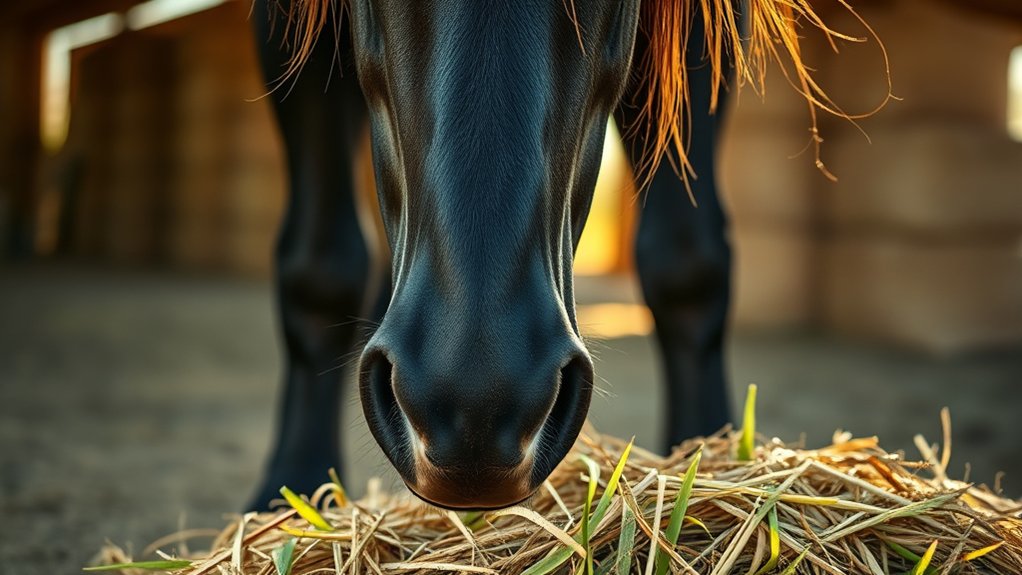
Although various types of hay exist, high-quality grass hay like timothy, orchard grass, or Kentucky bluegrass stands out as the best choice for Friesians. These hays, harvested during late bloom, provide ideal nutrition and balanced fiber essential for digestion.
You should prioritize second-cut hay, which contains more leaves, a sweeter smell, and higher protein and fat content. This is perfect for Friesians’ dietary needs.
Avoid hay that’s dusty, moldy, or faded, as it can trigger allergies or respiratory problems.
Here are three key factors to contemplate when selecting hay:
- Choose high-quality grass hay harvested early to maximize digestibility.
- Opt for second-cut hay for improved nutrient density.
- Ensure hay is properly stored to prevent dust and mold buildup.
Why Alfalfa Isn’t the Best Choice for Friesians
Since Friesian horses are prone to metabolic issues and weight gain, you should avoid feeding them alfalfa hay. Its high protein and calcium content can make these problems worse, increasing the risk of obesity and laminitis.
Instead, focus on a balanced diet with low-protein forage like grass hay to keep your Friesian healthy. Alfalfa hay’s nutrient density might disrupt digestion and metabolic balance in these horses.
| Nutrient | Alfalfa Hay | Grass Hay |
|---|---|---|
| Protein (%) | 18-22 | 8-12 |
| Calcium (%) | 1.2-1.5 | 0.3-0.5 |
| Starch (%) | Moderate | Low |
| Risk for Friesians | High (metabolic issues) | Low (safer diet) |
| Recommended | Avoid | Preferred |
Should You Supplement Your Friesian With Grain?
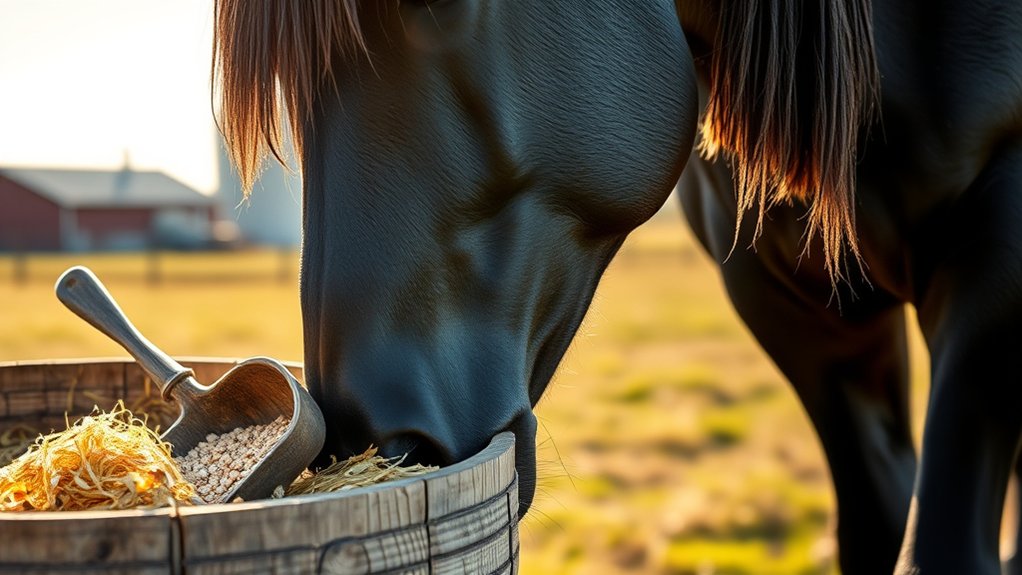
You can definitely supplement your Friesian with grain to give it some extra energy and nutrients. Just make sure to keep the portions small so you don’t cause any digestive problems.
A good rule of thumb is to limit starch intake to less than 2 grams per kilogram of your horse’s body weight per meal. This helps keep the microbial fermentation in their gut healthy.
It’s also a good idea to introduce grain gradually and spread it out over several small feedings. Doing this supports proper digestion and lowers the chances of colic or metabolic issues.
Benefits Of Grain
How can grain supplementation benefit your Friesian horse? Adding grain to your horse’s diet can help meet its nutritional needs, especially if it’s in heavy work or training. Grain provides extra energy that forage alone mightn’t supply, supporting weight maintenance or gain while preserving digestive health.
Consider these key benefits of grain:
- Supplies concentrated energy to fuel performance and recovery.
- Processed grains like oats improve digestibility, reducing fermentation risks.
- Supports balanced nutrition when tailored to individual requirements.
You should introduce grain gradually and monitor intake closely. Keep portions small, generally under 2 grams of starch per kilogram of body weight per meal, to avoid digestive upset. Properly managed grain supplementation enhances your Friesian’s health without compromising gut function.
Grain Feeding Limits
Why should you limit grain feeding for your Friesian horse? Excessive grain, especially starch, can cause serious digestive issues.
Friesians should consume no more than 2 grams of starch per kilogram of body weight per meal to avoid undigested starch reaching the large intestine.
When starch reaches the large intestine, it disrupts the microbial balance and leads to lactic acid buildup. This lowers pH, increasing the risks of colic and laminitis.
While small amounts of processed grains like oats are acceptable, large grain meals pose health hazards.
Friesians thrive primarily on forage-based diets, with grain supplements used sparingly and divided into multiple small feedings.
Carefully controlling grain intake helps maintain gut health and prevents fermentation problems, ensuring your Friesian stays healthy and performs well.
Grain Transition Tips
Although Friesian horses primarily thrive on forage, supplementing their diet with grain can be beneficial in certain situations, like increased workload or nutritional gaps. When you decide to add grain, shift gradually to protect their sensitive digestive system.
Here are essential tips:
- Introduce grain gradually over 7-10 days to allow the digestive tract to adjust and avoid upset.
- Choose processed grains to improve starch digestibility and reduce the risk of undigested starch reaching the hindgut.
- Consult an equine nutritionist to determine the appropriate grain type and amount based on your Friesian’s age, weight, and activity level.
Careful transition and monitoring help prevent fermentation issues and maintain digestive health while supplementing forage with grain.
How to Balance Fiber and Starch in Friesian Diets
When managing your Friesian’s diet, you need to prioritize a balance between fiber and starch to maintain ideal digestive health. High-quality forage like grass hay should form the diet’s foundation, supplying essential fiber that supports hindgut microbial fermentation.
Limit starch intake from grains to no more than 2 grams per kilogram of body weight per meal to prevent fermentation imbalances. Excess starch can lower gut pH, harming beneficial microbes and increasing risks of colic and laminitis.
To meet energy needs without compromising gut health, incorporate easily digestible fiber sources such as beet pulp or soy hulls.
Spread grain meals into smaller, multiple feedings throughout the day, emphasizing forage consumption to maintain microbial balance and promote overall digestive stability in your Friesian horse.
How to Safely Transition Friesians to New Feeds
Because Friesians have sensitive digestive systems, you need to introduce new feeds gradually over at least 7 to 10 days. This slow changeover helps prevent digestive upset and maintains gut microbial balance.
To guarantee a safe feed change, follow these key steps:
- Start by mixing a small amount of the new feed into their current diet, gradually increasing the proportion daily.
- Monitor your Friesian closely for signs of colic, diarrhea, or discomfort throughout the shift period.
- Avoid abrupt feed changes, especially with high-starch grains, to protect their delicate digestive system.
Consulting an equine nutritionist or veterinarian can help tailor a progression plan specific to your Friesian’s needs, ensuring a smooth and safe dietary adjustment.
What Vitamins and Minerals Does a Friesian Need in Its Diet?
To keep your Friesian healthy and performing well, you must provide a diet rich in key vitamins and minerals tailored to their specific needs. Essential minerals like calcium, phosphorus, magnesium, zinc, and selenium support bone health and overall physiology.
Vitamins A, D, and E play vital roles in immune function, muscle development, and calcium absorption. Vitamin E specifically helps prevent muscle atrophy and aids recovery.
Furthermore, vitamin K is indispensable for proper blood clotting and bone metabolism.
Since forage forms the diet’s base, regularly analyzing its vitamin and mineral content ensures your Friesian receives balanced nutrition. Adjust supplements based on your horse’s age, activity level, and health to maintain optimal levels and support their well-being effectively.
How to Manage Water and Salt Intake for Friesians
You should always make sure your Friesian has constant access to clean, fresh water. They typically need around 12 gallons a day, especially when it’s hot outside or after a heavy workout.
It’s also a good idea to offer daily salt supplements. This could be in the form of salt licks or loose salt, usually about 12 ounces. This helps keep their mineral balance and electrolyte levels just right.
Water Access Essentials
Although Friesian horses thrive with a steady supply of clean, fresh water, managing their intake requires careful attention to both quantity and quality. Proper hydration is essential for digestion and overall health, so monitoring water intake and maintaining accessible water sources is critical.
To guarantee ideal water access:
- Provide approximately 12 gallons daily, increasing during exercise or hot weather.
- Keep water sources clean, fresh, and thawed in cold weather to prevent freezing.
- Regularly observe Friesians to prevent dehydration or overconsumption, especially in those prone to metabolic issues.
Salt Supplement Importance
Because Friesian horses rely heavily on maintaining a proper electrolyte balance, managing their salt intake is just as important as guaranteeing they’ve access to clean water.
You should provide about 12 ounces of loose salt daily or offer free-choice salt blocks in their stalls to encourage natural consumption.
This approach helps prevent electrolyte imbalances and supports overall health.
Proper water intake is vital alongside salt supplementation, so constant access to fresh, clean water is a must.
Keep in mind, excessive salt can cause dehydration or water retention, so adjust salt levels based on activity and environmental conditions.
Monitoring both water and salt consumption, especially during hot weather or intense exercise, ensures your Friesian stays hydrated and performs at its best without risking electrolyte disturbances.
Feeding Tips for Young and Growing Friesian Horses
When raising young Friesian horses under four years old, providing a balanced diet rich in high-quality forage like grass hay is essential to support their rapid growth. To guarantee optimal development, follow these key feeding tips:
- Introduce concentrates such as senior feed or low-starch pellets gradually over several weeks. This helps avoid digestive upset and encourages healthy weight gain.
- Limit grain intake to keep starch below 2 grams per kilogram of body weight per meal. Doing this prevents fermentation issues and colic.
- Include digestible fiber sources like beet pulp or soy hulls to supply energy while promoting gut microbial health.
Regularly monitor your young Friesian horses’ weight and condition. Adjust feed amounts to maintain a balanced diet without risking obesity or metabolic problems.
Frequently Asked Questions
How Often Should I Feed My Friesian Horse Daily?
You should feed your Friesian horse 3 to 4 times daily to maintain ideal feeding frequency. Implement dietary scheduling that mimics natural grazing by dividing their daily intake into small, consistent meals.
Proper meal portioning, typically 1.5-2.5% of their body weight in forage, supports digestive health and prevents issues like colic.
Keep feeding times regular and adjust portions based on activity, age, and weight to guarantee your horse stays healthy and happy.
Can Friesians Eat Fruits and Vegetables as Treats?
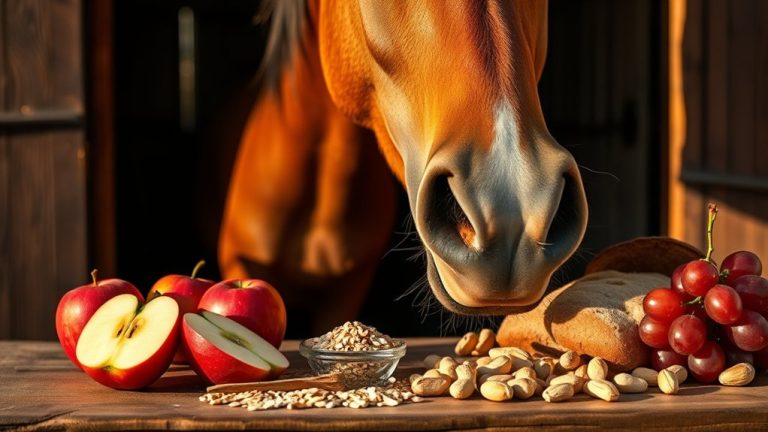
Yes, you can give Friesians fruits as treats and vegetables for horses as healthy snack options. Apples, carrots, and berries provide natural sugars and nutrients.
While veggies like celery and sweet bell peppers offer fiber without excess sugar.
Always remove seeds or cores to avoid choking or toxicity. Remember to offer these treats in moderation, ensuring they complement their balanced diet rather than replace essential forage and grain for proper nutrition.
What Are Common Feeding Mistakes to Avoid With Friesians?
You should avoid irregular feeding schedules that cause digestive upset in Friesians. Spread grain intake into multiple small meals to prevent starch overload.
Don’t rely solely on processed grains; balance them with good quality grass hay. Avoid high-protein alfalfa and excessive calories to prevent obesity and laminitis.
Use appropriate dietary supplements only when necessary and choose safe treat alternatives like carrots or apples, not sugary or starchy snacks.
How Does Exercise Affect a Friesian’s Dietary Needs?
Imagine feeding your Friesian like a knight fueling his steed before battle. Exercise impact raises your horse’s dietary energy needs considerably. You’ll have to adjust their nutritional balance by adding energy-dense feeds and extra forage to maintain stamina and muscle.
Increased activity boosts metabolism, helping manage weight, but you must guarantee proper fiber, protein, and electrolytes to support digestion and mineral replacement during intense workouts.
Are There Specific Supplements for Friesian Horses With Health Issues?
Yes, you can use dietary supplements to support health management in Friesian horses with issues like joint problems or metabolic syndrome.
Supplements such as MSM, glucosamine, chondroitin, omega-3 fatty acids, and antioxidants help maintain nutritional balance and reduce inflammation.
Probiotics also aid digestive health.
Always consult your veterinarian to tailor supplement choices to your Friesian’s specific health needs, ensuring safe and effective nutritional support.
Conclusion
Feeding your Friesian is like nurturing a majestic oak. Strong roots need steady, balanced nourishment. Stick to quality forage, avoid excessive alfalfa, and introduce grains carefully to keep your horse’s health sturdy and vibrant.
Remember, vitamins, minerals, water, and salt are the unseen sunlight and rain, essential for growth and vigor. With thoughtful care, you’ll help your Friesian thrive, embodying the strength and grace this noble breed is known for.