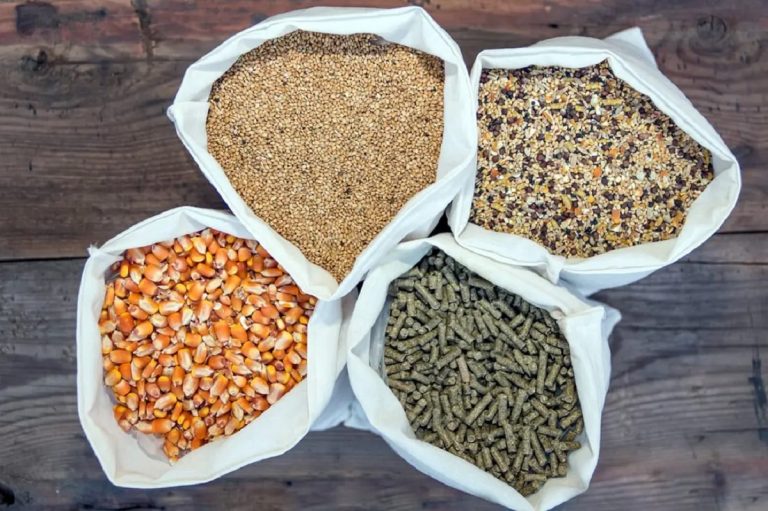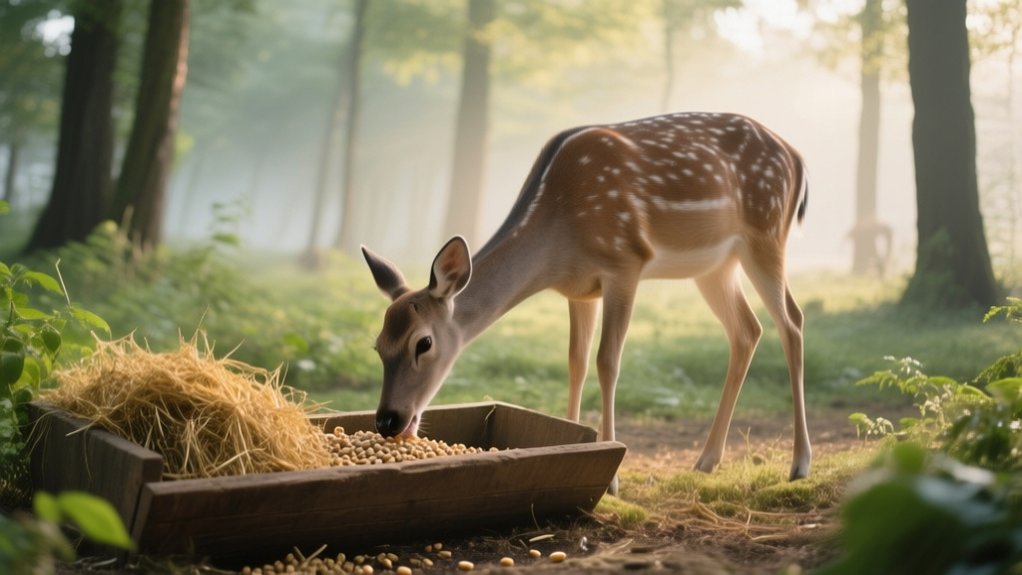
Can Deer Eat Horse Feed – What to Know
You shouldn’t regularly feed deer horse feed because its high grain content and additives don’t match their specialized rumen digestion. This can cause nutritional imbalances and digestive upset like bloating or diarrhea.
Small, occasional amounts may be tolerated if the feed is free of harmful supplements. But frequent feeding risks obesity, altered behavior, and disease transmission.
Deer thrive best on native plants and deer-specific feeds tailored to their biology. Understanding these differences can help you guarantee their health and sustainability.
Key Ingredients in Horse Feed That Impact Deer Health
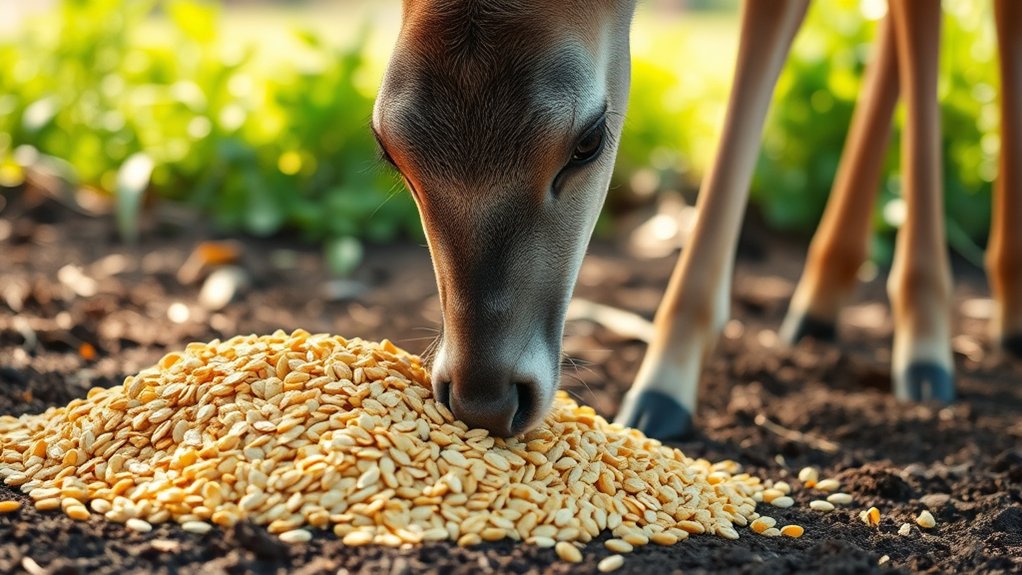
Although deer can benefit from some components found in horse feed, it’s essential to understand how key ingredients affect their health. Oats and barley provide high energy, which can support deer metabolism in small amounts. Commercial horse feeds often include added vitamins and minerals, potentially supplementing deer nutritional needs when consumed moderately.
Deer can benefit from certain horse feed ingredients like oats, barley, and added vitamins in moderation.
However, you should be cautious, as excessive intake of processed feed may cause digestive issues like bloating or create nutritional imbalances.
Ingredients such as molasses attract deer due to sweetness, but their high sugar content can negatively impact health if ingested in large quantities.
Additionally, certain additives or medications formulated for horses might be toxic to deer, so you need to be aware of these risks when considering horse feed as a food source for deer.
Just keep these points in mind, and you can make safer choices for deer health.
Can Deer Safely Eat Horse Feed Occasionally?
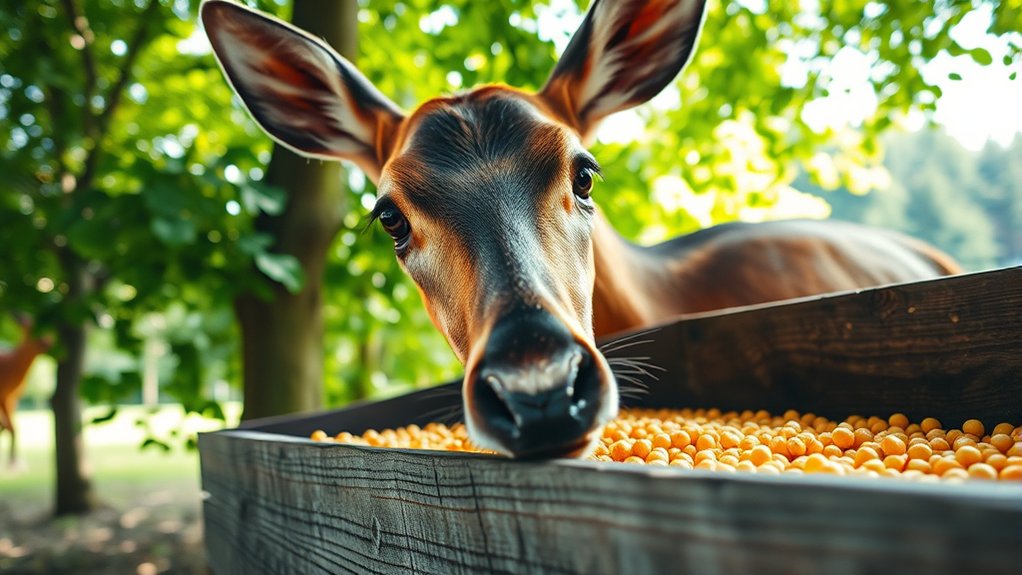
Understanding the impact of key ingredients in horse feed helps clarify why feeding it to deer only occasionally is advisable. You can safely offer horse feed to deer in moderation, but be sure to avoid additives or mold. The nutritional mismatch may cause digestive disturbances if given frequently.
| Aspect | Horse Feed Content | Deer Consideration |
|---|---|---|
| Grains | High | Limited tolerance |
| Additives | Various (preservatives, supplements) | May cause adverse effects |
| Nutritional Balance | Formulated for horses | Not balanced for deer |
| Feeding Frequency | Occasional recommended | Avoid regular use |
Risks of Feeding Horse Feed to Deer Regularly
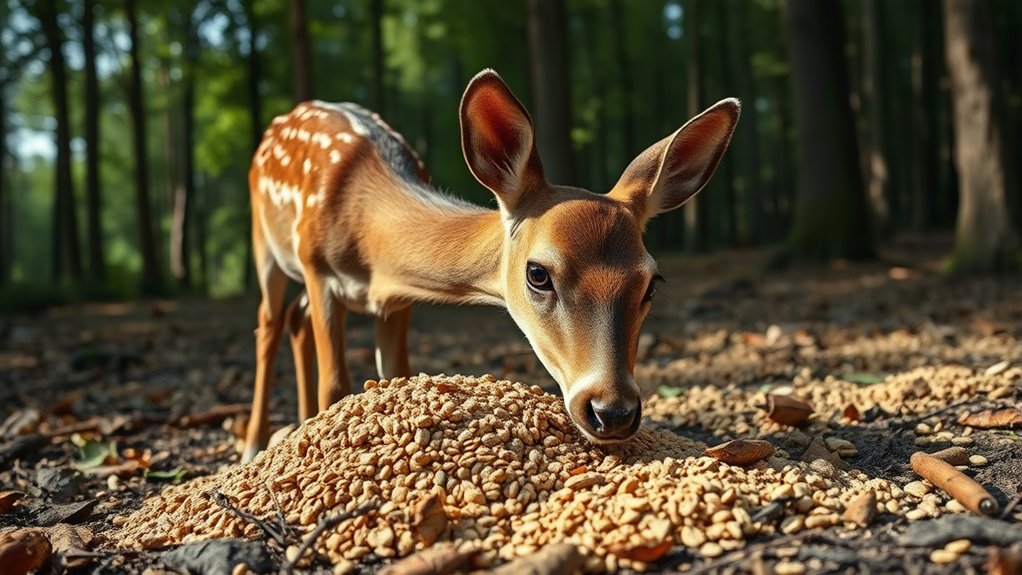
If you feed horse feed to deer regularly, you risk causing serious nutritional imbalances because this feed is designed to meet the specific dietary needs of horses, not deer.
Deer consuming horse feed may develop obesity or digestive disorders due to inappropriate ingredient composition, including grains and supplements that can be harmful or toxic in large amounts.
Also, regular feeding can alter deer behavior by increasing dependence on human-provided food. This reduces their natural foraging instincts, which are crucial for their survival.
There’s also the risk of transmitting diseases or parasites from domesticated animals to wild deer populations.
These factors combined highlight the potential health and ecological consequences. That’s why horse feed is unsuitable for routine deer consumption, and why alternative, species-appropriate nutrition should be prioritized.
How Deer Digest Horse Feed Differently From Horses
You should know that deer have a multi-chambered stomach, which is specially designed to ferment high-fiber plant material. This is quite different from the simpler digestive system horses have.
Because of this difference, deer don’t absorb nutrients from horse feed as efficiently since that feed is made with horses’ digestion in mind.
Deer Digestive System
Because deer are ruminants with a complex, four-chambered stomach, they digest horse feed differently than horses. Horses rely on a simpler, single-chambered stomach and hindgut fermentation.
Deer chew cud and ferment food in their rumen, reticulum, omasum, and abomasum. This allows extensive microbial breakdown of fibrous, woody plant materials.
Their digestive enzymes and microbial populations are specialized for high-fiber, browse-type diets. In contrast, horses ferment food primarily in the cecum and colon.
This difference in anatomy and microbiology means deer aren’t as efficient at processing grain and processed horse feeds.
Feeding deer horse feed regularly often leads to gastrointestinal upset because their digestive systems can’t handle it well. This highlights why it’s so important to understand their unique digestive physiology.
Deer need diets suited specifically to their ruminant system to stay healthy.
Nutrient Absorption Differences
How exactly do deer process horse feed differently than horses? Deer have a ruminant stomach that ferments fibrous plant material through microbial activity before digestion.
Horses, on the other hand, are hindgut fermenters, digesting feed primarily in the cecum and colon. This is a fundamental difference that changes how each extracts nutrients.
Deer use microbial populations adapted to a varied, high-fiber diet to break down horse feed. Their enzyme production and gut morphology are different too, which affects nutrient absorption rates and how efficiently they get nutrients from the feed.
Some key differences include: deer rely on rumen microbial fermentation to break down fibrous components, which enhances nutrient availability.
Horses digest mainly in the hindgut, which can limit their efficiency with certain fibrous feeds.
Also, variations in enzyme profiles influence how nutrients are metabolized and absorbed in each species.
Signs Deer Have Problems After Eating Horse Feed
Although deer may occasionally consume horse feed, they often experience adverse effects because the feed isn’t suited to their digestive systems. You might notice digestive upset like diarrhea or bloating, which shows they can’t tolerate the grains and supplements made for horses.
Deer can also become lethargic, lose their appetite, or start grooming themselves abnormally. These behaviors usually signal discomfort or nutrient imbalances.
Sometimes, they may show signs similar to colic, such as restlessness and abdominal pain after eating horse feed.
These symptoms reflect the stress on their bodies caused by the wrong nutrient profile and possible toxicity. If you see any changes in your deer’s behavior or health after they eat horse feed, it’s best to get a vet to check them out right away.
Keeping an eye on these signs helps you act quickly to protect the deer’s well-being.
Better Natural Foods for Deer Nutrition
You should focus on giving deer essential nutrients found in native plants like acorns, berries, and different types of leaves.
These natural foods change with the seasons, so deer get a balanced diet all year round.
Knowing what they like to eat and when it’s available really helps support their digestion and overall health.
It’s often better than relying on commercial feeds.
Essential Nutrients for Deer
Since deer rely on a variety of natural foods to meet their nutritional requirements, understanding the essential nutrients they need is crucial for supporting their health and development. Deer require a balanced diet rich in proteins, carbohydrates, fats, vitamins, and minerals to maintain healthy growth and immune function.
Natural forage supplies key minerals like calcium, phosphorus, and magnesium. These minerals are indispensable for antler development and bone integrity. Deer selectively consume diverse plants to acquire a complete range of micronutrients, which processed feeds often lack.
Supplementing with natural foods enhances digestion and overall health more effectively than artificial feeds. It really makes a difference when deer get their nutrients from what’s natural to them.
Key essential nutrients for deer include:
- Proteins for tissue repair and growth
- Minerals such as calcium and phosphorus for skeletal health
- Vitamins supporting metabolic and immune processes
Preferred Native Plant Species
Natural forage plays a pivotal role in providing deer with the nutrients they require, and selecting native plant species enhances this benefit considerably. Oak, maple, and birch trees supply essential nutrients and high-energy food sources that align well with local deer diets, supporting healthier growth and reproductive success.
When you incorporate native plants like serviceberry and dogwood into the landscape, you promote natural foraging behaviors and reduce deer dependence on supplemental feeds. These species are also more resilient to local pests and weather fluctuations, ensuring a reliable food supply.
Research indicates that deer actively prefer native over non-native ornamental plants due to their superior nutritional value. By prioritizing native species, you help maintain a balanced, sustainable diet that meets deer’s physiological needs effectively.
Seasonal Forage Availability
Although forage availability fluctuates throughout the year, understanding these seasonal changes is key to managing deer nutrition effectively. Deer rely on different natural food sources depending on the season to meet their nutritional needs.
In spring and early summer, they munch on nutrient-rich grasses, wildflowers, and fresh leaves.
As fall rolls in, mast crops like acorns and berries become important energy sources.
When winter hits and green forage is scarce, deer switch to woody browse such as twigs and bark.
Here’s a quick look at the key seasonal forage patterns:
- Spring/Summer: Plenty of high-nutrient grasses and new leaves
- Fall: More energy-dense mast crops in their diet
- Winter: Woody plants and bark take center stage due to limited green forage
Knowing these patterns helps you support deer with natural, seasonally appropriate nutrition. It’s all about matching what’s available with what they need throughout the year.
Is It Ever Safe to Give Deer Commercial Feed?
When you consider feeding deer commercial horse feed, you need to recognize that these products are designed specifically for horses’ nutritional requirements, which differ markedly from those of deer.
Horse feed may lack essential nutrients deer require and contain additives or medications potentially harmful to them. Feeding deer such feed regularly can cause digestive disturbances and nutritional imbalances.
However, in emergency situations, offering small amounts might be temporarily safe but should never replace their natural diet long-term.
To guarantee safety and nutritional appropriateness, you should always consult wildlife or veterinary experts before providing any commercial feed to deer. This precaution helps prevent unintended health consequences and supports the maintenance of natural foraging behaviors critical to deer wellbeing.
Choosing the Best Deer Feed for Healthy Wildlife
Considering the risks associated with feeding deer commercial horse feed, it’s clear that selecting the right nutrition is essential for their health. You should prioritize deer-specific feed formulated to meet their unique digestive and nutritional requirements. Such feed contains balanced proteins, vitamins, and minerals, avoiding processed grains and artificial additives harmful to deer.
This approach supports their health, especially during winter or food shortages, reducing malnutrition risks.
When choosing the best deer feed, focus on high-quality proteins adapted to deer metabolism. Also, look for natural ingredients that mimic native forages and avoid grains and synthetic additives that can be detrimental to wildlife.
Always consult wildlife experts or local regulations before supplementing deer diets. This helps promote sustainable populations and ecological balance.
Avoid Attracting Deer to Horse Feed Areas
Because horse feed often contains grains and sweet ingredients that appeal to deer, you need to take specific measures to prevent them from accessing these areas. Start by securing feed containers with tight-fitting lids or using elevated feeding stations to limit deer access.
Promptly clean up any leftover feed or spillage, as these can attract deer. Consider planting deer-resistant vegetation around feeding zones to create a natural deterrent. It’s a simple way to keep deer away without much hassle.
Additionally, installing physical barriers such as fencing, ideally at least eight feet high, provides an effective method to keep deer away. These combined strategies reduce the likelihood of deer consuming horse feed, which can be nutritionally inappropriate and lead to unwanted interactions.
Implementing them guarantees the safety and health of both your horses and the local deer population. So, taking these steps is definitely worth it for everyone’s well-being.
Frequently Asked Questions
How Does Seasonal Change Affect a Deer’s Diet Preferences?
You’ll notice deer shift diets seasonally, eating green foliage in warmer months. Then, they rely on bark, twigs, and nuts in colder months.
These changes help meet their nutritional needs as fresh vegetation becomes scarce during winter. It’s pretty interesting how they adapt, right? This way, they make sure they get enough food all year round.
Can Feeding Deer Horse Feed Affect Local Ecosystem Balance?
You should know feeding deer horse feed can increase local deer populations by up to 30%. This change disrupts predator-prey dynamics and causes overgrazing.
That overgrazing ultimately degrades habitat and alters the delicate balance of the ecosystem. It’s a chain reaction that can have lasting effects. So, while it might seem helpful, feeding deer horse feed can actually do more harm than good.
What Are Common Deer Feeding Behaviors in the Wild?
You’ll notice deer primarily browse on leaves, twigs, and fruits, feeding mostly at dawn and dusk. They select nutrient-rich plants and avoid toxins.
They also adjust their diet seasonally to meet changing nutritional needs and food availability. It’s pretty interesting how they know what to eat and when. Deer really adapt to their environment to stay healthy.
How to Safely Store Horse Feed Away From Deer?
You should store horse feed in sealed, rodent-proof containers indoors or in secure sheds. Place the storage away from vegetation to reduce the chance of attracting deer.
Make sure to clean up any spills promptly so it doesn’t draw them closer. Using fencing or barriers to physically prevent deer access is also a smart move. This helps keep your feed safe and minimizes contamination risks.
Do Different Deer Species React Differently to Horse Feed?
You might think all deer would devour horse feed alike, but species vary wildly. White-tailed deer handle it better. Mule deer risk upset.
Sensitive Sitka deer often avoid it due to starch intolerance. So, it really depends on the type of deer you’re dealing with. Not all deer react the same way to horse feed.
Conclusion
So, you might think sharing your horse feed with deer is a harmless treat, but their digestive systems aren’t designed for it. While they might nibble without immediate harm, regular feeding risks serious health issues because the ingredients are optimized for horses, not deer.
Honestly, the best way to help deer stay healthy is to avoid offering your horse’s carefully balanced feed altogether. Instead, stick to natural forage or deer-specific nutrition for truly beneficial support. It’s really about giving them what’s best for their bodies.