Can Horses Eat Goat Feed – Safety & Facts
You shouldn’t feed your horse goat feed because it contains ingredients harmful to equines, like elevated copper, molasses, and additives that can cause toxicity and digestive issues. Goat feed is formulated differently to meet goats’ needs and may include substances poisonous to horses.
If your horse accidentally eats it, watch for signs like colic or lethargy and consult a veterinarian immediately. Knowing how to prevent this and handle emergencies helps protect your horse’s health and wellbeing.
It’s always better to be safe and stick to feed designed specifically for horses. That way, you can avoid any unexpected health problems and keep your horse happy and healthy.
Why Goat Feed Is Unsafe for Horses
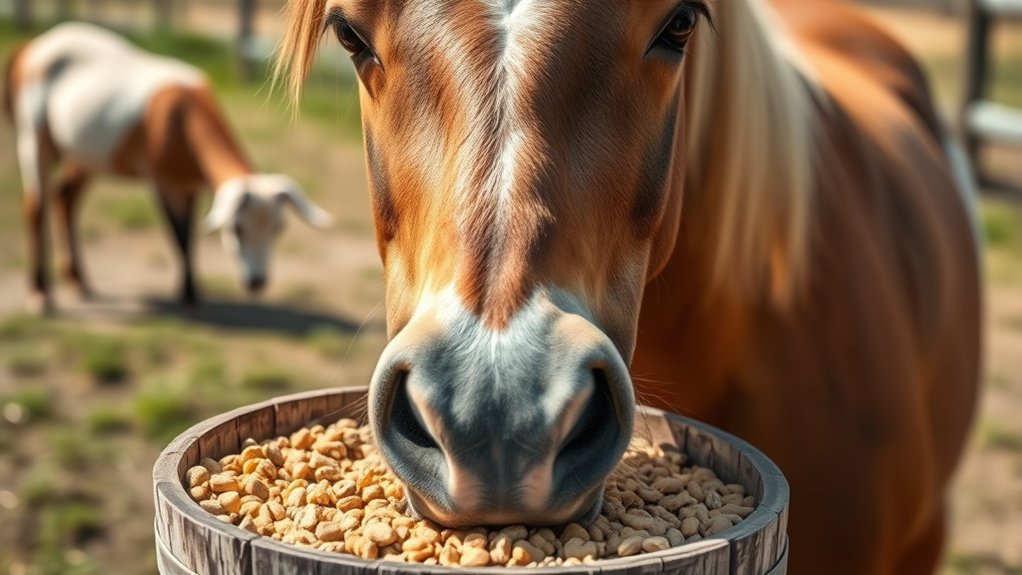
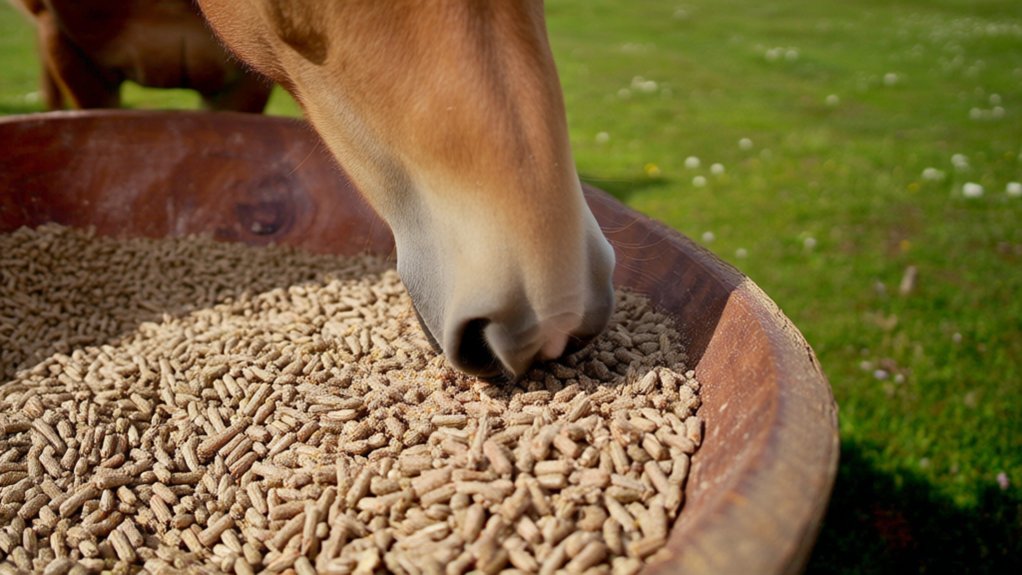
Although goat feed is formulated to meet the specific nutritional needs of goats, it contains ingredients that can be harmful to horses. You should avoid feeding goat feed to horses because it often has elevated copper levels, which can cause copper toxicity, a serious and potentially fatal condition for horses.
Additionally, goat feed may include additives or medications safe for goats but unsafe for horses, risking adverse health effects. Cross-contamination can also occur if goat feed mixes with horse feed, introducing imbalances and harmful substances.
Feeding your horse goat-specific feed increases the likelihood of metabolic problems and nutritional deficiencies since the formulation doesn’t align with equine dietary requirements.
To keep your horse healthy, it’s critical to use feed designed explicitly for horses rather than repurposing goat feed.
Ingredients in Goat Feed That Can Harm Horses
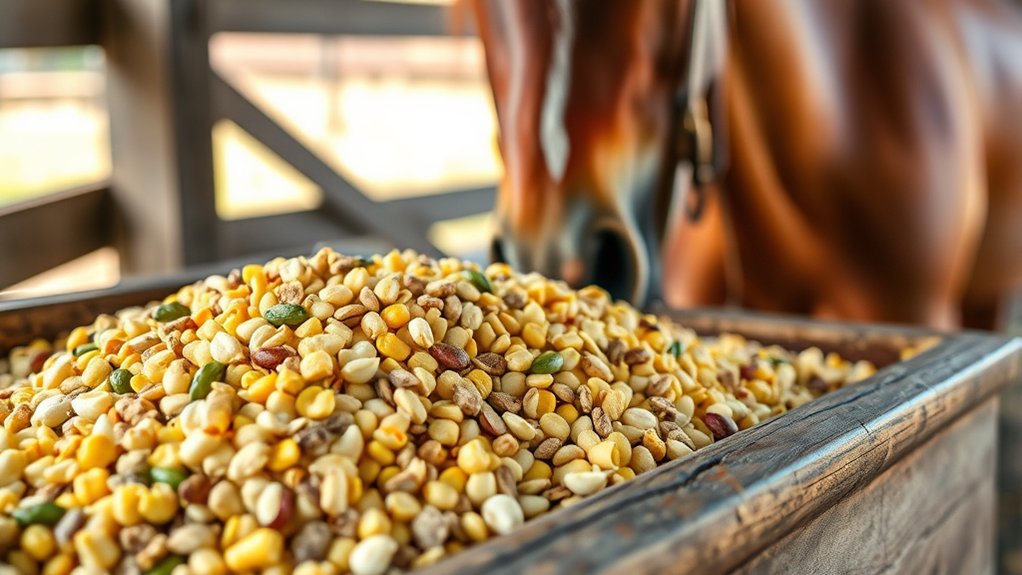
You should know that goat feed often has ingredients that can be harmful to horses. For example, it might contain high levels of copper, certain herbs, and additives like molasses or medications.
Feeding goats’ rations to horses isn’t a good idea because it can cause serious health problems, including digestive issues and even toxicity.
Toxic Components In Goat Feed
What ingredients in goat feed can pose serious risks to horses? Several components commonly found in goat feed are unsafe for equines and can cause severe health issues. You should be aware of these toxic elements before considering goat feed for your horse.
First, copper-rich feeds. Goats tolerate higher copper levels, but too much copper is toxic to horses. So, it’s important to keep that in mind.
Next, molasses and high-sugar additives. These can trigger metabolic problems like laminitis in horses. It’s something you definitely want to avoid.
Also, ionophores. Some goat feed supplements contain these antibiotics, which are highly poisonous to horses. Always check the label carefully.
Finally, moldy or spoiled feed. Improperly stored goat feed can harbor toxins that are harmful to equine health.
Avoiding these toxic ingredients is vital to protect your horse from poisoning and metabolic disorders. Better safe than sorry, right?
Risks Of Cross-Species Feeding
Recognizing the toxic ingredients in goat feed is just the beginning of protecting your horse’s health. When you feed your horse goat feed, you risk exposing it to harmful substances like certain herbs, plants, or mineral supplements not suited for equines.
Goat feed often contains elevated copper levels, which can be toxic to horses if consumed in excess.
Additionally, additives such as antibiotics or supplements designed for goats may be unsafe for horses.
The mineral balance in goat feed differs markedly from what horses require, potentially disrupting their electrolyte and mineral homeostasis.
Cross-contamination between goat and horse feed can also introduce harmful toxins into your horse’s diet.
To safeguard your horse’s well-being, you must understand these risks before considering cross-species feeding.
It’s really important to keep your horse’s diet species-specific to avoid any unexpected health problems.
Preventing Accidental Ingestion
Although goat feed may seem harmless, it often contains ingredients that can seriously harm horses if ingested accidentally. To prevent this, you need to be extra careful with how you store and handle feed.
Here are some key steps to keep your horse safe:
- Store goat and horse feed separately and securely to avoid cross-contamination.
- Check goat feed ingredients for toxic elements like copper and harmful herbs.
- Avoid using goat mineral supplements for horses, since they often contain unsafe mineral levels.
- Keep a close eye on your animals to make sure horses don’t get into goat feed areas.
Taking these precautions can really help protect your horse from accidental ingestion. It’s worth the extra effort to keep them safe!
How Goat Feed Differs From Horse Feed
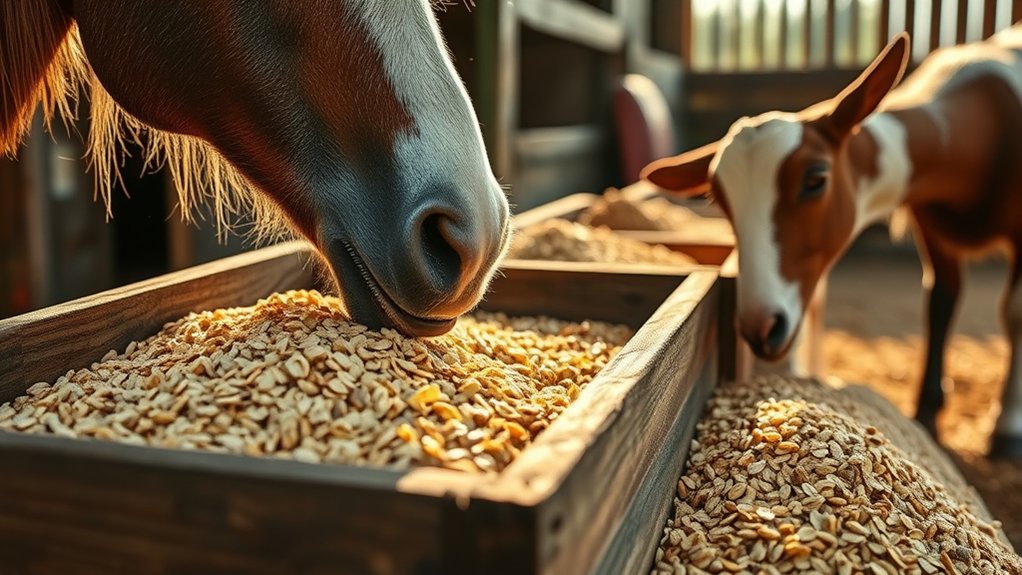
How exactly does goat feed differ from horse feed? Goat feed is formulated to meet goats’ unique nutritional needs, featuring specific mineral balances like lower copper levels.
In contrast, horse feed often contains higher copper concentrations tailored to equine health.
Additionally, horse feed typically includes more sugars and molasses, ingredients that can upset goat digestion.
These feeds reflect the distinct digestive systems and metabolic rates of each species.
Goat feed supports browsing behavior and addresses goats’ specific mineral requirements, while horse feed is designed for a different metabolism and digestive process.
Understanding these differences is essential because the formulations and additives in each feed are species-specific.
This ensures that your horse and goat receive appropriate nutrition for peak health and well-being.
Symptoms of Goat Feed Toxicity in Horses
You should keep an eye out for early signs of toxicity in your horse. Things like colic, feeling unusually tired, or walking oddly could mean there’s something harmful in the goat feed.
Sometimes, symptoms show up as neurological problems, sweating, or even jaundice—it really depends on the type of toxin involved.
If you spot any of these signs, don’t wait. It’s important to get veterinary help right away to avoid serious health issues.
Early Signs Of Toxicity
When your horse accidentally consumes goat feed, you might notice early signs of toxicity such as mild colic, decreased appetite, or subtle behavioral changes like restlessness and pawing. These initial symptoms can be crucial indicators that something is wrong.
Watch closely for diarrhea or loose stools within 24-48 hours. You might also see slight lameness or stiffness, which could signal muscle or nerve impact. Elevated heart rate and rapid breathing are common stress responses.
Unusual behavioral changes that deviate from normal patterns are another red flag. If you observe any of these signs, it’s essential to act quickly and consult your veterinarian.
Early detection and intervention can prevent more serious complications and ensure your horse’s safety after exposure to goat feed.
Common Health Symptoms
What signs should you watch for if your horse consumes goat feed? Pay close attention to symptoms like colic, diarrhea, or lethargy, as these often indicate toxicity. You might notice muscle weakness, tremors, or abnormal heart rhythms, which suggest the feed contains harmful ingredients.
High copper levels in goat feed can cause colic, laminitis, or neurological problems in horses. Behavioral changes such as restlessness or agitation may also occur, reflecting gastrointestinal discomfort.
Severe toxicity cases often lead to intense colic that demands prompt veterinary care.
Recognizing these symptoms early is vital for your horse’s health and safety. If you observe any of these signs, monitor your horse closely and be ready to seek professional advice. It’s always better to act quickly when you suspect something’s wrong.
Emergency Response Actions
Although symptoms of goat feed toxicity in horses can develop rapidly, swift and decisive action can markedly improve outcomes. If your horse ingests toxic goat feed, you must act immediately to prevent serious complications. Watch for signs like colic, diarrhea, lethargy, muscle weakness, tremors, or difficulty breathing.
Here’s what you should do:
- Remove all contaminated feed to stop further ingestion.
- Monitor your horse closely for worsening symptoms or new signs.
- Contact your veterinarian right away for professional diagnosis and treatment.
- Provide supportive care as advised, which may include fluids and medications.
Prompt recognition and response can substantially reduce risks and improve your horse’s recovery chances from goat feed toxicity. So, don’t wait—act quickly to keep your horse safe.
Preventing Horses From Eating Goat Feed
To keep your horses from eating goat feed, you need to store the feed in secure, sealed containers that horses can’t access. Establish separate feeding zones and clearly label all feed storage to reduce accidental ingestion. Installing barriers or fencing around goat feed areas further limits horse access.
Make sure to regularly monitor pastures and feeding spots to spot any feed left out. It’s also important to educate everyone involved in the farm’s care about the risks and proper feed handling. This way, everyone stays on the same page and helps keep the horses safe.
| Prevention Step | Description | Benefit |
|---|---|---|
| Secure Storage | Use sealed containers | Blocks horse access |
| Separate Feeding Areas | Designate distinct zones | Minimizes accidental eating |
| Staff Education | Train on feed risks and handling | Ensures consistent vigilance |
Effective Feeding Strategies to Keep Goats and Horses Safe
When you manage feeding for both goats and horses, creating clearly separated feeding and storage areas is essential to keep each species safe and healthy. This helps prevent accidental ingestion of inappropriate feed and reduces health risks.
To implement effective feeding strategies, consider these key points:
- Use species-specific mineral supplements to meet nutritional needs and avoid toxicity.
- Regularly inspect and reinforce fencing to prevent goats and horses from accessing each other’s feed.
- Gradually transition animals to new diets, avoiding shared feed containers to minimize health hazards.
- Monitor and clean feeding areas routinely to prevent cross-contamination and ensure proper consumption.
Storing and Separating Feed for Horse Safety
Because horses and goats have different dietary needs, storing their feed separately is essential to prevent accidental ingestion and health issues. You should use clearly labeled containers for each feed type and keep goat feed in secure, sealed bins or cabinets that horses can’t access or tip over.
Position feed storage away from horse grazing areas to reduce cross-contamination risks. Regularly inspect the storage area for spills, leaks, or signs of contamination that could jeopardize your animals’ health.
Maintain a strict feeding schedule and designate specific storage spots to guarantee each animal accesses only its appropriate feed. These measures help you safeguard your horses from accidentally consuming goat feed and keep overall feeding safety and animal well-being on your property.
Emergency Steps If Your Horse Accidentally Eats Goat Feed
Although horses rarely eat goat feed on purpose, accidental ingestion can still cause serious health problems that need quick action. If your horse does eat goat feed, it’s important to act fast to reduce any harm.
First, get rid of any leftover goat feed right away so your horse doesn’t eat more. Then, watch your horse carefully for signs like colic, diarrhea, being lethargic, or acting strange. Make sure to write down anything unusual you notice.
Next, call your vet as soon as possible to let them know what happened and get their professional advice on tests or treatment. Don’t try to make your horse vomit or give it any medicine without your vet’s guidance. Doing the wrong thing could make things worse.
Also, keep a detailed record of how much and what kind of goat feed your horse ate. This info will help your vet figure out the best care and treatment for your horse.
Frequently Asked Questions
Can Horses Eat Goat Hay or Forage Safely?
Yes, you can feed horses goat hay or forage safely if you guarantee it’s free from mold, toxic plants, and contaminants. Always check nutrient content and store it properly to prevent risks and maintain your horse’s health.
Just make sure you’re keeping an eye out for anything that could be harmful. Proper storage is key to keeping the hay fresh and safe. That way, your horse stays healthy and happy!
Are There Any Supplements to Counteract Goat Feed Effects in Horses?
You won’t find specific supplements to counteract goat feed effects in horses. Instead, focus on preventing your horse from eating goat feed in the first place. If accidental ingestion happens, it’s best to get veterinary care right away.
Balanced mineral supplements can help support your horse’s overall health. But keep in mind, they don’t neutralize any toxins that might be in the goat feed. So, prevention and prompt vet attention are really the key here.
How Quickly Does Goat Feed Toxicity Show in Horses?
Goat feed toxicity in horses can show symptoms within hours to a few days, depending on the toxic ingredients and the amount ingested.
You should act quickly and contact a vet if you notice any signs of distress.
It’s always better to be safe and get professional advice as soon as possible.
Is Goat Feed Safe for Pregnant or Young Horses?
You shouldn’t feed goat feed to pregnant or young horses, as its high copper and sugar levels can cause toxicity, digestive issues, and developmental problems.
It’s best to stick to species-specific horse feed to guarantee safety and proper nutrition. That way, you can be sure they’re getting exactly what they need without any risks.
Feeding the right feed makes all the difference in keeping them healthy and thriving.
Can Mixing Small Amounts of Goat Feed With Horse Feed Be Harmful?
Mixing small amounts of goat feed with horse feed isn’t immediately harmful, but it can cause nutrient imbalances and health risks over time. You shouldn’t regularly combine them to keep your horse safe and healthy.
It’s better to stick to feed designed specifically for horses. That way, you make sure they get the right nutrients without any surprises.
Conclusion
So, while it might seem harmless to share goat feed with your horse, don’t let the convenience fool you. Your horse isn’t a goat. Those tempting ingredients can cause serious harm, not to mention the digestive chaos they bring.
You wouldn’t want your horse to suffer just because you saved a few minutes. Keep their feeds separate and stay vigilant. Remember, what’s safe for goats isn’t always safe for horses.
Your horse will thank you for it.