How Do You Feed A Horse – Step-by-Step Guide
To feed your horse properly, start by calculating daily forage at 1.5-2% of its body weight. Adjust this amount based on your horse’s age and activity level.
Supplement with ration balancers or concentrates gradually, following weight-based guidelines. If you have a senior horse or one with limited forage, consider using complete feeds.
Sweet feeds can add energy, but try to avoid whole grains since they can cause digestion issues. Also, keep treats to under 10% of your horse’s daily calories, and choose healthy options whenever possible.
Following these steps helps maintain ideal nutrition and good digestive health. And there’s still more to explore when it comes to fine-tuning your horse’s diet.
How to Calculate Your Horse’s Daily Forage Needs
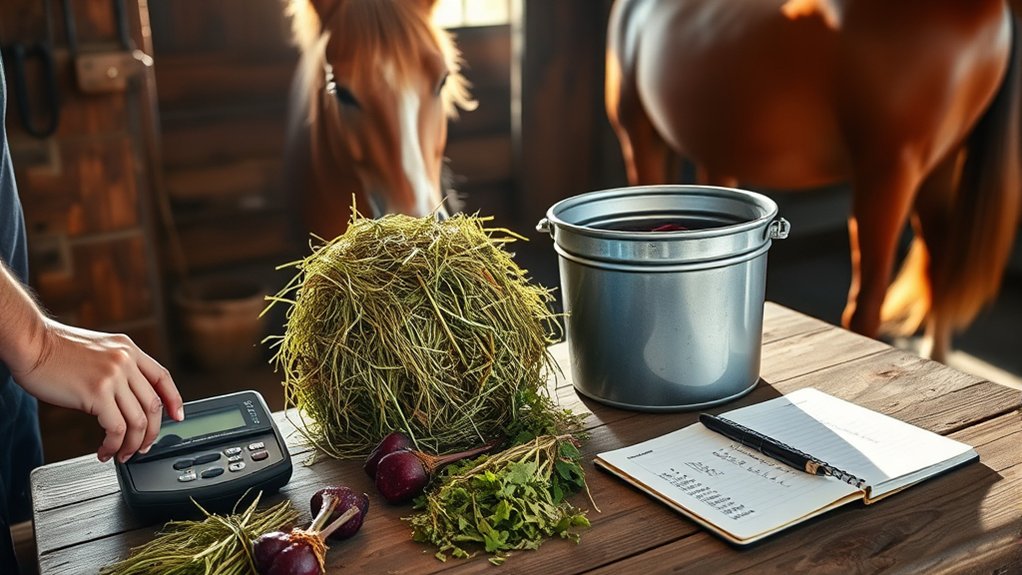
When calculating your horse’s daily forage needs, start by considering its body weight. A horse typically requires 1.5 to 2% of its weight in dry forage daily.
To estimate the total forage, multiply your horse’s weight in pounds by 0.02.
For example, a 1,000-pound horse needs about 20 pounds of dry forage each day.
This amount varies with activity level, metabolism, age, and body condition, so adjust accordingly to maintain ideal health.
Always confirm the forage is high quality, free from mold, dust, and weeds.
This helps meet nutritional demands effectively.
Keeping these factors in mind helps you provide the proper daily forage intake, supporting digestion and nutrient absorption that are crucial for your horse’s well-being.
Choosing the Right Ration Balancer for Your Horse
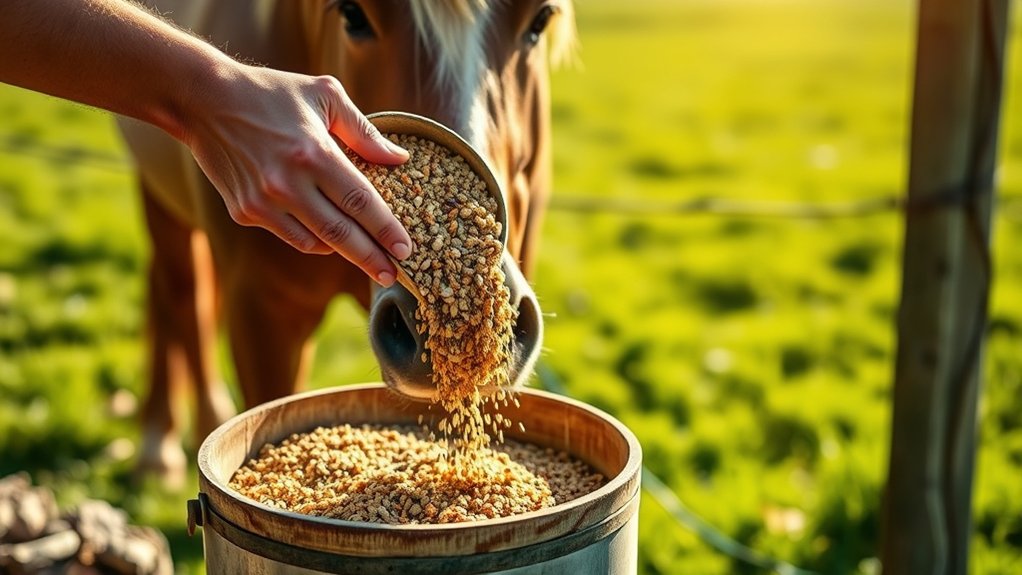
Although your horse’s forage provides the foundation of its diet, you’ll need a ration balancer to fill nutritional gaps that forage alone can’t cover. Choose a ration balancer that suits your horse’s age, weight, and activity level to guarantee it receives appropriate vitamins, trace minerals, and amino acids often absent in forage.
Always check the product label for feeding guidelines, basing amounts on your horse’s body weight.
Assess your forage quality and nutritional needs to decide if a ration balancer is necessary or if adjustments are needed.
For best results, consult a veterinarian or equine nutritionist who can recommend a ration balancer that complements your horse’s overall diet and supports its health effectively.
When and How to Add Concentrate and Performance Feeds
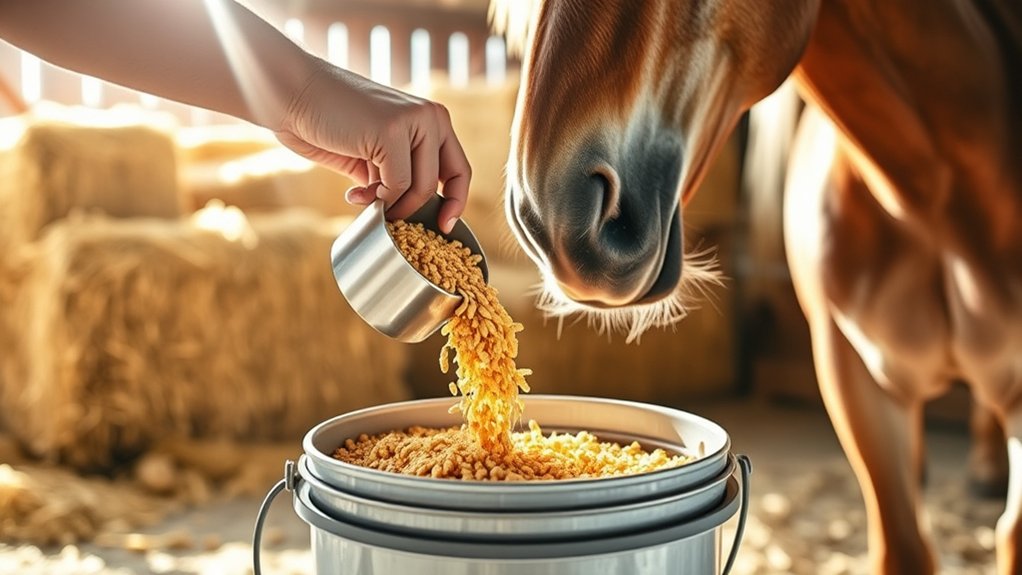
You’ll want to start by introducing concentrate and performance feeds slowly, over the course of about 7 to 10 days. This helps prevent any digestive upset in your horse.
When choosing the right feed, consider your horse’s weight, age, and how active they are. It’s important to adjust the amount as their workload changes.
Also, always follow the manufacturer’s guidelines closely.
One more thing—make sure to feed concentrates separately from forage so your horse’s digestion stays on track.
Timing For Concentrate Feeding
Since introducing concentrate and performance feeds too quickly can disrupt your horse’s digestion, you should gradually add these feeds over a 7-10 day period.
Feed concentrates in several small meals daily rather than one large portion to enhance digestion and reduce colic risk.
Time concentrate feeding around your horse’s workload, ideally 30-60 minutes before or after exercise. You can adjust this based on your horse’s individual tolerance.
Always follow the manufacturer’s guidelines for portion size and frequency to keep your horse properly nourished and avoid overfeeding.
Also, make sure to provide fresh water alongside concentrates, especially with higher-starch feeds, to support digestion and prevent dehydration.
This careful timing and gradual introduction help your horse adapt safely to concentrated performance feeds while keeping their digestive health in check.
Choosing Appropriate Performance Feeds
When should you introduce concentrate and performance feeds to your horse’s diet? Start gradually over 7-10 days to prevent digestive upset. Follow the manufacturer’s guidelines, adjusting amounts based on your horse’s age, weight, and workload.
You’ll add concentrates when forage alone doesn’t meet energy demands, especially in active or working horses. Balance concentrates carefully with forage to avoid excess starch and sugar intake, which can cause ulcers and other health issues.
Regularly monitor your horse’s condition, adjusting concentrate portions as needed to maintain excellent health and performance.
Using Complete Feeds for Seniors and Limited Forage
Although senior horses and those with limited access to forage face unique nutritional challenges, complete feeds offer a practical solution by providing all essential nutrients in a single, balanced formula. These feeds include added fiber sources like beet pulp or hay pellets to support digestive health, which is critical for horses with compromised chewing ability or scarce forage.
By replacing separate forage components, complete feeds simplify your feeding routine and help maintain your horse’s weight, coat condition, and overall health. It’s important to follow the manufacturer’s feeding guidelines carefully to avoid overfeeding or causing nutritional imbalances.
Using a scientifically formulated complete feed guarantees your senior or forage-limited horse receives consistent nutrition tailored to their specific needs. This approach promotes longevity and well-being, making it easier to care for your horse as they age or face forage restrictions.
What Sweet Feeds Are and When to Use Them
Sweet feeds are a mix of oats, pellets, and molasses that make the feed tastier and more nutrient-dense. They offer a concentrated energy boost, which is especially helpful for active or underweight horses.
It’s important to weigh the benefits, like better taste and extra vitamins, against the potential downside of too much starch if you feed them in excess.
Components Of Sweet Feeds
Because horses sometimes require extra energy beyond what forage provides, you’ll find that sweet feeds offer a carefully balanced mix of oats, pellets, and molasses designed to enhance taste and deliver concentrated calories. These components work together to provide essential nutrients and energy efficiently.
Typically, sweet feeds contain:
- Oats and grains – supply starches and carbohydrates for quick energy.
- Pellets – concentrate vitamins, minerals, and sometimes added fats to support overall health and performance.
- Molasses – improves palatability, encouraging consistent consumption.
You should use sweet feeds primarily when your horse’s forage intake doesn’t meet its energy or nutrient demands, like during intense work or breeding.
Always feed according to manufacturer guidelines to avoid health issues related to excess starch or calories.
Benefits And Considerations
When your horse needs extra energy beyond forage, a carefully balanced feed blending grains, pellets, and molasses can provide concentrated nutrients and improve taste. Sweet feeds offer calories for performance or weight gain but must complement, not replace, quality hay.
You should avoid using them for horses with metabolic problems or laminitis risk because of the high starch content. Overfeeding can cause digestive upset or obesity, so it’s important to follow manufacturer guidelines strictly.
| Benefit | Consideration | Advice |
|---|---|---|
| Enhances palatability | High starch content | Use sparingly |
| Provides concentrated energy | Not suitable for metabolic issues | Always balance with forage |
| Supports weight gain | Risk of digestive upset if overfed | Follow portion control |
| Easy to feed and store | May cause laminitis in sensitive horses | Monitor horse’s health closely |
Appropriate Usage Scenarios
Although forage forms the foundation of a horse’s diet, you’ll need to incorporate sweet feeds when your horse requires additional energy or calories beyond what hay can provide. Sweet feeds combine grains, pellets, and molasses, which increases palatability and energy density.
Use them appropriately in these scenarios:
- High-Performance Horses: When your horse has elevated activity levels, sweet feeds supply extra calories to meet energy demands.
- Weight Gain: If your horse struggles to maintain weight, sweet feeds provide concentrated nutrients to support healthy weight gain.
- Supplementing Forage: Use sweet feeds as a supplement, not a primary food source, to avoid digestive issues from excessive starch and sugar.
Always follow manufacturer guidelines to prevent overfeeding and reduce risks like gastric ulcers. This guarantees safe, effective integration into your horse’s diet.
Avoiding Whole Grains in Horse Feed
Since whole grains like oats, corn, and barley can disrupt your horse’s digestive system, it’s best to avoid using them as the main component of their feed.
Feeding large quantities of these grains leads to rapid fermentation in the hindgut, producing excess acid that disturbs microbial balance and increases risks of colic and gastric ulcers.
Also, whole grains contain variable nutrient levels and potential contaminants, making them unreliable for consistent nutrition.
Instead, opt for commercially prepared feeds formulated to provide balanced nutrients with controlled starch content, which reduces digestive stress.
These concentrates support your horse’s health more effectively than whole grains, ensuring stable energy release and minimizing gastrointestinal complications.
Prioritizing balanced, complete feeds helps maintain digestive integrity and overall well-being.
Tips for Balancing Treats Without Overfeeding
To keep your horse healthy, you need to limit treats to no more than 10% of their daily caloric intake. Overfeeding treats can disrupt their nutritional balance and lead to digestive issues.
Here are three key tips to balance treats effectively:
- Choose low-calorie, healthy options like carrots or apples instead of high-sugar treats to reduce excess calorie intake.
- Break treats into small pieces to control portions and minimize digestive upset caused by large, sudden food amounts.
- Use treats primarily as training rewards rather than daily snacks. This way, you can integrate them into the horse’s overall forage and concentrate intake to maintain proper nutrition.
Following these strategies ensures you provide enjoyable treats without compromising your horse’s health or diet.
Frequently Asked Questions
How Often Should I Clean My Horse’s Water Trough?
You should clean your horse’s water trough at least once daily, or twice during hot weather or heavy use.
Scrub, rinse, and refill it to prevent algae and bacteria. This helps guarantee fresh, safe drinking water for your horse’s hydration.
Keeping the trough clean is super important, especially when it’s warm out or if your horse drinks a lot. Just a little extra effort goes a long way!
What Signs Indicate My Horse Is Not Digesting Food Properly?
When your horse’s belly feels like a stormy sea, with frequent colic, loose stools, or bloating, these waves signal poor digestion.
Watch for weight loss, reduced appetite, or discomfort. They’re clear signs your horse’s gut isn’t working properly.
Can Horses Eat Grass Clippings From My Lawn?
You can feed horses fresh grass clippings occasionally, but avoid large amounts.
Make sure the clippings are free from chemicals, mold, and spoilage. This helps prevent colic or laminitis.
Use clippings only as an infrequent treat to keep things safe for your horse.
How Do Feeding Needs Change With Seasons?
You’ll increase forage during winter to support body heat and energy. In summer, you’ll reduce forage if pasture is lush but focus on hydration and electrolytes.
Adjust supplements seasonally to match changes in forage nutrition. This helps keep animals healthy all year round.
It’s all about balancing what they need with what’s available in each season. Keep an eye on how the weather affects their diet.
What Are Safe Treats Besides Carrots and Apples?
Think of safe treats as keys opening variety. Watermelon, cucumber, pumpkin, and herbs like parsley, mint, or chamomile provide low-sugar, digestible options.
Always introduce them gradually to avoid upsetting your horse’s sensitive digestive system. It’s all about keeping things tasty and safe!
Conclusion
Feeding your horse properly is like tuning a fine instrument. Each element has to work together to keep your horse healthy. By calculating daily forage, selecting the right balancer, and adding concentrates carefully, you help your horse perform at its best.
Remember to avoid whole grains and balance treats wisely so you don’t overfeed. With these precise steps, you’ll maintain your horse’s nutrition in a scientific and effective way. This will keep your equine partner happy and strong every day.