How Tall Are Thoroughbred Horses?
Thoroughbred horses typically stand between 15.2 and 17 hands tall, measured at the withers, where one hand equals four inches. Most racehorses average around 16 hands, balancing speed and agility most effectively.
Height impacts stride length, conformation, and health, influencing racing suitability and longevity. Taller horses often have longer strides but face higher joint stress risks, while shorter ones excel in agility.
Understanding these height factors helps you evaluate performance and training potential effectively.
Typical Height Range of Thoroughbred Horses
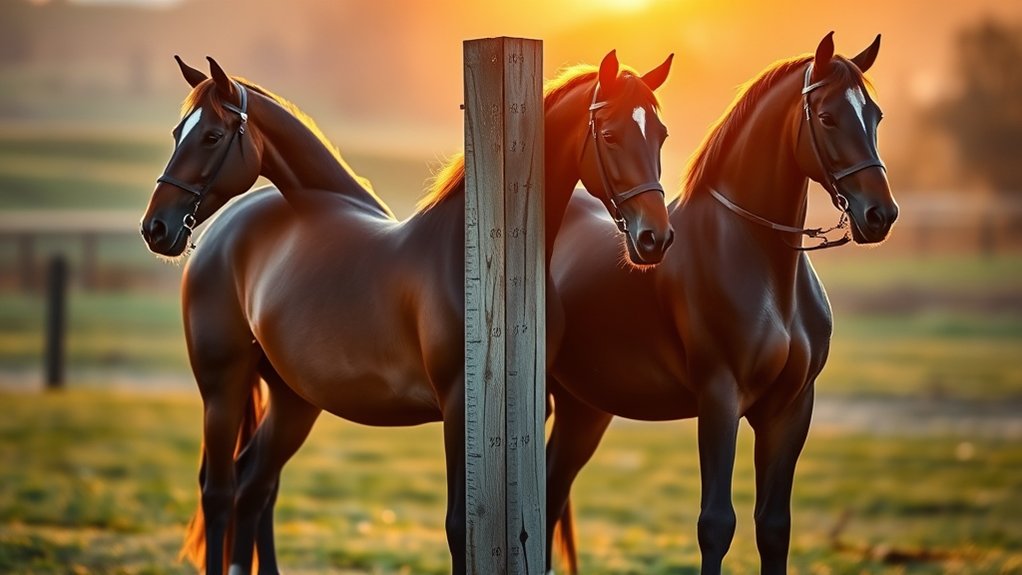
Although Thoroughbred horses come in various sizes, their typical height ranges from 15.2 to 17.0 hands, which translates to about 62 to 68 inches at the shoulder. When you measure a Thoroughbred’s height, you do so from the ground to the highest point of the withers, excluding the head and ears.
Thoroughbred heights typically range from 15.2 to 17.0 hands, measured to the withers.
Most racing Thoroughbreds fall within a narrower height range, typically around 16 to 16.2 hands (64 to 66 inches). This range reflects selective breeding focused on optimizing performance.
Occasionally, exceptional individuals like Holy Roller reach 18.1 hands, approximately 73 inches at the shoulder, but these are outliers.
Understanding this typical height range helps you recognize the breed’s physical standards and the precise measurement methods used to assess their stature.
How Thoroughbred Height Affects Performance
When you evaluate Thoroughbred performance, their height plays a vital role in determining speed, agility, and endurance. Thoroughbred height directly influences race performance through factors like stride length and stamina. Consider these key points:
- Horses around 16-17 hands benefit from longer stride lengths, boosting speed and efficiency.
- Taller horses tend to weigh more, which can reduce agility and stamina over longer distances.
- Thoroughbreds at or below 15.2 hands excel in agility, ideal for shorter, explosive races due to a lower center of gravity.
- Heights exceeding 17 hands often present structural challenges, increasing injury risk and hindering performance.
Optimal race performance usually occurs between 16 and 16.2 hands, balancing stride length, stamina, and agility for peak results.
How Thoroughbred Height Compares to Other Breeds
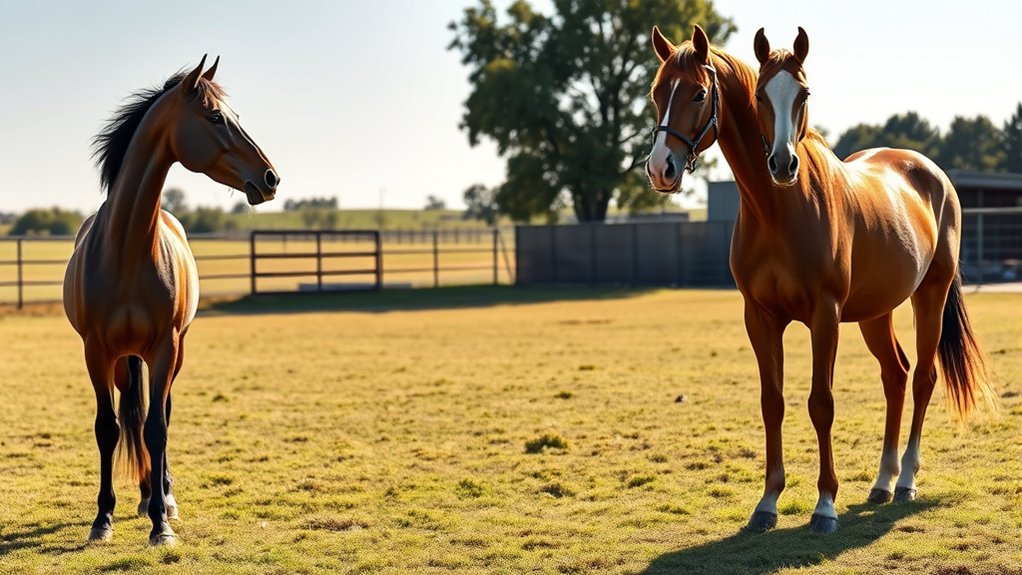
You’ll find that Thoroughbreds typically stand around 16 hands. This puts them right in the middle—taller than Arabians but a bit shorter than the larger Warmbloods.
Warmbloods often match or even exceed this height, but they usually carry more muscle mass.
On the other hand, draft horses are bigger in both height and weight, focusing more on strength than agility.
Average Thoroughbred Height
How tall are Thoroughbred horses compared to other breeds? The average Thoroughbred height ranges from 15.2 to 17 hands (62 to 68 inches) at the withers. This reflects breed standards that emphasize a stature optimized for speed and agility.
Here’s how their height compares numerically:
- Average Thoroughbred height: 15.2 to 17 hands.
- Typical racing Thoroughbreds: around 16 to 16.2 hands.
- Draft breeds: over 17 hands, generally larger and heavier.
- Exceptional individuals, like Holy Roller: up to 18.1 hands.
This height range positions Thoroughbreds as taller than many sport horses but lighter and more refined than draft breeds. Their stature is carefully maintained within breed standards to balance speed, endurance, and agility rather than sheer size.
Comparison With Warmbloods
Although Thoroughbreds usually stand between 15.2 and 17 hands, Warmbloods tend to be taller, ranging from 16.1 to 17.3 hands.
When you compare height and stature, Warmbloods like the Hanoverian and Dutch Warmblood often exceed 16.2 hands. This reflects their breeding focus on disciplines requiring larger size and power.
Unlike the lean, lightweight build of Thoroughbreds optimized for speed, Warmbloods have a more substantial, muscular conformation suited for strength and agility.
This breed comparison highlights that Warmbloods generally surpass Thoroughbreds in both height and overall size, with Warmbloods reaching up to 17.3 hands compared to the typical maximum of 17.0 hands for Thoroughbreds.
Understanding these distinctions helps you appreciate how breed-specific purposes influence equine stature.
Size Versus Draft Horses
When comparing Thoroughbreds to draft horses, you’ll notice a clear distinction in height and build that reflects their different functions.
Thoroughbreds typically stand between 15.2 and 17 hands, averaging around 16 hands.
Draft horses range from 16 to 19 hands, often exceeding 17 hands on average.
This size difference is critical to their respective roles.
- Thoroughbred height: 15.2–17 hands (62–68 inches)
- Draft horse height: 16–19 hands (64–76 inches)
- Thoroughbred build: lean, athletic, optimized for speed
- Draft horse build: massive, heavy, designed for power
Understanding these differences helps you appreciate how height and build adapt horses to racing or heavy work.
What Determines a Thoroughbred’s Height?
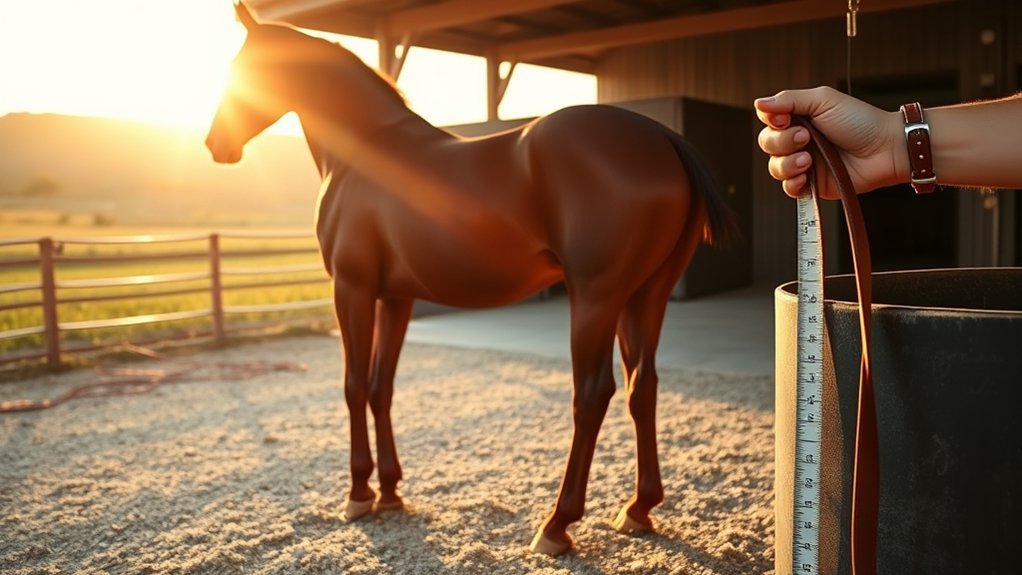
What factors influence a Thoroughbred’s height? Primarily, genetics play a pivotal role, as height is inherited from foundation bloodlines that define breed standards. You measure height from the ground to the highest point of the withers, excluding the head and ears.
The breed’s selective breeding favors taller, leaner horses, typically ranging between 15.2 and 17.0 hands (62 to 68 inches).
However, physical development doesn’t rely solely on genetics. You must also consider environmental factors like nutrition, health, and management that can subtly affect growth and final height.
While genetics set the potential range, an ideal environment ensures Thoroughbreds reach their full stature.
Understanding these determinants is essential to appreciating how breed standards and natural variation define the height of a Thoroughbred horse.
Relationship Between Conformation and Height in Thoroughbreds
You’ll find that limb proportions, especially leg length, play a big role in a Thoroughbred’s height. This directly affects how efficiently they can stride.
Then, neck length comes into play too, since it influences the horse’s overall balance and reach.
On top of that, the height of the withers and the structure of the back are important factors. These really help define both the quality of the horse’s conformation and its measured height.
Height And Limb Proportions
Although height in Thoroughbred horses typically ranges between 15.2 and 17 hands, their conformation, particularly the length and proportions of their limbs, plays a crucial role in determining their stature. You’ll notice that limb length directly influences height and stride length, both critical for racing performance.
Here’s what you should focus on:
- Limb length: Longer limbs generally increase overall height and contribute to a more efficient stride.
- Proportions: Balanced limb proportions support ideal gait and stability.
- Conformation: Features like sloped shoulders complement limb length, enhancing athletic ability.
- Height impact: Variations in limb proportions affect balance, which can either improve or hinder racing suitability.
Understanding these factors helps you appreciate how limb conformation shapes a Thoroughbred’s height and athletic potential.
Neck Length Impact
Limb proportions considerably influence a Thoroughbred’s height, but the neck length also plays a vital role in shaping both the horse’s silhouette and perceived stature. When you assess conformation, a longer, well-arched neck creates a taller visual impression, even though it doesn’t alter actual height at the withers.
This extended neck length enhances height perception by elongating the horse silhouette, especially from lateral views. Furthermore, a proportionally long neck contributes to increased stride length, which can indirectly affect how tall the horse appears during motion.
Since neck length generally correlates with overall size, taller Thoroughbreds tend to have longer necks, balancing their frame and refining their height perception. Understanding these nuances helps you appreciate how neck length subtly influences the horse’s stature beyond mere measurements.
Withers And Back
When measuring a Thoroughbred’s height, the withers serve as the definitive reference point. They mark the highest spot on the horse’s shoulders, excluding the head and ears. Understanding the relationship between withers, back, and conformation is essential for accurate height assessment. Here’s what you need to know:
- The withers’ height directly influences the official measurement from ground to withers.
- A well-defined, high withers structure enhances perceived height and overall conformation.
- Back length and proportions affect the horse’s silhouette but don’t alter measurement standards.
- Variations in shoulder angulation and back length impact athletic performance and perceived height.
Official Height Standards for Thoroughbreds
While Thoroughbreds can vary in size, official height standards set their range between 15.2 and 17 hands. This translates to 62 to 68 inches measured at the withers. Height is measured from the ground to the top of the withers, excluding the head and ears.
This measurement uses hands and inches, where one hand equals 4 inches. Most racehorses stand around 16 hands (64 inches). Occasionally, exceptional Thoroughbreds exceed this official range.
| Height (Hands) | Height (Inches) | Description |
|---|---|---|
| 15.2 | 62 | Minimum official height |
| 16 | 64 | Average racehorse height |
| 17 | 68 | Maximum official height |
These official standards guarantee uniformity in evaluating Thoroughbred size within the recognized range.
How Height Influences Training and Racing Strategies
Although Thoroughbred height varies within official standards, it plays a critical role in shaping training and racing strategies. You must tailor your approach based on each horse’s stature to maximize performance. Here’s how height influences your methods:
- Taller horses (around 16.2 hands) benefit from training strategies that maximize long strides and endurance. These strategies are ideal for race distances exceeding 1.25 miles.
- Shorter Thoroughbreds (15.2 hands or less) excel in sprint races due to enhanced horse agility and quick acceleration.
- Breeders select height traits to target specific race distances, guiding your training focus accordingly.
- Training for taller horses emphasizes sustained pacing, while shorter horses require explosive start drills.
Understanding these height-based differences ensures you prepare Thoroughbreds efficiently for their best racing roles.
Impact of Height on Thoroughbred Health and Longevity
You’ll find that taller Thoroughbreds, especially those above 16.2 hands, tend to be more prone to joint stress and musculoskeletal injuries. This happens because their increased weight and longer stride length put extra pressure on their bodies.
On the other hand, horses that stand around 16 hands seem to hit the sweet spot. They balance speed and durability pretty well, which can help them live longer, healthier lives.
Knowing how height affects these health factors gives you a better idea of what risks to watch for and how to take good care of your horse.
Height And Joint Health
Because taller Thoroughbreds, usually standing between 16 and 17 hands, experience greater leverage and weight distribution, they face increased joint stress during high-speed racing. This elevated stress influences joint health markedly and raises the risk of joint injuries, such as osteoarthritis, especially under intensive training.
To optimize racing performance and minimize injury, you must focus on tailored management strategies. Key considerations include:
- Monitoring Thoroughbred height to assess joint stress potential.
- Implementing targeted joint supplements to support cartilage health.
- Designing careful training regimens that reduce repetitive joint overload.
- Scheduling regular veterinary evaluations for early detection of joint issues.
For exceptionally tall horses like Holy Roller at 18.1 hands, specialized care is critical to address unique joint stress patterns, ensuring injury prevention and maintaining peak performance.
Longevity Related Factors
When managing Thoroughbreds, you must recognize that height considerably influences their health and longevity. Taller horses often face increased musculoskeletal issues due to the extra stress on bones and tendons, which can shorten their competitive and overall lifespan. Staying within breed standards (15.2 to 17 hands) correlates with better health and longevity.
Specialized training, nutrition, and veterinary care are essential for very tall Thoroughbreds to mitigate health risks and support longevity.
| Height Range (hands) | Impact on Health |
|---|---|
| 15.2 – 17 | Ideal health, longer longevity |
| 17+ | Increased joint strain, risk of musculoskeletal issues |
| 18+ | High risk, requires specialized care |
| Below 15.2 | Less common, generally robust but less typical |
Proper management tailored to height ensures sustained health and performance.
Measuring Thoroughbred Height Accurately
Although measuring a Thoroughbred’s height may seem straightforward, it requires specific techniques to guarantee accuracy. You measure Thoroughbred height by recording the distance from the ground to the highest point of the withers, excluding head, ears, and neck.
To get an accurate horse height, follow these steps:
- Assure the horse stands square on a flat, level surface.
- Use a measuring stick or tape designed for horse measurement.
- Measure up to the withers, never including the neck or head.
- Record the height in hands and inches, remembering one hand equals 4 inches.
This method avoids decimals, maintaining standardized, precise horse height measurement essential for Thoroughbred evaluation.
Why Height Matters for Thoroughbred Success
Height plays a critical role in determining a Thoroughbred’s racing capabilities, as it directly affects stride length and speed potential. When you evaluate a horse’s conformation, you’ll notice that height influences not only its physical balance but also its efficiency in covering ground.
Taller horses typically achieve longer stride lengths, enhancing their racing ability, especially over longer race distances. However, an ideal horse size balances speed, stamina, and agility, as extremes in height can hinder performance.
Breeders select for specific height ranges, around 16 hands, to maximize these traits. Understanding how height impacts stride length and conformation helps you appreciate why it’s a key factor in tailoring Thoroughbreds to excel at particular race distances and styles, ultimately influencing their success on the track.
Frequently Asked Questions
What Colors Do Thoroughbred Horses Commonly Come In?
You’ll find Thoroughbred horse coat colors mainly in common horse shades like bay, black, chestnut, gray, and brown. Breed color genetics influence these equine pigmentation patterns, creating typical Thoroughbred color patterns.
Gray Thoroughbreds lighten with age due to pigmentation changes.
Though horse color variations like roan and palomino occur, they’re rare and not officially recognized.
Understanding these genetics helps you appreciate Thoroughbred color diversity within standard equine pigmentation limits.
How Long Do Thoroughbreds Typically Live?
Thoroughbreds typically live around 25 to 35 years. Their lifespan depends heavily on horse diet quality, breeding practices, and training methods that minimize health issues.
You’ll want to maximize riding techniques and exercise routines to reduce stress and injury. Proper nutrition and care can push their longevity into the early thirties or beyond.
Monitoring these factors guarantees your Thoroughbred remains healthy and performs well throughout its life.
What Is the Average Weight of a Thoroughbred Horse?
You’ll find the average weight of a Thoroughbred horse ranges between 1,000 and 1,200 pounds, with most racehorses around 1,100 pounds. Proper feeding habits, training routines, and health care guarantee they maintain this essential weight.
Breeding methods influence muscle mass and size, while racing techniques demand tailored conditioning.
Horse grooming also plays a role in monitoring body condition, helping you track weight changes vital for peak performance and overall health.
How Fast Can a Thoroughbred Horse Run?
A Thoroughbred horse can run up to 40 miles per hour, making it the fastest breed in horse racing. Breeding standards focus on enhancing speed and stamina, while training techniques optimize muscle performance and stride efficiency.
Jockey roles are essential for pacing and strategy. They adapt to track conditions that affect speed.
Racing records reflect these combined factors, showing how Thoroughbreds sustain top velocity over distances from 5/8 to 1 3/4 miles with remarkable consistency.
What Is the History of the Thoroughbred Breed?
You’re stepping into a legacy shaped by legendary bloodlines, where horse racing meets meticulous breeding standards.
The Thoroughbred’s historical origins trace back to 17th-century England, blending Middle Eastern stallions with native mares.
This breed development, documented in early racing records and the General Stud Book, established a pure lineage.
Famous Thoroughbreds like Eclipse exemplify this precision, making the breed a cornerstone of modern equine sport and breeding excellence.
Conclusion
Understanding how tall thoroughbred horses are isn’t just trivia; it’s essential for optimizing their performance and health. You’ll find that even slight height variations can dramatically influence racing strategy and training outcomes.
Measuring height accurately guarantees you’re making informed decisions grounded in conformation and genetics. In the world of thoroughbreds, height isn’t just a number. It’s the cornerstone of success, as indispensable as the air they breathe for sprinting champions.