How To Buy Horses – Simple Steps
To buy a horse, first set a clear budget that covers the purchase, care, and extras. Next, define your riding goals and skill level so you can find a suitable match. It’s important to locate reputable sellers through trusted networks and verify the horse’s health, temperament, and conformation carefully.
You’ll want to arrange a thorough vet check and a test ride to evaluate the horse’s performance and behavior. Make sure to complete all necessary paperwork to secure ownership legally.
Following these steps helps you make a confident purchase. Let’s explore how to make this process easier and safer.
Set Your Budget and Know Buying Costs

Before you start looking for a horse, you need to set a clear budget that covers not just the purchase price but also vetting, transportation, and ongoing care.
Begin by researching typical prices for the type and age of horse you want in your local market.
Don’t forget to include additional costs like personal protective equipment, tack, and stable setup.
Keep in mind that horses with special needs or those imported may demand higher expenses.
Establish a maximum spending limit to prevent overspending and guarantee you’re financially prepared for unexpected costs, such as emergency vet visits.
Identify Your Riding Goals and Skill Level

Begin by figuring out what you want to get out of riding—maybe it’s just for fun, competing, or even professional work.
Take a good, honest look at your current skill level too. This way, you can make sure to pick a horse that fits well with what you can handle.
When your horse matches your discipline and experience, you’re more likely to have a great partnership.
Define Riding Objectives
While selecting the right horse, you need to clearly identify your riding goals and honestly assess your skill level to guarantee a good match. Start by outlining whether you want a horse for beginner riding, advanced competition, trail riding, or leisure.
Consider your long-term plans, like training, showing, or casual riding, as these will influence the horse’s suitability. Match the horse’s age, training, and temperament to your experience and intended use to confirm compatibility.
Remember, specific disciplines like dressage, jumping, or Western demand horses trained in those areas to meet your objectives.
Assess Skill Proficiency
Although defining your riding goals is essential, accurately evaluating your current skill level is just as critical to finding a horse that matches your abilities. You need a clear understanding of your experience to avoid selecting a horse beyond your proficiency. That can lead to frustration or safety risks.
To assess your skill proficiency effectively, start by consulting a qualified instructor or experienced rider for an honest evaluation of your abilities. Then, review your riding history and how comfortable you’re with various horse behaviors and training levels.
Also, consider the horse’s age, temperament, and training background to make sure they align with your riding goals and experience.
This precise assessment helps you target horses whose needs and characteristics complement your current skill set. That way, you set the stage for a successful partnership.
Match Horse To Rider
Before choosing a horse, you need to clearly identify your riding goals and honestly assess your skill level to guarantee a compatible match.
Determine whether you want a horse for trail riding, jumping, or dressage, as this will guide your selection. Be realistic about your experience.
Select a horse with training and temperament suited to your abilities. Avoid overly spirited or too calm horses that don’t align with your riding proficiency.
Also, consider the horse’s age, prior training, and use to ensure it suits your intended activities. Don’t overlook physical conformation and health history.
A sound horse can safely support your riding goals. Matching these factors thoughtfully helps you find a horse that complements your skills and ambitions.
This makes your riding experience safe and enjoyable.
Where to Find Trusted Horse Sellers

You’ll want to focus on sellers recommended by trusted sources like Pony Club officials or well-established local dealers.
It really helps to check a dealer’s reputation and ask for word-of-mouth referrals from experienced riders. That way, you can avoid unreliable sellers.
Also, don’t forget to consider online platforms that have verified reviews and thorough vetting—those can be great for finding trustworthy options.
Trusted Sources Identification
When you want to find a trustworthy horse seller, start by seeking recommendations from reputable organizations like Pony Club, local Masters of Foxhounds (MFH), or experienced trainers. These sources often have connections to reliable sellers with transparent histories.
You should also consider personal referrals from horse owners or professionals you trust.
To identify trusted sources, look for sellers who’ve positive reviews and verifiable references. They might belong to professional equine organizations or have endorsements.
Also, they should maintain transparency about the horses’ backgrounds and health.
Avoid sellers with questionable histories or lacking verifiable information. Online platforms with verified reviews can also help you pinpoint reputable sellers.
Dealer Reputation Factors
Although finding trusted horse sellers can seem intimidating, knowing where to look and what to evaluate makes the process more straightforward. Start by seeking dealers recommended by reputable sources like Pony Club district commissioners and local master farriers.
Dealers with a long-standing positive reputation in the equine community tend to be more reliable and transparent.
You should prioritize sellers who provide thorough documentation, including health records and honest assessments of their horses. Pay close attention to word-of-mouth reputation, as it often reflects consistent integrity better than new or unknown dealers.
It’s a good idea to check online reviews and feedback from previous buyers to verify a dealer’s trustworthiness.
Community Recommendations
Since community recommendations often come from trusted sources, they provide a reliable starting point for finding reputable horse sellers. You’ll want to tap into established networks where word-of-mouth reputation is key. Reputable contacts like Pony Club district commissioners and members of the Mare and Foal Herd can direct you to trustworthy sellers.
Additionally, online platforms affiliated with recognized equine organizations offer vetted breeder and dealer listings.
To further refine your search, consider attending local horse shows or clinics where experienced riders and trainers gather.
Here are three practical ways to find trusted sellers through community recommendations:
- Consult Pony Club DCs and Mare and Foal Herd members for personal referrals
- Use online platforms like the British Horse Society to locate reputable breeders
- Attend local equine events to meet experienced sellers and trainers in person
Assess Horse Health, Temperament, and Conformation
Before committing to a purchase, you need to thoroughly assess the horse’s health, temperament, and conformation to confirm it suits your needs and reduces future risks.
Start by evaluating the horse’s conformation. Check posture, musculature, and hoof condition for signs of soundness or potential issues.
Observe the horse’s temperament through calm, gradual interaction to make sure it fits your experience level.
Review health records carefully, focusing on vaccinations, dental care, and hoof maintenance history.
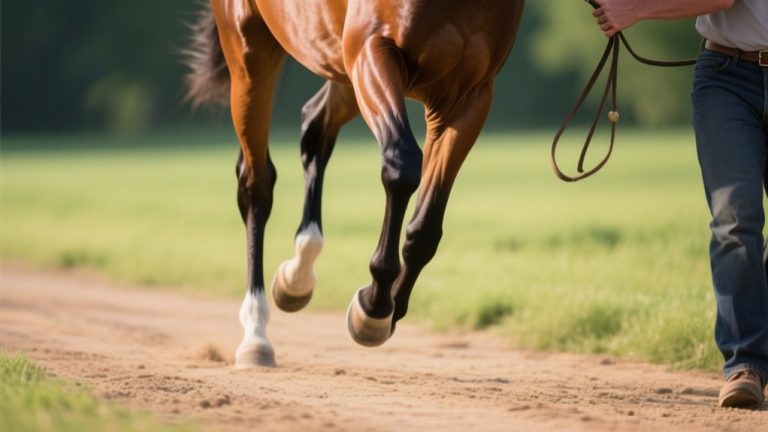
Watch the horse’s gait for irregularities or lameness, ideally with a vet or gait analyst’s assistance.
Finally, ask detailed questions about training, behavior, and previous environments to determine suitability and uncover any hidden risks.
This thorough assessment helps confirm your new horse will be a safe, compatible partner. Taking the time now can save you a lot of trouble later.
Test Ride and Handle the Horse Before Buying
When you handle the horse on the ground before riding, you get a clear sense of its behavior and temperament in a controlled setting. This step lets you assess how the horse responds to basic commands and whether it cooperates calmly.
Handling a horse on the ground reveals its temperament and response to basic commands before riding.
Next, take the horse for a test ride in a familiar, safe area to evaluate its gait, responsiveness, and comfort.
Focus on these key points:
- Observe the horse’s reaction to haltering, leading, and standing still to judge training and demeanor.
- Check for any nervousness, aggression, or excitement that might signal behavior issues.
- Assess physical aspects like saddle fit, hoof health, and overall condition during handling and riding.
These observations help you decide if the horse suits your needs before committing to purchase. It’s all about making sure you and the horse are a good match.
Arrange a Thorough Pre-Purchase Vet Check
Although you’ve handled and ridden the horse to gauge its temperament and suitability, arranging a thorough pre-purchase vet check is essential to uncover any hidden health issues. The vet will conduct a comprehensive clinical exam, evaluating gait, conformation, dental health, and hoof condition while checking for lameness or discomfort.
Imaging techniques like X-rays help reveal joint, tendon, or bone problems not visible externally. Blood tests or lab work identify underlying infections or health concerns that might affect future performance.
Make sure to discuss the vet’s findings and recommendations in detail before making your decision. This step protects your investment and ensures the horse’s health aligns with your riding goals, preventing costly surprises down the road.
Complete Horse Paperwork and Ownership Transfer
Securing all necessary paperwork and completing the ownership transfer is essential to finalize your horse purchase legally and smoothly. Before you buy, make sure you have the horse’s passport, vaccination records, and health history verified.
Ensure all paperwork, including passport and health records, is verified before purchasing your horse.
Confirm the ownership transfer by completing the required legal documents, such as a Bill of Sale, and submitting them to the appropriate registry.
Also, check that the horse’s microchip information matches the paperwork and is current.
Key steps include:
- Verifying all health and vaccination records, including veterinary history
- Completing and submitting ownership transfer forms to the relevant authority
- Ensuring microchip details are accurate and updated
Following these steps protects your legal rights and guarantees the horse’s registration reflects your ownership. It’s a straightforward process once you know what to look for!
Frequently Asked Questions
How Do I Train a Newly Purchased Horse at Home?
You start by building trust through ground training, introducing equipment slowly, and using consistent cues with positive reinforcement.
Keep sessions short and frequent. Watch your horse’s reactions closely, and adjust your methods to their comfort and pace.
It’s all about moving at a speed that feels right for your horse. Patience and consistency really pay off here.
What Equipment Do I Need for Horse Grooming?
Ever tried grooming a horse without the right tools? You’ll need a curry comb, body brush, mane and tail comb, hoof pick, and grooming cloth. These essentials keep your horse clean, healthy, and comfortable every time.
Having the right gear really makes a difference. It’s not just about looking good—it’s about making your horse feel good too. Trust me, once you get the hang of it, grooming becomes a great bonding time.
How Often Should I Schedule Regular Vet Check-Ups?
You should schedule regular vet check-ups at least once or twice a year. For older or high-performance horses, it’s a good idea to increase the frequency to quarterly visits.
It really depends on your horse’s age, health, and activity level. So, work with your vet to tailor the schedule that fits your horse best. This way, you can keep your horse in great shape all year round.
What Are Common Signs of Horse Stress or Anxiety?
Ever seen a horse’s ears pin back like storm clouds? You’ll notice wide eyes, tail swishing, rapid breathing, pawing.
Sweating, trembling, or resistance to touch are also clear signs your horse feels stressed or anxious. These behaviors usually mean something is bothering them.
How Can I Safely Transport My Horse to a New Location?
You’ll secure your horse in a clean, well-ventilated trailer with non-slip flooring and partitions. Make sure the space is comfortable and safe for your horse before hitting the road.
Provide water and light feed during the trip to keep your horse hydrated and energized. It’s a good idea to plan smooth routes with regular stops to give your horse a break and reduce stress.
Also, don’t forget to consult a vet about the travel duration. They can offer advice on bedding or whether sedation might be necessary to keep your horse calm.
Conclusion
Buying a horse is a big step, but if you follow these practical steps, you’ll avoid jumping in with both feet. Set your budget, know what you want, and find a trusted seller.
Don’t skip the test ride or vet check. They’re worth their weight in gold. Finally, make sure all paperwork is in order.
With careful planning, you’ll find a horse that fits your needs and set yourself up for success from the start.