When Did People Start Riding Horses?
You started riding horses at least 5,000 years ago, well before the earliest artistic depictions. Skeletal evidence from the Yamnaya culture shows specific markers indicating frequent horseback riding, suggesting it was used for transport and mobility.
Early domestication also changed horse anatomy and behavior to suit riders. While some experts question the interpretation of these markers, the impact of horseback riding on human society was profound.
Exploring further reveals how this practice shaped cultures and technology.
When and Where Did Horseback Riding Begin?
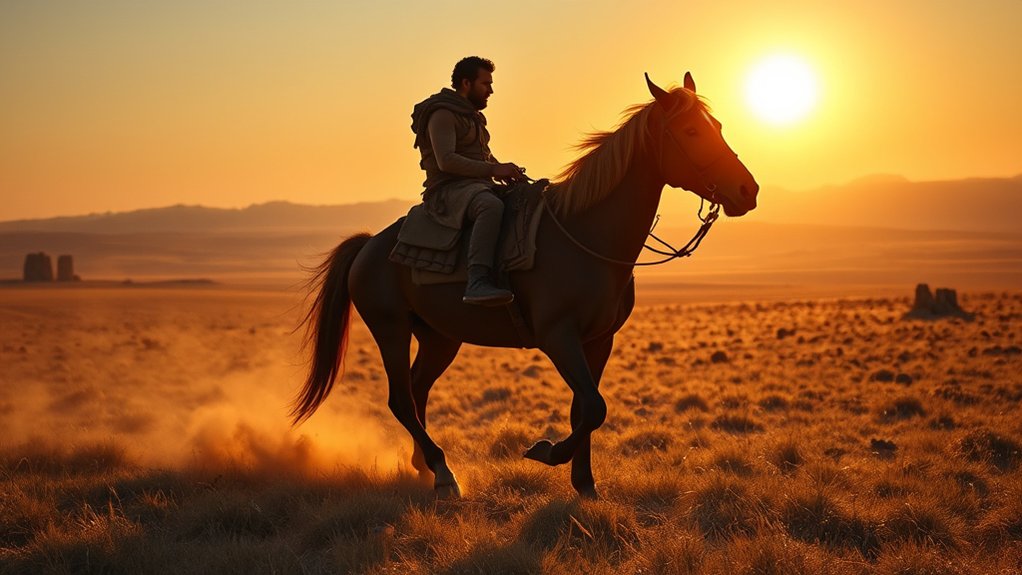
Although horse domestication likely started earlier, the earliest direct evidence of horseback riding dates back to around 3500 BCE in Central Europe. This is identified through specific skeletal markers known as “horse rider syndrome.”
Analysis of human remains from the Yamnaya culture in western Russia, dating between 3000 and 2500 BCE, further supports that people were riding horses by 3000 BCE. The earliest evidence includes wear on hip sockets and thigh bones, indicating regular horseback riding.
This evidence places horseback riding’s origins in the Eurasian steppe during the late Copper Age to early Bronze Age. Archaeological and genetic findings align, suggesting horseback riding gradually developed over time.
The Yamnaya culture’s remains provide critical insight into this shift, marking one of the earliest widespread uses of mounted horseback riding in human history.
The Yamnaya Culture’s Role in Horseback Riding and Domestication
Because the Yamnaya culture lived between 3000 and 2500 BCE in western Russia, their remains provide essential evidence about early horseback riding and domestication. Researchers analyzing Yamnaya skeletons identified “horse rider syndrome,” a biomechanical stress marker indicating frequent horseback riding.
This evidence suggests that horseback riding in the Yamnaya culture predates artistic depictions and was integral to their mobility and expansion across Eurasia. The Yamnaya were among the first to engage in horse domestication, using horses primarily for transport.
The gradual emergence of horseback riding within this culture likely shaped their widespread influence. By studying these skeletal markers, you can understand how the Yamnaya culture played a pivotal role in developing horseback riding and horse domestication practices that impacted subsequent societies.
Physical and Behavioral Differences Between Wild and Early Domestic Horses

You’ll notice that early domestic horses show some pretty distinct physical changes. For example, they tend to have lighter builds and specific skeletal markers that suggest riding stress.
This is quite different from their wild counterparts.
These changes didn’t just happen by chance. They reflect selective breeding and shifts in behavior that made it easier for humans to control and work with horses.
By understanding these differences, we get a clearer picture of how domestication influenced not only the horse’s anatomy but also its temperament.
It’s pretty fascinating to see how much humans have shaped these animals over time.
Wild vs. Domestic Traits
When examining the change from wild to domesticated horses, physical and behavioral traits reveal significant differences shaped by human intervention. Skeletal remains show that domestication altered horse anatomy and behavior, reflecting human influence.
You can identify these differences in:
- Reduced size and limb proportion changes in early domestic horses compared to wild counterparts.
- Modifications in skull shape and tooth wear, indicating dietary and environmental shifts.
- Skeletal adaptations in pelvis and thigh bones linked to riding and handling.
- Behavioral differences, such as decreased flight response and increased tolerance of humans, contrasting with wild horses’ defensive nature.
These traits collectively demonstrate how early domestication influenced horses’ physical form and calmer temperament, which was essential for their role as riding animals.
Behavioral Adaptations To Humans
Although wild horses relied heavily on flight to escape danger, early domestic horses showed notable behavioral adaptations that made them more compatible with human interaction. Through domestication, these horses exhibited changes like reduced fearfulness and increased tolerance to human presence.
You’ll notice early domestic horses displayed less aggression and more cooperation, reflecting their shift from survival-driven instincts to roles involving early riding and handling. Curiosity toward humans replaced the heightened flight response typical of wild horses, making training and control easier.
Selective breeding reinforced these traits, promoting trainability and social behaviors that worked well with humans. These behavioral adaptations, alongside subtle anatomical changes, highlight the transformation early domestic horses went through to support human needs.
This marked a pivotal step in the history of horse domestication and riding development.
Physical Changes From Riding
While early domestic horses showed minimal physical differences from their wild counterparts, careful analysis reveals important skeletal changes linked to riding. You can identify these physical changes through specific skeletal adaptations caused by biomechanical stress from mounted activity.
Consider these key findings:
- Changes in thigh bones and pelvis reflect repetitive stress from carrying riders.
- Altered lower spine structure indicates adaptation to the rider’s weight and movement.
- Smaller skulls and varied limb proportions emerged due to selective breeding.
- Wear patterns on hip sockets and thigh bones provide direct evidence of horseback riding.
These adaptations reveal how riding influenced horse anatomy, differentiating early domestic horses from wild ones beyond behavioral traits. Understanding these physical changes helps pinpoint when domestication and riding practices began.
Identifying Early Horse Riders Through Skeletal Evidence
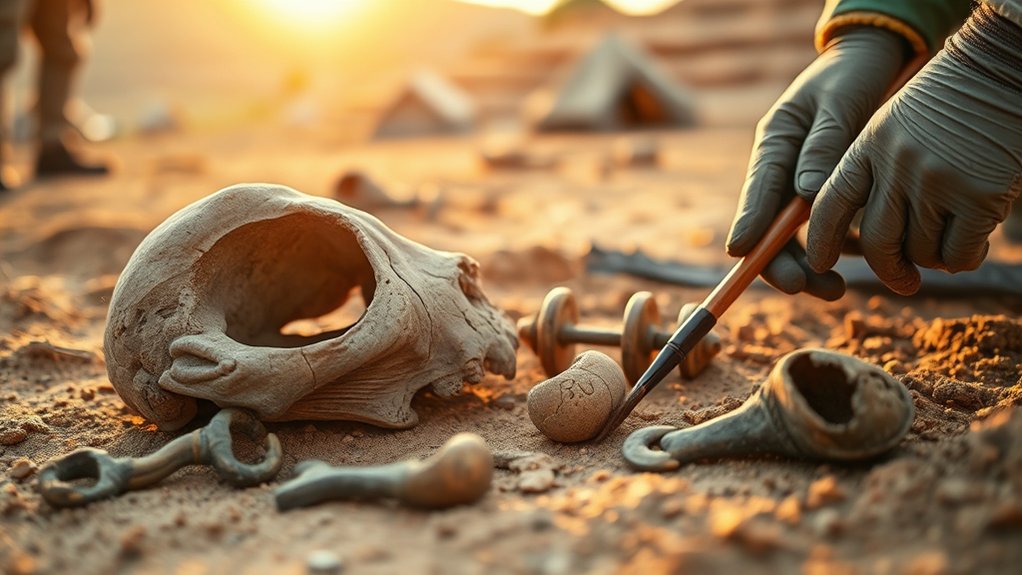
Because skeletal remains can reveal biomechanical stress patterns, researchers have identified early horseback riders by analyzing specific traits in human bones. Skeletal analysis of 217 individuals from Yamnaya burial sites showed five skeletons exhibiting multiple markers of horseman syndrome, a set of six traits linked to habitual riding, including modifications to thigh bones and pelvis.
These markers provide direct evidence of horseback riding around 3000–2500 B.C.E., predating artistic representations and chariot use. The presence of horse remains alongside these skeletons strengthens the association between humans and early riding activity.
Bone tissue analysis further confirms biomechanical stress consistent with riding, allowing you to understand how physical evidence, rather than indirect sources, offers a reliable window into the origins of human-horse interaction.
How Genetics Trace the Origins of Domestic Horses
Skeletal evidence offers tangible proof of early horseback riding, but genetic data uncovers the deeper story behind horse domestication and breeding. Genetic analysis reveals complex domestication patterns, primarily traced through mitochondrial DNA (mtDNA). Here’s what you should know:
Genetic insights deepen our understanding of horse domestication beyond skeletal evidence.
- Mitochondrial DNA identifies at least 17 maternal lineages, indicating multiple domestication events across Eurasia.
- Coat color diversity increased rapidly in early domesticated horses, showing selective breeding distinct from wild populations.
- Y-chromosome studies reveal low stallion diversity, suggesting limited male contributions to the domestic gene pool.
- Chalcolithic horses aren’t direct ancestors of modern domestic horses, implying separate domestication processes.
Artifacts Revealing Early Horseback Riding Practices
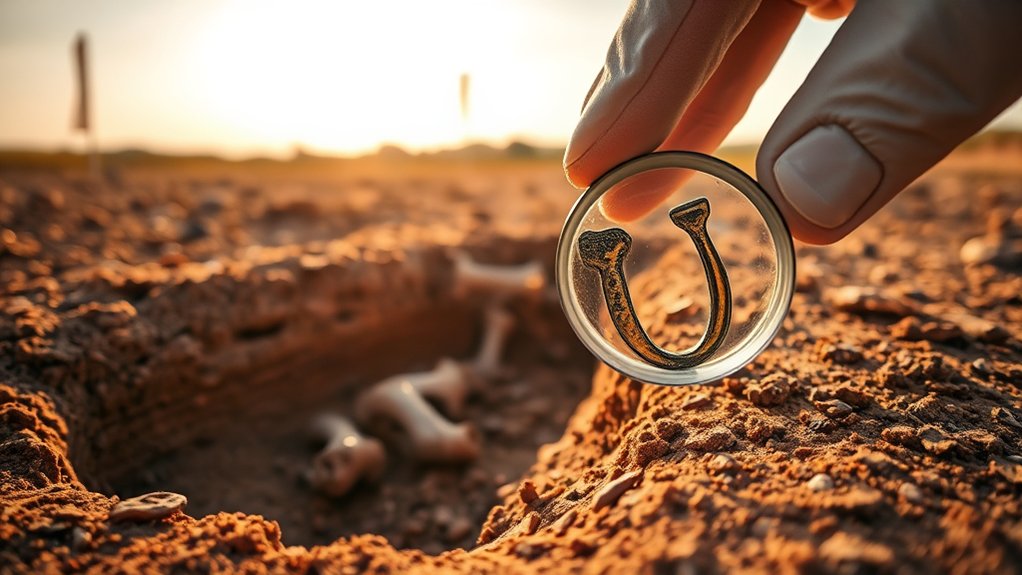
You can spot early horseback riding by looking at certain skeletal markers found in more than 200 Bronze Age human skeletons. These markers show wear on the hip sockets and thigh bones.
People often call this wear “horse rider syndrome,” which points to the biomechanical stress that comes from regular riding. So, by studying these artifacts, we get solid proof that horseback riding started long before the very first artistic images of it appeared.
Archaeological Skeletal Evidence
Although artistic depictions of horseback riding appear around 4,000 years ago, direct physical evidence pushes this timeline further back. Analysis of over 200 Bronze Age skeletal remains reveals five individuals exhibiting “horse rider syndrome,” marked by wear on hip sockets and thigh bones. These markers indicate repeated biomechanical stress from riding, dating to about 5,000 years ago.
Key findings include:
- Identification of six skeletal markers linked to horseback riding.
- Five Yamnaya culture skeletons with at least four markers each.
- Burial mounds containing both human remains and horse-related artifacts.
- Evidence published in *Science Advances* confirming early riding practices.
This skeletal evidence predates artistic depictions by roughly a millennium, providing the earliest direct proof of horseback riding during the Bronze Age.
Riding Markers Identification
Because direct evidence of early horseback riding can be elusive, researchers rely on identifying specific physical markers, known as riding markers, on ancient human remains. These markers include distinctive wear patterns and biomechanical changes in the pelvis, hip sockets, thigh bones, and lower spine caused by horseback riding stress.
Analysis of over 200 Bronze Age skeletal remains revealed five individuals exhibiting at least four of six recognized riding markers, often called horseman syndrome traits. This evidence provides direct physical proof of horseback riding practices dating back approximately 5,000 years.
How Horseback Riding Changed Human Societies
When humans began riding horses around 3000 B.C.E., they opened new possibilities for travel and communication that reshaped societies. The domestication of the horse and the practice of riding changed how you interact with your environment.
Here’s how horseback riding changed human societies:
- It allowed you to travel longer distances, enhancing trade and cultural exchange across vast regions.
- Mounted combat improved military mobility and strategy, especially in Eurasian steppe cultures.
- You could expand settlements and develop urban centers more efficiently through horse-powered transportation and labor.
- Agricultural practices became more productive with horses aiding in plowing and resource management.
These changes show how riding and horse domestication deeply influenced social, economic, and military aspects of human life.
Why Some Skeptics Question Early Riding Evidence?
You might wonder if skeletal markers really show horseback riding because similar signs can come from handling other animals or doing different activities.
Also, incomplete remains make it tricky to pinpoint changes caused just by riding.
On top of that, evidence from animals like mules adds another layer of complexity when trying to understand early human transport methods.
Skeletal Evidence Limitations
Although skeletal remains offer valuable clues about early horseback riding, they don’t always provide definitive evidence. Skeletal evidence can be limited and sometimes ambiguous when identifying riding-related changes.
You should consider these key challenges skeptics raise about skeletal markers:
- Incomplete preservation means some bones or features needed to detect riding-related changes might be missing.
- Skeletal markers like horseman syndrome aren’t exclusive to riding and may appear due to other activities or stresses.
- Diagnosing riding adaptations often relies on subjective criteria, leading to inconsistent interpretations among researchers.
- Without direct artifacts linked to riding equipment, it’s difficult to conclusively connect skeletal changes to horseback riding alone.
Understanding these limitations helps you critically assess claims about the timing of early horseback riding.
Alternative Animal Transport
Skeptics challenge the interpretation of skeletal markers attributed to horseback riding by highlighting alternative explanations rooted in other forms of animal transport. You have to consider that skeletal signs linked to riding could stem from activities like chariot use or managing different animals.
The incomplete preservation of remains makes it harder to identify biomechanical stress unique to riding. Alternative animal transport involving mules or donkeys may produce similar skeletal changes, which casts doubt on early domestication evidence.
| Factor | Skeletal Signs | Evidence Challenges |
|---|---|---|
| Horseback Riding | Specific stress | Often incomplete |
| Chariot Use | Similar stress | Indistinct markers |
| Mules/Donkeys Riding | Comparable | Confounds identification |
| Archaeological Finds | Rare bits/tack | Lacking in early sites |
This overlap fuels skepticism about early horseback riding claims.
What Future Research Could Reveal About Horseback Riding History
As researchers continue to develop new methods, analyzing horse bones for skeletal signs of rider carriage could pinpoint when horseback riding first emerged. Future research could focus on examining ancient remains for physical adaptations in horses and humans linked to riding.
Applying genetic analysis to trace the co-evolution and geographic spread of riding practices is another key area. Identifying artifacts related to early riding technology, such as saddles or bits, can help us understand how techniques evolved.
Conducting interdisciplinary studies that combine archaeology, genetics, and biomechanics will help integrate all these findings. These approaches will clarify the timeline and cultural contexts of horseback riding’s origins.
The Legacy of Early Horseback Riding in Modern Cultures
Understanding the origins of horseback riding helps explain its deep-rooted influence on modern cultures around the world. Early horseback riding, evidenced by skeletal markers and archaeological finds like those from the Yamnaya culture, laid the groundwork for many cultural practices you see today.
The gradual evolution of riding techniques and equipment, such as bits and saddles, directly shaped modern sports including equestrian competitions.
Moreover, Indigenous North American societies integrated horses into their mobility and cultural systems long before European arrival, demonstrating horseback riding’s broad cultural impact.
When you consider transportation, recreation, and cultural identity, you’ll see how these early developments persist.
Frequently Asked Questions
How Did Horses Impact Indigenous North American Cultures Before Europeans Arrived?
Horses deeply shaped Indigenous North American cultures by enhancing mobility and trade, which you’d recognize in their cultural significance. They symbolize strength and freedom in Indigenous storytelling, reflecting their essential role beyond transportation.
You’d see horse symbolism woven into ceremonies and social status, showing how horses influenced identity and spiritual life. This evidence highlights horses as crucial to expanding hunting territories and fostering cultural exchange before European contact.
What Types of Horses Were First Domesticated for Riding?
You’ll find that the first horses domesticated for riding were small, agile types from the Eurasian steppes, like those linked to early horse breeding. They weren’t specialized breeds yet but general-purpose horses.
As saddle development advanced, riding techniques evolved, gradually shaping these horses’ physiques.
Archaeological and genetic evidence shows a progression from simple riding to more specialized breeds optimized for different riding needs over time.
Were Horses Used for Ceremonial Purposes by Early Riders?
Picture horses as the beating drum in ancient ceremonial rituals. They were definitely more than just mounts.
You’ll find evidence of ritualistic horse dances and sacred equine symbols in burial sites and rock art. This shows early riders used horses in spiritual contexts.
Archaeological findings from cultures like the Yamnaya reveal horses held symbolic power. This confirms their role in ceremonies, not just transport.
How Did Early Riders Train and Care for Their Horses?
You’d rely on gentle horse training techniques, like gradual desensitization to early riding gear such as bits and saddles, to build trust over time.
Equine health practices included monitoring behavior closely, providing proper food, water, and shelter, plus grooming and hoof care to maintain well-being.
Evidence shows early riders emphasized patience and positive reinforcement, ensuring safety and cooperation while reinforcing the bond between rider and horse through consistent care and respect.
Did Horse Riding Influence Migration Patterns of Ancient Peoples?
Yes, horse domestication greatly influenced migration patterns of ancient peoples. You’ll see that riding techniques improved mobility, enabling long-distance travel across Eurasia.
This increased range helped groups explore and settle new territories efficiently. Equine mythology often highlights the horse’s central role in cultural identity and migration narratives, reflecting its importance in facilitating trade and cultural exchanges.
Evidence shows these advancements reshaped migration routes and accelerated population movements.
Conclusion
You might think that riding horses is a simple, timeless act, but the evidence shows it’s a complex story still full of debate. Despite skeletal clues and genetic data pointing to the Yamnaya culture as early riders, skeptics remind us how much we don’t know.
So, while you saddle up imagining ancient riders blazing trails, remember: the truth about when people first rode horses is still galloping just out of reach.