Where Did The American Quarter Horse Originated From
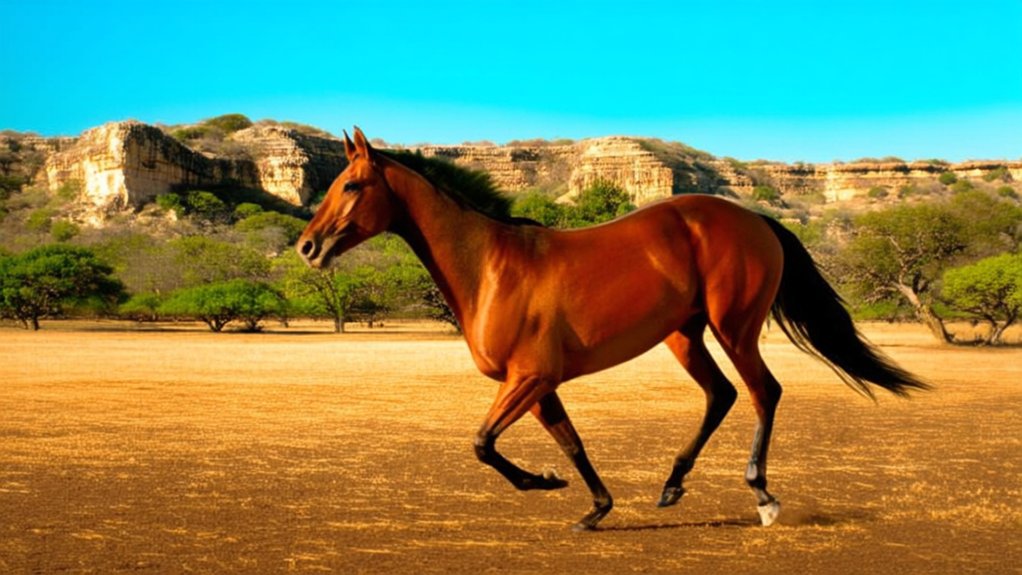
You’ll find that the American Quarter Horse originated in 17th-century Virginia, where colonists bred English horses with Spanish Chickasaw horses to create a fast, versatile breed. These horses excelled in short-distance quarter-mile sprints, which is how the breed got its name.
Over time, crossbreeding with Thoroughbreds enhanced their speed and agility, shaping their traits for ranch work and racing. Understanding this foundation reveals how the Quarter Horse became an enduring symbol of American equine heritage.
The Early Colonial Roots of the Quarter Horse
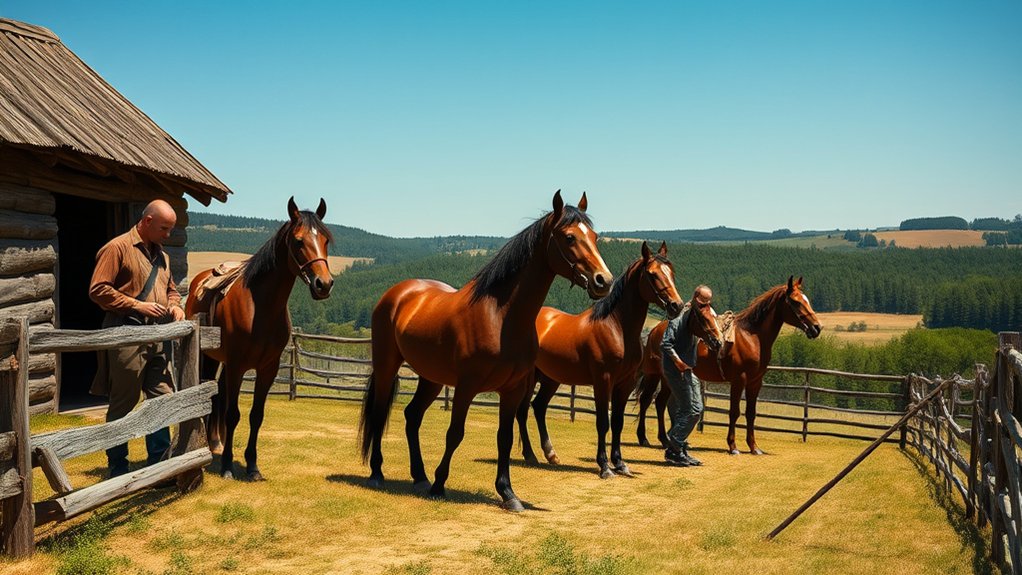
Although many associate the American Quarter Horse with modern rodeos and ranch work, its origins go back to 17th century Virginia. Colonists bred horses specifically for short-distance speed and versatility.
You’ll find that early settlers imported English horses and Chickasaw horses of Spanish descent. They combined traits that enhanced speed and agility.
The breed developed primarily for quarter-mile races, which defined its name and purpose. By the 18th century, plantation owners and settlers wagered on these quick horses, integrating them firmly into regional culture.
The foundation rested on crossing English Thoroughbreds with native North American horses. This produced an adaptable and fast horse suited for racing and diverse labor tasks.
Understanding these roots reveals how the Quarter Horse’s unique characteristics emerged from deliberate colonial breeding strategies.
How English and Spanish Horses Shaped the Quarter Horse
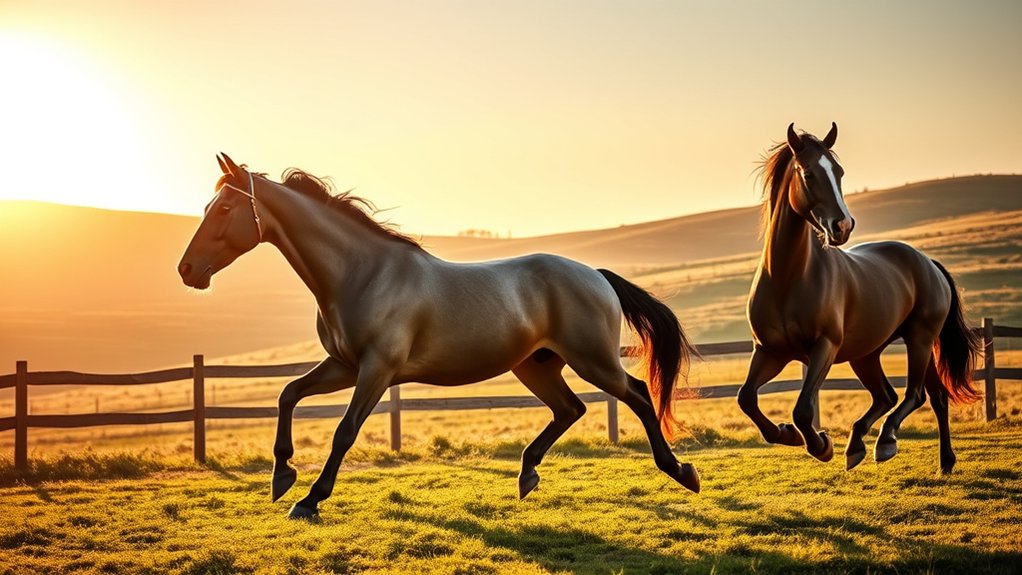
The early colonial breeders didn’t just randomly mix horses. They brought together distinct bloodlines that each added specific qualities to the American Quarter Horse. English horses contributed speed and refinement, while Spanish breeds like the Chickasaw and Iberian added agility, cow sense, and hardiness.
This blend created a versatile horse, quick and tough enough for many tasks. Understanding these influences helps you appreciate the Quarter Horse’s unique traits.
| Bloodline | Key Contributions |
|---|---|
| English Horses | Speed, refinement |
| Spanish Horses | Agility, cow sense |
| Chickasaw Breed | Hardiness, stamina |
| Iberian Breed | Agility, temperament |
This combination shaped the Quarter Horse’s characteristic speed, agility, and adaptable temperament you see today.
How Thoroughbreds Helped Shape the Quarter Horse
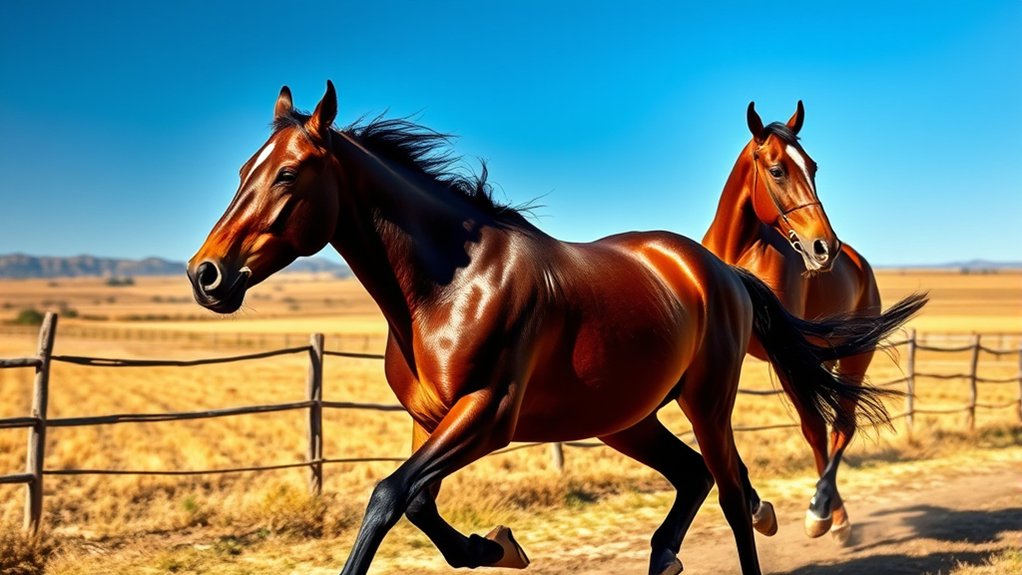
You’ll notice that Thoroughbreds played a big role in boosting the Quarter Horse’s speed and agility. This was especially true through some careful crossbreeding back in the 18th century.
Take the Thoroughbred stallion Janus, for example. He was imported in 1752 and made a lasting mark on Quarter Horse bloodlines.
Janus brought in traits that really helped improve their short-distance racing abilities.
Knowing about this influence gives us a better understanding of how the Quarter Horse developed into such a versatile and fast athlete.
Thoroughbred Influence on Speed
When you examine the origins of the American Quarter Horse’s speed, you’ll find that Thoroughbreds played an essential role in shaping its athleticism. By introducing sprinting ability and an athletic build, Thoroughbreds enhanced the Quarter Horse’s quick acceleration, especially over short distances like a quarter mile.
This genetic infusion refined both speed and stamina, enabling the breed to excel in short-distance racing. The Thoroughbred influence also contributed to a more streamlined head shape, improving overall agility and performance.
Crossbreeding with Thoroughbreds established the Quarter Horse as one of the fastest breeds worldwide for sprints. Understanding this influence helps you appreciate how the infusion of Thoroughbred bloodlines was pivotal in developing the Quarter Horse’s renowned speed and athletic prowess without altering its unique characteristics.
Janus Stallion Contribution
Although Thoroughbreds broadly influenced the American Quarter Horse, the stallion Janus played a particularly pivotal role in shaping the breed’s speed and refinement. Imported into America in 1752, Janus introduced valuable genetic traits that enhanced short-distance racing performance and athletic ability.
You’ll find that breeders selectively used Janus’s lineage to develop faster, more agile horses, blending his Thoroughbred characteristics with local stock. This strategic infusion helped create the modern Quarter Horse, renowned for its sprinting speed and versatility.
By incorporating Janus’s bloodlines, you can trace how the Quarter Horse evolved into a breed excelling in quick bursts and refined movement. This made it uniquely suited for racing and varied performance tasks.
Janus remains a key figure in the breed’s genetic foundation.
Why Is It Called the “Quarter” Horse?
Because the American Quarter Horse excels at sprinting short distances, it earned its name from its remarkable speed over a quarter-mile race.
You should understand that the term “Quarter” directly refers to the breed’s specialization in these short sprints, a distance where it consistently outperforms other horses.
This name originated in the 18th century, when farmers and ranchers raced these horses over quarter-mile tracks, highlighting their exceptional quickness and acceleration.
The breed’s identity centers on this ability to cover a quarter mile faster than any other horse, rather than excelling in endurance or long-distance racing.
Quarter Horse Racing Origins and Early Venues
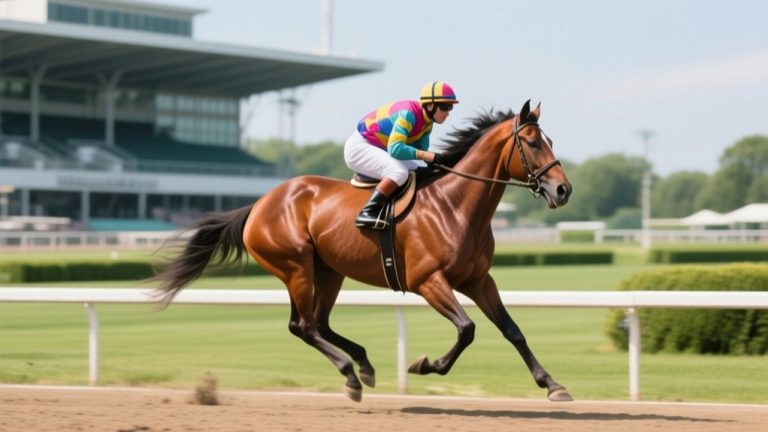
Tracing back to early 17th-century Virginia, Quarter Horse racing began on plantations where short-distance sprinting contests showcased the breed’s remarkable speed. The first documented races occurred in 1674 in Enrico County, focusing on quarter-mile sprints that highlighted the horse’s explosive power and agility.
By the late 1600s, plantation owners regularly wagered on these events, underscoring the competitive nature and growing popularity of the sport.
Early race venues were informal, typically set in open fields or farm lanes rather than established tracks. These grassroots settings laid the foundation for organized short-distance racing.
It’s interesting how these simple beginnings shaped what would become a beloved racing tradition.
The importation of the Thoroughbred stallion Janus in 1752 further refined the breed, enhancing its speed and stamina. This helped shape the Quarter Horse’s racing legacy in a big way.
You could say Janus gave the breed a real boost.
Meet the Legendary Sires and People Who Built the Breed
You’ll find that the American Quarter Horse’s foundation rests on legendary sires like Steel Dust and Wimpy P-1. These guys passed down important traits like speed and cow sense that really set the breed apart.
Then, influential breeders such as Scott Wilson came along and refined those characteristics even more. They helped shape the breed’s versatility and solid reputation.
When you understand their roles, it’s clear how careful selection and breeding built the modern American Quarter Horse we know today.
Founding Stallions
When you explore the roots of the American Quarter Horse, you’ll discover that its foundation rests on legendary stallions like Steel Dust, renowned for his cow sense and speed. The breed’s development was further shaped by Janus, a Thoroughbred stallion introduced in 1752, which enhanced speed and refinement.
Wimpy P-1, the first officially registered stallion in 1940, symbolizes the formal recognition of the breed. Early breeders prioritized horses with quick acceleration, agility, and versatility, building a lineage focused on performance and utility. It’s pretty fascinating how these traits were so important from the very beginning.
| Stallion | Contribution |
|---|---|
| Steel Dust | Cow sense, speed |
| Janus | Speed, refinement |
| Wimpy P-1 | Official breed registration |
Influential Breeders
The legacy of foundational stallions like Steel Dust and Wimpy P-1 extends beyond their individual traits. It was shaped remarkably by the breeders who recognized and refined these qualities. These breeders focused on enhancing speed, agility, and temperament. They wanted to make sure the American Quarter Horse thrived as a versatile and reliable breed.
When you look at their influence, consider how they selected for cow sense and sprinting ability, as seen in Steel Dust. They also registered Wimpy P-1 as the first official Quarter Horse, which really helped cement breed standards.
Plus, they integrated traits ideal for ranch work and rodeo through sires like Poco Bueno. They emphasized performance versatility under Doc Bar’s guidance. And overall, they established the breed’s reputation for speed, strength, and adaptability.
It’s pretty impressive how much these breeders shaped what the Quarter Horse is today.
How Ranch Work Shaped Quarter Horse Traits
Because ranch work demanded quickness and agility, Quarter Horses developed a muscular build and exceptional athletic ability tailored to rapid turns and short bursts of speed. You’ll notice that their calm temperament and strong cow sense emerged from the need to herd and rope cattle effectively in open pastures.
Breeders selected horses with outstanding sprinting capabilities, stamina, and versatility to handle diverse ranch chores. Over generations, these traits refined the breed’s intelligence and agility, making them indispensable for cattle work.
| Trait | Ranch Work Influence |
|---|---|
| Muscular Build | Supports rapid turns and bursts of speed |
| Calm Temperament | Essential for managing unpredictable cattle |
| Sprinting Ability | Enables quick acceleration over short distances |
| Versatility | Adapts to various ranch tasks efficiently |
Establishing the American Quarter Horse Registry
Although the American Quarter Horse had been prized for its speed and versatility for decades, it wasn’t until 1940 that enthusiasts established the American Quarter Horse Registry to officially document and preserve the breed’s unique bloodlines.
This pivotal move secured the breed’s integrity and growth, focusing on key traits that made the Quarter Horse distinct.
You should understand these core aspects of the registry:
- Official recognition and registration began in 1940.
- Emphasis on preserving speed, agility, and versatility.
- Registration requires verified pedigree and adherence to breed standards.
- Initially prioritized horses excelling in short-distance racing and work.
It has become the largest breed registry worldwide, with over 3.2 million Quarter Horses registered.
This structure guarantees the breed’s consistent quality and historical preservation.
How the Quarter Horse Became America’s Most Popular Breed
With the American Quarter Horse Registry firmly established in 1940, the breed’s qualities gained widespread recognition and appeal. You’ll find that the Quarter Horse’s exceptional speed and versatility made it a standout choice for various roles, from short-distance racing to ranch work.
Its calm temperament suited farmers, cowboys, and rodeo performers alike, which boosted its adoption nationwide. The breed’s historic roots in early American racing and cattle work laid a foundation for its reputation.
Meanwhile, the AQHA helped standardize and promote these traits. This combination of reliability, adaptability, and performance cemented the Quarter Horse as America’s most popular breed.
It’s widely valued for both work and sport. You can see how these factors combined to make it a uniquely American equine icon.
The Cultural Impact of the Quarter Horse in American History
You can really see the Quarter Horse’s impact in Western riding traditions. Its agility helped shape ranch work and rodeo events in a big way. Because of its speed and versatility, it became absolutely essential for cattle herding.
This made the breed a big part of the daily life and culture of American ranchers.
But the Quarter Horse didn’t just work the land. It grew into a powerful symbol of Western heritage.
Even today, it continues to influence America’s cultural identity in meaningful ways.
Western Riding Traditions
Because the American Quarter Horse combines speed, agility, and versatility, it has become integral to Western riding traditions, especially in cattle herding and rodeo events. You’ll find this breed central to the development of key Western riding styles, thanks to its quick acceleration and maneuverability.
Its influence shaped cowboy culture and practical ranch operations throughout the American West.
Key aspects of the Quarter Horse’s role include:
- Exceptional agility for quick cattle turns and roping
- Reliability under diverse ranch conditions
- Foundation for Western disciplines like reining and cutting
- Contribution to the efficiency of cattle herding techniques
- Enduring presence in Western rodeo events highlighting speed and skill
Understanding these factors shows why the Quarter Horse remains a cultural and functional icon in Western riding.
Rodeo and Ranch Roles
Building on its foundational role in Western riding traditions, the American Quarter Horse also shaped the dynamic world of rodeo and ranch work. You’ll find its agility, speed, and sharp turning ability are perfect for cattle herding, roping, and rodeo events like barrel racing.
Cowboys and ranchers have long relied on this breed’s quick acceleration and cow sense. This makes it an indispensable partner on the range and in competition.
| Activity | Quarter Horse Trait |
|---|---|
| Cattle Herding | Agility and cow sense |
| Roping | Quick acceleration |
| Barrel Racing | Sharp turning ability |
| Timed Competitions | Speed and responsiveness |
| Ranch Work | Endurance and versatility |
This versatility really cemented its role in American Western culture and rodeo history. It’s no wonder the Quarter Horse remains a favorite among riders today.
Cultural Symbolism and Legacy
Although you might primarily recognize the American Quarter Horse for its physical prowess, its significance runs much deeper as a cultural emblem of the American West. This breed symbolizes more than speed and agility; it embodies the spirit and history of frontier life.
When you consider its impact, keep in mind the integral role it plays in cattle work and rodeo events. It has also influenced Western rodeo and equestrian traditions in many ways.
You’ll find the American Quarter Horse represented in American art, literature, and folklore. It stands as an emblem of rugged individualism and the pioneering spirit.
Plus, it’s a symbol of American ingenuity and resilience.
Frequently Asked Questions
What Is the Average Lifespan of an American Quarter Horse?
The average lifespan of an American Quarter Horse is about 25 to 30 years. With proper care, nutrition, and regular veterinary visits, you can help your horse live into its late twenties or even early thirties.
It’s really all about giving them the right environment and attention. Horses that get good care tend to live longer and healthier lives. So, keeping up with their health checks and diet makes a big difference.
How Much Does an American Quarter Horse Typically Weigh?
An American Quarter Horse typically weighs between 1,000 and 1,300 pounds. You’ll find stallions around 1,200 pounds, mares a bit lighter.
The weight can vary by age, sex, and whether they’re stock-type or racing horses. So, it really depends on a few factors. But generally, these horses fall within that range.
What Colors Are Most Common in American Quarter Horses?
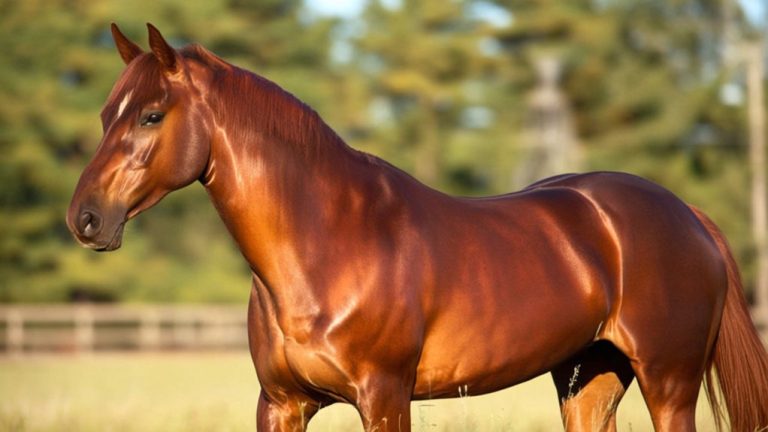
You’ll find most American Quarter Horses are sorrel, black, bay, or chestnut. These colors dominate the breed’s look.
But you’ll also see less common shades like cream, champagne, and perlino from time to time. This shows just how wide the coat variety is among these horses.
Are American Quarter Horses Good for Beginner Riders?
You’ll find American Quarter Horses wonderfully beginner-friendly. Their calm, cooperative nature eases your learning curve. Plus, their steady temperament and adaptability gently build your confidence.
This makes them an excellent choice for anyone starting horseback riding. They’re easy to work with and really want to please, which is great when you’re just getting the hang of things. You’ll feel supported every step of the way.
What Health Issues Are Common in American Quarter Horses?
You’ll often encounter health issues like HYPP, HERDA, PSSM, and GBED in American Quarter Horses.
Regular genetic testing and careful breeding help you prevent these inherited disorders.
This way, you can ensure your horse stays healthy and strong.
Conclusion
You’ve traced the American Quarter Horse back to its colonial roots, shaped by English, Spanish, and Thoroughbred bloodlines. This breed earned its name from quarter-mile races, reflecting its speed and agility. Ranch work refined its traits, while early registries preserved its legacy.
Like a steadfast companion through America’s history, the Quarter Horse’s evolution mirrors the spirit and resilience of the land itself. It’s solid, reliable, and deeply woven into the nation’s cultural fabric.