Where Do American Quarter Horses Live – Here’s Where
You’ll find American Quarter Horses mostly in the U.S., especially Texas, Oklahoma, and California. They thrive on ranches, farms, and rodeo arenas. Their muscular build helps them handle everything from open plains to rugged mountains and urban trail parks.
They adapt well to varied climates and work smoothly in both rural and city environments. If you want to uncover how these versatile horses fit into different lifestyles and regions, there’s plenty more to explore about their unique roles.
Where Quarter Horses Are Most Common
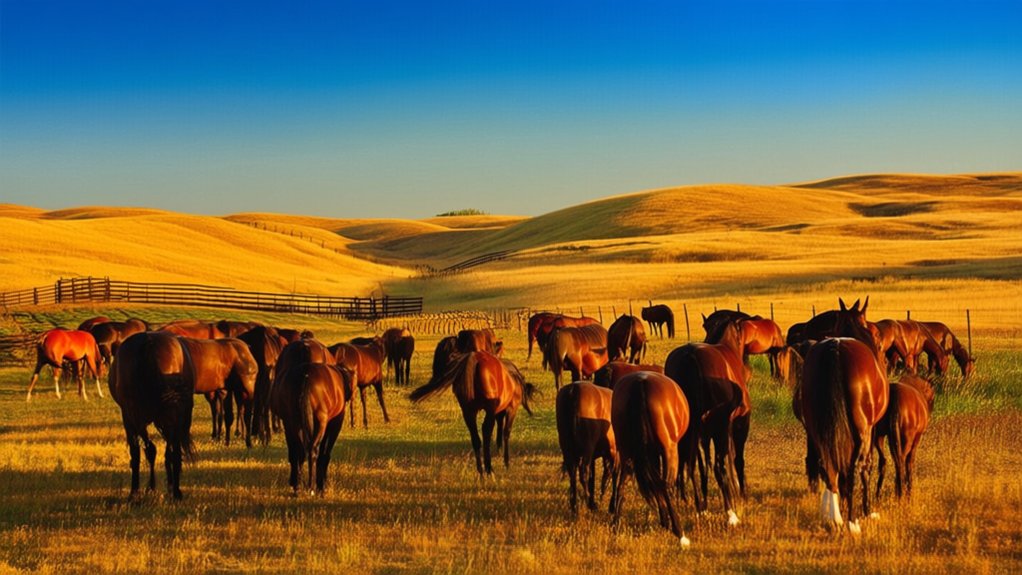
Although American Quarter Horses have a strong presence worldwide, you’ll find the highest concentration right here in the United States. Millions are registered and actively working across various states, especially in Texas, Oklahoma, and California.
These states boast large ranches and vibrant equestrian communities, making them ideal homes for Quarter Horses.
You’ll also see plenty of these horses in rural farms throughout the southern and western U.S., where they excel in ranch work and rodeo events.
Beyond America, countries like Brazil, Germany, and Australia have growing populations of Quarter Horses, mainly for competitive riding and breeding.
Still, if you want to experience the breed at its most common and celebrated, American ranches, rodeos, and equestrian centers are where you’ll find them in their element.
Climate and Terrain Impact on Quarter Horses
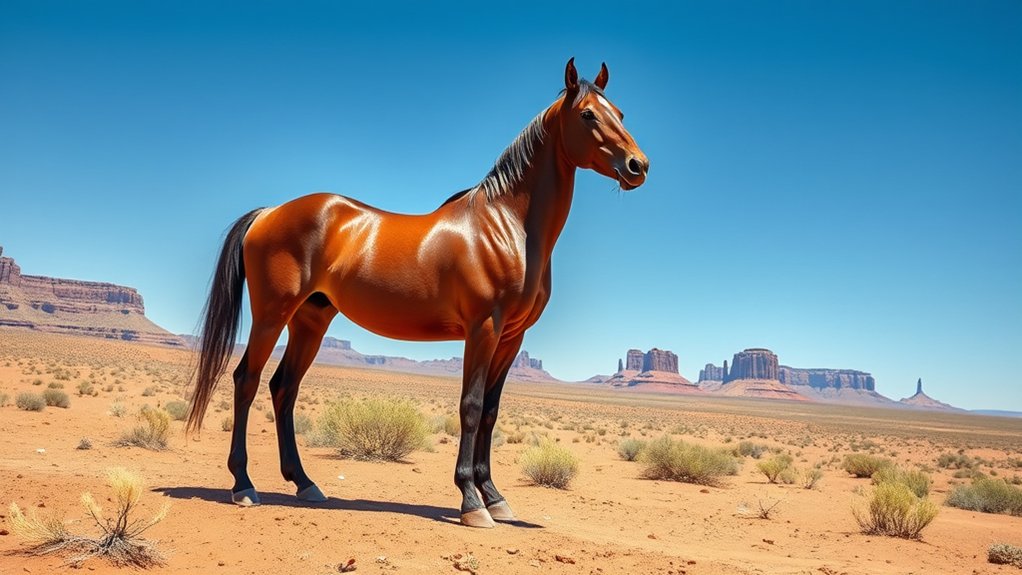
You’ll find American Quarter Horses excel in a wide range of climates, thanks to their hardy and adaptable traits. They’re pretty tough and can handle different weather conditions without much trouble.
Plus, their strength and agility make them great for all kinds of terrains — whether it’s flat plains or rugged hills.
It’s interesting to see how climate and terrain actually shape their performance. This helps explain why they do so well in so many different regions.
They really are versatile horses that can thrive almost anywhere you put them.
Climate Adaptability Traits
Because American Quarter Horses have evolved across diverse American landscapes, they’ve developed remarkable climate adaptability traits that let them thrive in environments ranging from scorching deserts to snowy mountains. Their thick, muscular build insulates against cold, while their efficient temperature regulation keeps them cool in heat. You’ll find them excelling in extreme climates, given proper care.
| Climate Type | Adaptability Trait | Benefit |
|---|---|---|
| Hot & Dry | Efficient temperature control | Maintains performance and stamina |
| Cold & Snowy | Thick muscular build | Provides insulation and protection |
| Variable Weather | Hardy, resilient nature | Thrives with proper shelter and nutrition |
This versatility makes Quarter Horses exceptional companions in varied American climates. They’re truly built to handle whatever weather comes their way.
Terrain Suitability Factors
American Quarter Horses don’t just adapt to different climates. They also excel across a range of terrains that suit their physical strengths. You’ll find them thriving on flat, open prairies and plains, where their sprinting ability and grazing habits come into play.
Their muscular build and strong hooves let them navigate rugged, rocky terrain common in western ranches and mountain foothills with ease. If you keep them in colder regions, providing shelter and attentive hoof care is essential to prevent navicular strains and frost injuries.
Thanks to their versatile nature, Quarter Horses perform well in coastal areas, deserts, and mountainous landscapes alike. Understanding these terrain suitability factors helps you choose the right environment to maximize your horse’s health and performance.
Why Ranches and Farms Suit Quarter Horses
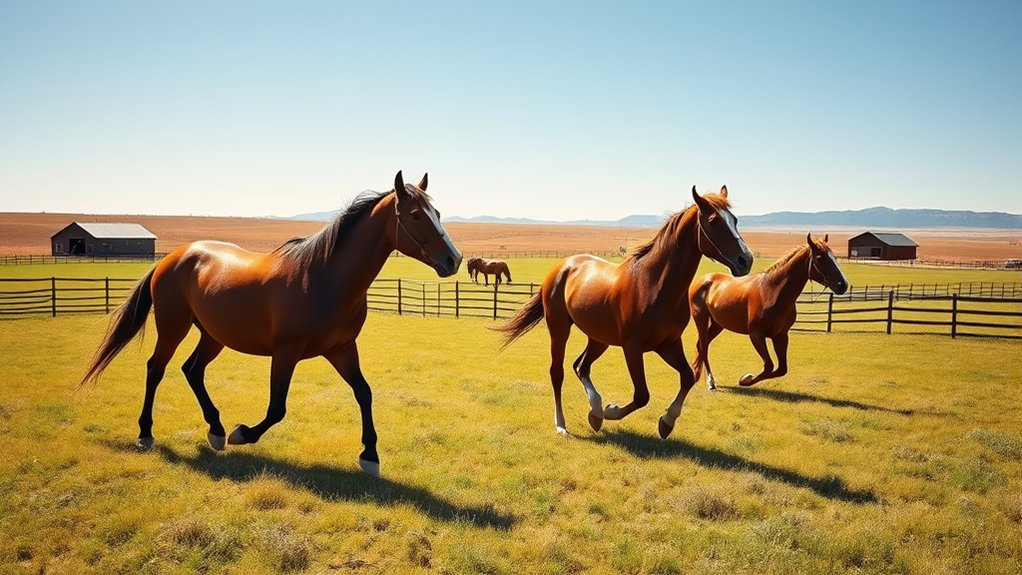
When you consider the demands of ranch and farm life, Quarter Horses fit right in thanks to their versatility and strength. Their muscular build and agility handle roping and herding with ease, making your work efficient. Their calm, trainable nature lets you manage them safely, while their ability to switch between ranch tasks and pleasure riding offers unmatched flexibility.
Plus, wide-open spaces on farms provide the perfect environment for grazing and exercise. This keeps them healthy and ready for action.
| Trait | Benefit |
|---|---|
| Versatility | Handles cattle work and riding |
| Strength | Manages demanding physical tasks |
| Temperament | Easy and safe to train |
| Multi-discipline | Suitable for diverse farm activities |
| Open Space Needs | Thrives with ample grazing and exercise |
Quarter Horses’ Role Across U.S. Regions
You’ll find Quarter Horses playing a crucial role in regional ranch work, especially across Texas and Oklahoma’s vast cattle lands.
They’re also stars in Western performance events like rodeos, where their speed and agility truly shine.
It’s pretty interesting to see how these horses adapt to different tasks, and that really helps explain why they’re so popular all across the U.S.
Regional Ranch Work
Although Quarter Horses are found across the United States, their role is especially essential on ranches in the western and southern regions. You’ll find them heavily relied upon in states like Texas, Oklahoma, and California, where large cattle industries demand swift, agile horses for herding.
In places such as Colorado, Wyoming, and Montana, Quarter Horses thrive in rugged landscapes, helping ranchers manage livestock with quick acceleration and sharp turns.
Southern states like Florida and Georgia also depend on these versatile horses for cattle operations and recreational ranch work.
If you work on a ranch, you’ll appreciate how their strength and maneuverability make daily tasks smoother. It’s easy to see why Quarter Horses remain a cornerstone of ranch life across these key regions.
Western Performance Events
Because American Quarter Horses combine speed, agility, and endurance, they dominate western performance events like rodeos, cutting, reining, and barrel racing throughout the western United States. You’ll find them excelling in Texas, Oklahoma, and California, where their skills shine in both ranch work and competitive arenas.
Their role extends into cowboy culture states such as Wyoming and Nevada, thriving in major events like the National Finals Rodeo and AQHA World Championship Show.
| Region | Popular Events |
|---|---|
| Texas & Oklahoma | Rodeos, Cutting, Barrel Racing |
| California | Reining, Ranch Competitions |
| Southwest States | National Finals Rodeo, AQHA Show |
Wherever you go in the West, Quarter Horses are central to western performance traditions. They really are a key part of the culture out here.
Best Living Conditions for Healthy Quarter Horses
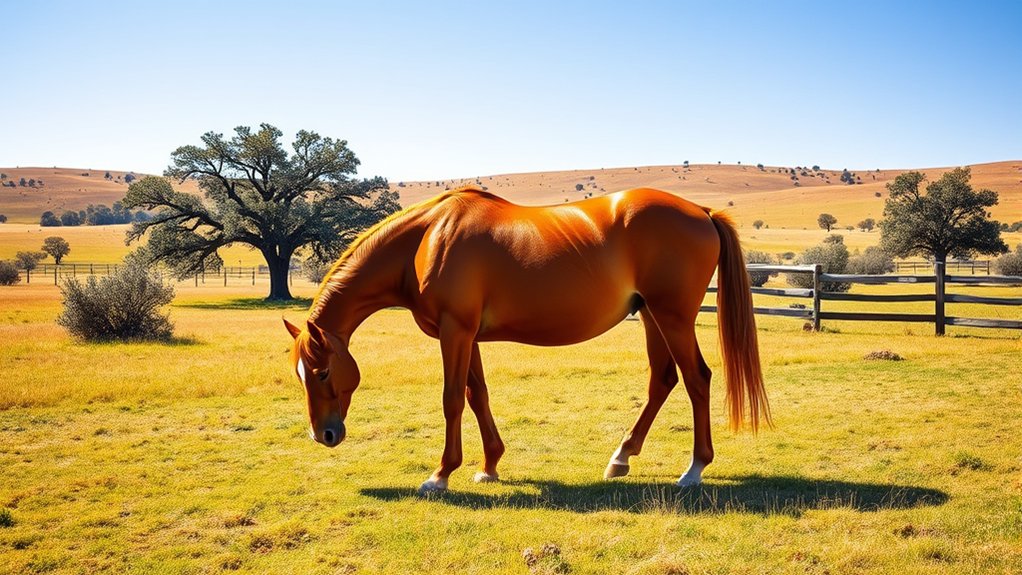
When you provide American Quarter Horses with spacious, well-ventilated pastures, they can graze naturally and move freely. This is essential for their health.
To keep them comfortable, offer clean, dry shelter or run-in sheds that protect against rain, snow, and intense heat.
Proper fencing, like sturdy wooden or wire barriers, prevents injuries and keeps them safe.
Make sure they always have access to fresh, clean water and high-quality forage to maintain energy and overall well-being.
Regular hoof care and a clean living environment are equally important to prevent common health issues.
By combining these elements, you create the best living conditions that support the strength, robustness, and happiness of your American Quarter Horses.
It really makes a difference in their everyday life. When they’re comfortable and safe, they thrive.
Quarter Horse Adaptation to Urban and Recreational Settings
Creating ideal living conditions for American Quarter Horses sets the stage for their success beyond traditional ranch environments. You’ll find these horses thriving in urban and recreational settings thanks to their calm temperament and versatility.
When adapting to city life, consider these key aspects:
Access to enclosed riding spaces in suburban stables or private yards guarantees safety and comfort. Participation in equestrian programs, clinics, and riding lessons keeps them engaged and well-trained.
Using urban trail parks and riding schools allows them to exercise and socialize effectively.
Their strong build and agility make them perfect for urban trail rides and community equestrian events.
With growing urban equestrian communities, Quarter Horses continue to blend seamlessly into recreational and city life.
It’s pretty cool to see how well they adapt, right?
Frequently Asked Questions
How Long Do American Quarter Horses Typically Live?
American Quarter Horses typically live over 25 years, sometimes reaching their early 30s.
If you provide proper nutrition, regular vet care, and good management, you can help your horse enjoy a long, healthy, and active life. Taking care of them well really makes a difference.
What Is the Average Height and Weight of a Quarter Horse?
Think of Quarter Horses as sturdy mountains. You’ll find them standing 14 to 16 hands tall and weighing between 900 and 1,200 pounds.
They’re compact, muscular, and built to perform. They balance strength with agility perfectly.
Are American Quarter Horses Good With Children and Beginners?
Yes, you’ll find American Quarter Horses excellent for children and beginners because they’re calm, gentle, and highly trainable.
Their steady temperament helps you build confidence safely, making learning enjoyable and less intimidating for new riders. It’s really about feeling comfortable and having fun while you learn. These horses are just great companions for anyone starting out.
What Are Common Health Issues in American Quarter Horses?
Don’t beat around the bush. American Quarter Horses often face genetic issues like HYPP, HERDA, PSSM, and GBED. You’ll want to test and manage these conditions carefully to keep your horse healthy and strong.
It’s important to stay on top of these health concerns. Regular check-ups and proper care can make a big difference. Your horse will thank you for it!
How Much Do American Quarter Horses Cost on Average?
You’ll find American Quarter Horses typically cost between $5,000 and $10,000 for well-trained ones. Younger or unstarted horses go for $1,500 to $3,000.
Top-quality show horses can exceed $50,000. So, depending on what you’re looking for, prices can vary quite a bit. It’s all about the horse’s training and pedigree.
Conclusion
If you’re thinking about where American Quarter Horses thrive, you’ll find them mostly on ranches and farms where the climate and terrain suit their strong, versatile nature. They adapt well from open plains to urban settings, proving they’re worth their weight in gold. Whether you’re near rolling hills or bustling trails, these horses fit right in.
Understanding their needs helps you give them the best home for a healthy, happy life.