Why Do Horses Show Their Teeth: Causes, Meanings, And Behavior Insights
Horses communicate in many ways, and one of the most noticeable behaviors is showing their teeth. Many horse owners and enthusiasts often wonder why do horses show their teeth, as this gesture can seem both amusing and confusing. Observing this behavior closely can reveal a lot about a horse’s mood, health, and intentions.
Showing teeth is not always a sign of aggression. Horses use facial expressions, including teeth display, as a form of communication with other horses and humans. Understanding the context and accompanying body language is key to interpreting what the horse is trying to convey.
This behavior can also relate to playfulness, curiosity, or even discomfort. Horses may show their teeth during social interactions, when exploring objects, or in response to stimuli in their environment.
Learning why do horses show their teeth allows you to better understand equine communication. By recognizing the cues behind this action, you can respond appropriately, ensuring safety, enhancing bonding, and supporting your horse’s overall well-being.
Common Reasons Horses Show Their Teeth
Horses use facial expressions, including showing their teeth, as a primary form of communication. This behavior can signal a range of emotions, health concerns, or social interactions. Understanding the common reasons horses show their teeth helps owners, riders, and handlers interpret their horse’s intentions accurately, improving safety, training, and overall horse welfare.
Aggression And Threat Display
One of the most recognized reasons horses show their teeth is to display aggression or dominance. In social hierarchies, horses use teeth exposure as a warning to other horses or even humans, signaling that they may bite or assert control. You notice this behavior is often accompanied by pinned ears, flared nostrils, tense muscles, and an elevated head.
Horses may show their teeth during confrontations over food, space, or social rank. Understanding this context helps you interpret whether the horse is asserting dominance or simply warning others to maintain distance. Proper handling techniques, such as maintaining calm assertiveness and avoiding sudden movements, prevent escalation and reduce the risk of injury.
Aggression-related teeth showing is often situational, triggered by perceived threats or competition. Recognizing the signs early allows for intervention, ensuring both human safety and social stability within groups of horses.
Pain Or Discomfort
Horses sometimes show their teeth as a reaction to pain or discomfort, especially in the mouth, teeth, or jaw. Dental issues such as sharp points, misalignment, or tooth decay can cause horses to lift their lips or grind their teeth. You notice that horses with discomfort often display additional signs like head tossing, reluctance to accept the bit, drooling, or difficulty chewing.
Other physical discomforts, such as ulcers, sores, or tight tack, can also prompt teeth display as a way of expressing irritation or stress. By observing when and how a horse shows its teeth, you can identify potential health problems that require veterinary attention.
Addressing the underlying cause, whether through dental care, proper equipment, or medical treatment, reduces this behavior and improves overall comfort. You notice that horses that are pain-free and properly cared for are less likely to use teeth display as a communication method.
Playfulness And Social Interaction
Horses also show their teeth during play and friendly social interactions. Among foals or herd members, teeth display can be part of playful behavior, mock fights, or grooming rituals. You notice that in these scenarios, the expression is often accompanied by relaxed ears, soft eyes, and a bouncy or playful posture.
This behavior helps young horses learn social boundaries and develop communication skills. Adults may also show teeth in a friendly context to signal submission, interest, or curiosity toward other horses or humans. Observing body language alongside teeth display ensures you differentiate between playful gestures and aggressive signals.
Encouraging safe play and positive interactions in groups or with handlers strengthens bonds and teaches horses appropriate social behavior. Recognizing the playful context allows you to respond appropriately without unnecessary concern or intervention.
Flehmen Response And Scent Investigation
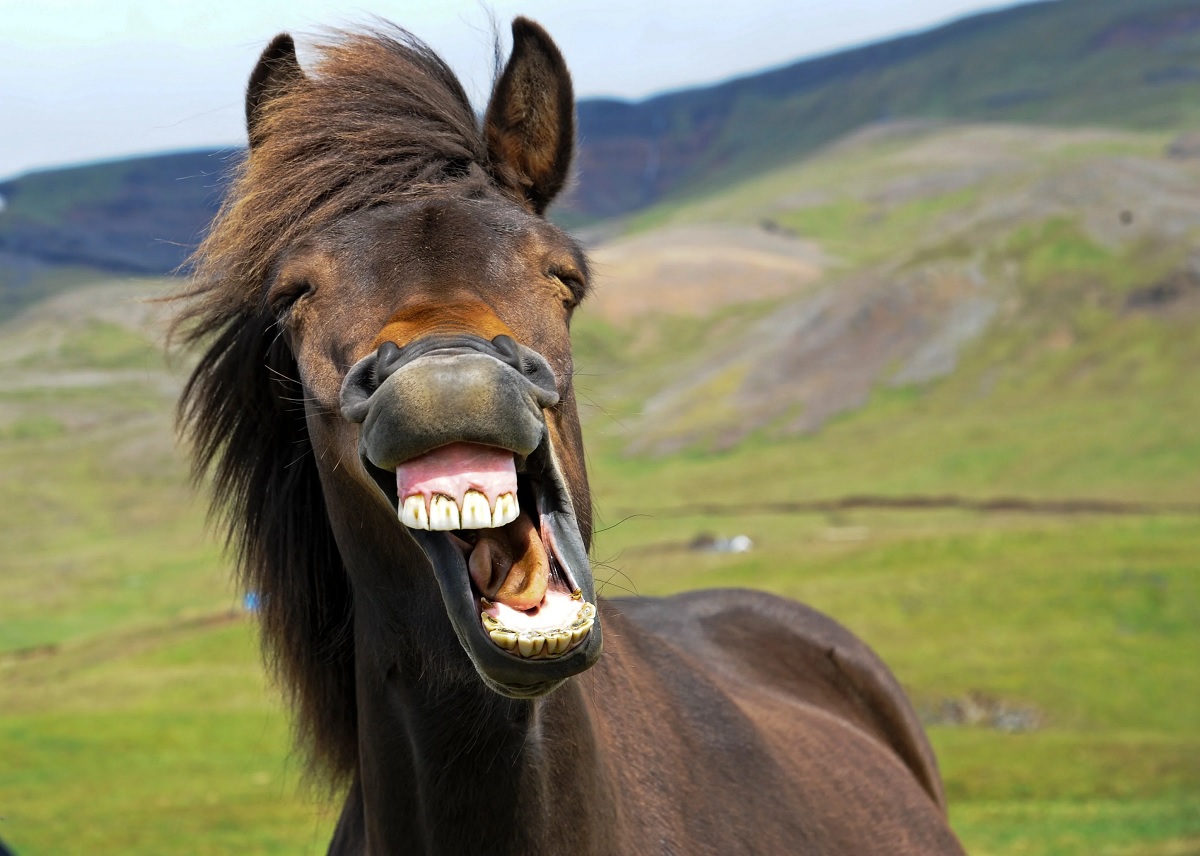
The flehmen response is a behavior in which horses curl back their lips and show their teeth to better detect scents, especially pheromones. This behavior is common when investigating urine, feces, or other environmental odors. You notice that during a flehmen response, the horse’s lips curl back, nostrils may flare, and head may be slightly elevated.
This is a natural and instinctive behavior related to reproduction, social awareness, and environmental exploration. It allows horses to transfer scent molecules to the vomeronasal organ, providing information about other horses’ reproductive status, territory, or health.
The flehmen response is harmless and temporary, often elicited by curiosity or hormonal cues. Understanding this reason for teeth display helps prevent misinterpretation as aggression or discomfort and highlights the horse’s keen sensory perception.
Response To Training Or Human Interaction
Horses may show their teeth during handling, grooming, or riding, sometimes as a response to training cues, playfulness, or mild resistance. For example, lifting lips can occur when exploring a bit, feeling pressure, or responding to touch. You notice that horses may combine this gesture with ear movements, head tilts, or body shifts, signaling attention, curiosity, or mild irritation.
Proper observation and handling techniques ensure that teeth display in these contexts does not escalate into unwanted behavior. Positive reinforcement, gentle guidance, and awareness of body language encourage cooperative responses and reduce tension during interactions.
By recognizing teeth display as part of communication during training or handling, you can adjust your approach to promote trust, comfort, and safety for both horse and handler, reinforcing a positive learning environment.
Social And Emotional Signals
Horses rely heavily on body language to communicate with one another and with humans, and showing their teeth is often part of this nonverbal language. Understanding the social and emotional signals behind teeth display helps you interpret your horse’s mood, intentions, and comfort level. By observing context and accompanying behaviors, you can respond appropriately, strengthen your bond, and ensure safety.
Submission And Hierarchy Communication
One important social reason horses show their teeth is to communicate submission or acknowledge herd hierarchy. Within a group, subordinate horses may lift their lips or bare their teeth toward dominant herd members as a gesture of respect. You notice this behavior is typically accompanied by lowered head, relaxed ears, and a calm posture, signaling that the horse is not challenging authority.
This form of communication helps maintain social harmony, reducing the risk of aggression or conflict in the herd. Understanding these subtle cues allows you to interpret interactions more accurately, particularly during group turnout or in multi-horse environments. You notice that horses that clearly signal submission through teeth display are often more integrated socially and less prone to stress-related behaviors.
Recognizing this behavior in domestic or training settings helps handlers manage group dynamics effectively and reinforces positive interactions among horses.
Curiosity And Exploration
Horses often show their teeth as part of exploratory behavior. When encountering new objects, scents, or unfamiliar situations, they may lift their lips and expose their teeth as a way to investigate. You notice that this behavior is frequently accompanied by alert ears, focused eyes, and sniffing, indicating curiosity rather than aggression.
This type of teeth display is common during trail rides, grooming sessions, or in new environments. It allows horses to gather sensory information through smell and touch while signaling interest to humans or other horses. Understanding this cue helps handlers differentiate between curiosity and discomfort, ensuring an appropriate response.
Encouraging safe exploration while monitoring teeth display strengthens trust and confidence. Horses that feel secure expressing curiosity are more willing to engage in learning, riding, and social interactions.
Playfulness And Social Bonding
Play is another context in which horses show their teeth, often accompanied by relaxed body posture, prancing, or gentle nudges with the head. In young foals, mock biting or teeth display helps develop social skills and establishes boundaries with peers. You notice that adult horses may engage in similar playful gestures during group turnout or interaction with trusted humans.
These behaviors promote bonding, reinforce herd cohesion, and allow horses to practice communication in a low-stress environment. Positive social interactions, indicated by playful teeth display, contribute to mental stimulation, reduce boredom, and support emotional well-being.
By observing playful cues and context, you can facilitate safe interaction while fostering natural behavior. Encouraging this type of social play improves overall mental health and strengthens the horse-human relationship.
Stress And Anxiety Signals
Teeth display can also indicate stress or anxiety in horses. When a horse is uncomfortable, nervous, or unsure about a situation, it may lift its lips or bare teeth as a warning or coping mechanism. You notice that this behavior often accompanies tense muscles, pinned ears, wide eyes, or tail swishing.
Recognizing these emotional signals allows handlers to intervene calmly, addressing the source of stress and preventing escalation. Techniques such as grounding, gentle reassurance, or removal from stressful stimuli help the horse feel safe and regain composure. You notice that horses that are understood and supported in stressful situations are more confident and cooperative in future scenarios.
Monitoring stress-related teeth display also prevents misinterpretation of behavior, ensuring safety and maintaining a positive training and riding environment.
Reinforcement Of Human-Horse Communication
Understanding social and emotional teeth display strengthens overall horse-human communication. You notice that by observing cues like lip lifting, facial tension, and ear position, you can better interpret needs, preferences, or discomfort. This awareness allows for timely adjustments in handling, training, and daily care.
Responding appropriately to teeth display fosters trust, reduces misunderstandings, and improves cooperation. Horses that feel heard and respected are more confident, attentive, and willing to engage in activities ranging from riding to grooming. By incorporating recognition of social and emotional signals into your routine, you enhance safety, communication, and the overall quality of the horse-human relationship.
Behavioral Patterns To Watch
Horses communicate extensively through body language, and observing their behavioral patterns can reveal a lot about their emotional and physical state. Recognizing these patterns, including when a horse shows its teeth, helps owners and handlers identify potential issues, anticipate reactions, and strengthen trust. Understanding key behaviors ensures safety, promotes welfare, and enhances the bond between horse and human.
Teeth Display And Mouth Movements
Teeth display is one of the most noticeable behavioral patterns in horses, and it can indicate a variety of intentions. You notice that horses may lift their lips, curl their upper lip, or bare their teeth when expressing curiosity, discomfort, or playfulness. Observing the context and accompanying body language is crucial to interpretation.
For instance, a horse showing its teeth during social interaction may be establishing dominance, signaling submission, or engaging in playful behavior. When combined with pinned ears, tense muscles, or head tossing, teeth display could indicate aggression or irritation. Conversely, relaxed ears, soft eyes, and a calm posture suggest a non-threatening or curious gesture. Monitoring these subtle cues allows you to respond appropriately, ensuring both safety and positive reinforcement during training or daily interactions.
Regular observation of teeth and mouth movements helps you detect health issues early, such as dental discomfort or pain, which might otherwise go unnoticed. By understanding the meaning behind these behaviors, you strengthen communication and maintain the horse’s comfort.
Ear And Eye Signals
Ear and eye positions are critical indicators of a horse’s emotional state. You notice that ears pointing forward generally signify interest or attentiveness, while pinned ears indicate agitation, discomfort, or aggression. Similarly, wide eyes or visible whites can signal fear or stress.
Observing these cues in conjunction with teeth display provides a more complete picture of the horse’s feelings. For example, a horse showing teeth with relaxed ears may be playful, while a horse showing teeth with pinned ears and flared nostrils may be defensive or anxious. Eye and ear monitoring helps you interpret intentions accurately, allowing for timely intervention or reassurance.
Understanding these signals enhances your ability to manage interactions safely and effectively, whether during training, grooming, or turnout. Horses that are observed and responded to appropriately feel secure, leading to better behavior and cooperation.
Tail Movements And Body Posture
Tail movements and overall body posture are also important behavioral patterns to watch. A swishing tail, tense muscles, or a stiff stance often indicates irritation, discomfort, or agitation. Conversely, a relaxed tail and loose posture usually suggest calmness and contentment.
When combined with teeth display, these cues can clarify the horse’s emotional state. For instance, a playful horse may show teeth while prancing with a raised, relaxed tail, while an anxious or aggressive horse may bare teeth with a rigid posture. Monitoring posture and tail behavior helps you distinguish between friendly, curious, or warning gestures, allowing for informed and safe handling.
Awareness of these patterns contributes to proactive management, reducing the risk of stress-related behaviors or injury during interactions. By reading the body as a whole, you gain insight into the horse’s comfort level and intentions.
Vocalizations And Other Behavioral Indicators
Horses often combine teeth display with vocalizations such as nickers, snorts, or whinnies. You notice that these sounds can reinforce the message conveyed through facial expressions, signaling curiosity, excitement, or distress. Observing vocal cues alongside teeth display and body language helps you interpret emotional states more accurately.
Other behaviors, like pawing, head tossing, or pacing, can also indicate frustration, discomfort, or anticipation. Recognizing patterns of repeated behaviors allows you to identify potential health issues, boredom, or training needs. Addressing the root cause of these behaviors ensures the horse remains comfortable, engaged, and safe.
How To Respond As A Horse Owner
Understanding why a horse shows its teeth is only part of responsible horse ownership. How you respond to this behavior directly affects safety, trust, and the horse’s well-being. Observing context, recognizing the underlying cause, and reacting appropriately ensures that interactions remain positive, training is effective, and potential health or behavioral issues are addressed promptly.
Assess The Context And Body Language
When your horse shows its teeth, the first step is to carefully assess the context and accompanying body language. You notice that relaxed ears, soft eyes, and calm posture may indicate curiosity or playfulness, whereas pinned ears, flared nostrils, or tense muscles signal irritation, fear, or aggression.
By observing the full range of signals, including head position, tail movement, and vocalizations, you can interpret the horse’s intentions accurately. Understanding whether the teeth display is related to social behavior, exploration, discomfort, or stress helps you choose the safest and most effective response. Contextual assessment prevents misinterpretation, reduces the risk of injury, and ensures that your actions support both safety and positive reinforcement during interactions.
Regular observation also allows you to notice changes in behavior over time, helping identify health issues or emotional stress that may require attention.
Ensure Safety And Maintain Calm
Safety is a priority when responding to teeth display, particularly if the horse shows signs of aggression or irritation. You notice that maintaining a calm, assertive demeanor helps prevent escalation and communicates control without provoking fear.
Keeping a safe distance, avoiding sudden movements, and using gentle verbal cues or body language helps de-escalate tension. You may also choose to temporarily remove yourself from the situation or redirect the horse’s focus to reduce stress. For horses showing teeth due to curiosity or playfulness, allowing safe exploration while monitoring behavior ensures both safety and engagement.
Maintaining calm during these interactions reinforces trust, encourages cooperative behavior, and reduces the likelihood of negative associations with human handling.
Address Underlying Health Or Comfort Issues
Teeth display can sometimes indicate discomfort or pain, particularly in the mouth, teeth, or jaw. You notice signs such as reluctance to accept a bit, drooling, head tossing, or difficulty chewing, which may accompany teeth display. Prompt veterinary or dental evaluation is essential to address underlying issues.
Other sources of discomfort, such as poorly fitted tack, sores, or digestive problems, may also trigger this behavior. By addressing the root cause, you reduce stress, improve performance, and ensure long-term comfort. Horses that feel physically comfortable are less likely to use teeth display as a form of communication, making daily interactions safer and more enjoyable for both horse and handler.
Reinforce Positive Behavior
Positive reinforcement is an effective strategy when responding to teeth display in non-aggressive contexts. You notice that rewarding calm and cooperative responses with praise, treats, or gentle stroking encourages repetition of desirable behavior.
Training sessions that emphasize patience, consistency, and rewards build trust and help the horse understand appropriate ways to express curiosity or social behavior. Avoiding punishment for natural gestures prevents fear and reinforces a positive learning environment. Over time, horses learn to communicate in safe, manageable ways, enhancing the bond between horse and handler.
Frequently Asked Questions
Why Do Horses Show Their Teeth To Other Horses?
Horses often show their teeth to communicate with other horses within their herd. You notice that this behavior can signal dominance, submission, or playfulness depending on the context. Subordinate horses may lift their lips to indicate respect, while dominant horses may display teeth as a warning or to establish hierarchy.
Observing accompanying body language, such as ear position, tail movement, and posture, helps you interpret the meaning accurately. Recognizing these cues ensures you understand herd dynamics, prevent conflicts, and maintain a safe environment for your horses.
Can Horses Show Their Teeth When They Are Playful?
Yes, horses frequently show their teeth during playful interactions. You notice that foals and young horses often lift their lips or gently bite each other as part of social play. Adult horses may also display teeth in a relaxed, playful context during turnout or while interacting with humans.
Playful teeth display is usually accompanied by relaxed ears, soft eyes, and bouncy or exaggerated movements. Understanding this behavior allows you to encourage safe social play while differentiating it from aggressive or stress-related teeth showing.
Do Horses Show Their Teeth When They Are In Pain?
Horses can show their teeth as a response to pain or discomfort. You notice that dental issues, ulcers, or jaw problems often cause horses to lift their lips or bare teeth. Other signs may include head tossing, drooling, reluctance to accept a bit, or difficulty chewing.
Recognizing this behavior is important for your horse’s health. Prompt veterinary evaluation and treatment can address the underlying problem, reduce discomfort, and prevent the behavior from escalating into stress or aggression. Pain-free horses display teeth less frequently.
Is Teeth Display A Sign Of Aggression In Horses?
Sometimes, showing teeth can indicate aggression. You notice that horses displaying teeth with pinned ears, flared nostrils, and tense muscles are often warning others of potential biting or dominance. This is common in herd interactions, during feeding, or when horses feel threatened.
Understanding this aggressive signal allows you to take safety precautions and manage the situation calmly. Avoid sudden movements, maintain distance, and observe the horse’s overall body language to prevent escalation and ensure both horse and human safety.
Can Horses Show Their Teeth Out Of Curiosity?
Horses often display teeth out of curiosity. You notice that when encountering new objects, scents, or humans, horses may lift their lips or bare teeth to explore and gather information. This behavior is usually accompanied by alert ears, sniffing, and focused attention.
Curious teeth display is harmless and demonstrates the horse’s intelligence and sensory awareness. Recognizing this type of behavior helps you differentiate between exploration, playfulness, or stress, allowing for a more accurate understanding of your horse’s intentions.
What Is The Flehmen Response And Why Do Horses Show Their Teeth During It?
The flehmen response is a natural behavior in which horses curl their upper lip and show their teeth to detect scents. You notice this occurs when investigating urine, feces, or environmental odors, allowing the horse to transfer molecules to the vomeronasal organ for analysis.
This behavior is instinctive and related to reproduction, social awareness, and curiosity. Understanding the flehmen response helps you recognize teeth display that is exploratory rather than aggressive, ensuring proper interpretation of your horse’s natural communication behaviors.
How Should You Respond When Your Horse Shows Its Teeth?
Responding appropriately when your horse shows its teeth depends on the context. You notice that observing body language, assessing emotional state, and maintaining calm ensures safe interaction. For playful or curious displays, you can allow exploration while monitoring behavior.
If teeth display signals discomfort, pain, or aggression, prompt action is necessary. This may involve checking for health issues, adjusting tack, or modifying handling techniques. By responding appropriately, you maintain safety, build trust, and foster a positive relationship between you and your horse.
Final Thoughts
Horses use their teeth as a way to communicate a wide range of emotions and reactions, from discomfort to playfulness. Understanding their body language helps you interpret their intentions and respond appropriately. By observing context, posture, and other cues, you can better understand what your horse is trying to convey.
When considering why do horses show their teeth, it often indicates something beyond just aggression. Many horses display this behavior during the Flehmen response, social interactions, or when they are experiencing irritation or dental discomfort. Paying close attention to frequency and accompanying signs allows you to distinguish between normal behavior and potential issues.
Being attentive to why do horses show their teeth ensures you provide proper care and maintain a safe environment. Regular dental check-ups, appropriate training, and observing your horse’s reactions all contribute to healthy communication and stronger trust between you and your horse.