How Much Is Horse Riding?
You’ll usually pay between $30 and $110 per hour for horseback riding lessons, depending on lesson type, location, and instructor experience. Private lessons cost more than group sessions, which are more affordable but offer less individual attention.
Trail rides range from $70 to $400, reflecting recreational factors rather than skill development. Annual ownership expenses vary widely but often reach thousands.
Understanding these variables helps you budget effectively and uncover ways to balance cost with quality instruction and experience.
How Much Do Horseback Riding Lessons Typically Cost?
While horseback riding lessons vary widely in price, you can generally expect to pay between $30 and $110 per hour. The cost hinges on factors like lesson type and location, but typically, private lessons range from $50 to $100 per hour, offering more personalized instruction with the horse.
Group riding lessons tend to be more economical, usually priced between $30 and $60 per hour, making them a cost-effective option for beginners.
Purchasing multiple lessons upfront often qualifies you for package discounts, reducing your overall expense.
Geographic location also influences prices. Affluent areas command higher rates, while rural regions offer more affordable options.
Understanding these typical costs helps you budget effectively for horse riding lessons that match your skill level and training goals.
Key Factors That Affect Riding Lesson Prices
Because several key factors directly influence riding lesson prices, understanding them can help you make informed decisions. Location plays an essential role; urban centers like New York and California typically have higher costs compared to rural areas.
The duration of your lessons, whether 30, 45, or 60 minutes, also affects the price, with longer sessions costing more. Prices depend on the instructor’s experience and certification level; certified trainers usually charge higher fees due to their specialized expertise.
The facility type impacts cost as well, with large show barns generally charging more than smaller community stables. While private lessons usually cost more because of personalized instruction, this article focuses on other factors.
Knowing these key elements will help you evaluate and anticipate the overall cost of horse riding lessons accurately.
Comparing Private, Semi-Private, and Group Riding Lessons
You’ll find that private lessons tend to cost the most, usually between $50 and $110 per hour. That’s because you get tailored instruction just for you.
Semi-private and group lessons help bring the cost down per rider, but keep in mind, you’ll get less one-on-one feedback.
Group sessions are generally the most affordable, running about $30 to $50 per hour.
Cost Differences
How much you’ll pay for horse riding lessons depends largely on the lesson format you choose. Rates vary markedly between private, semi-private, and group lessons due to the level of individual attention provided.
Private lessons command the highest price, typically ranging from $30 to $110 per hour. They offer personalized instruction tailored to your skill level.
Semi-private lessons, shared by two or three riders, reduce costs to about $20 to $80 per rider per hour. This balances affordability with some individual focus.
Group lessons, accommodating four to six riders, are the most economical, usually costing between $15 and $50 per rider per hour.
Understanding these cost differences allows you to select a horse riding lesson format that aligns with your budget without compromising your training needs.
Instructional Benefits
Although all lesson formats aim to enhance your riding skills, the instructional benefits vary considerably between private, semi-private, and group lessons. Private lessons offer the most focused, personalized instruction, allowing your trainer to tailor feedback precisely to your skill level. This accelerates progress, especially at advanced stages.
Semi-private lessons provide a balance, giving you some individualized attention while sharing costs with one or two other riders.
Group lessons, typically involving four to six participants, emphasize observational learning and social interaction, fostering teamwork and peer feedback.
While private lessons suit specialized or intensive training, group lessons support foundational skills through collaborative dynamics. Your choice depends on how much individualized guidance you need versus the benefits of learning within a social environment.
How Location and Season Impact Riding Lesson Prices
Since location and season directly affect supply and demand, they play a crucial role in determining the cost of horse riding lessons.
Location and season significantly influence the cost of horse riding lessons through supply and demand dynamics.
Riding lesson prices tend to be considerably higher in expensive urban areas like New York, California, and Florida, often reaching up to 50% more than in rural Midwest or Southern regions.
Seasonal fluctuations further influence these prices. Peak times such as summer and weekends drive demand and rates up, while off-peak periods like winter and weekdays typically see reduced prices.
Furthermore, barns may offer discounts during slower seasons to attract riders, impacting availability and pricing strategies.
Understanding these geographic and temporal factors helps you anticipate cost variations and select lessons that align with your budget and schedule.
What’s Included in a Standard Horseback Riding Lesson
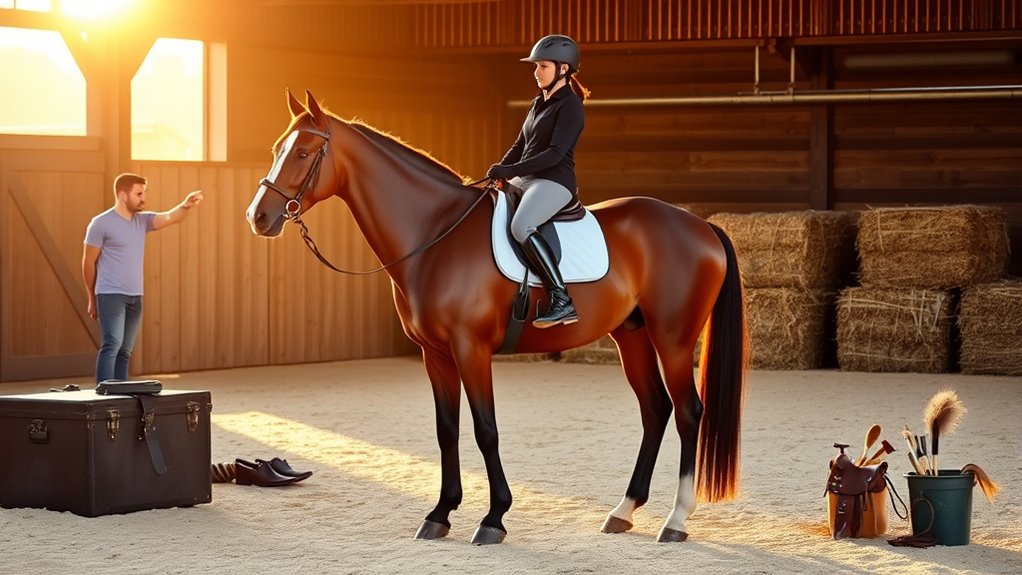
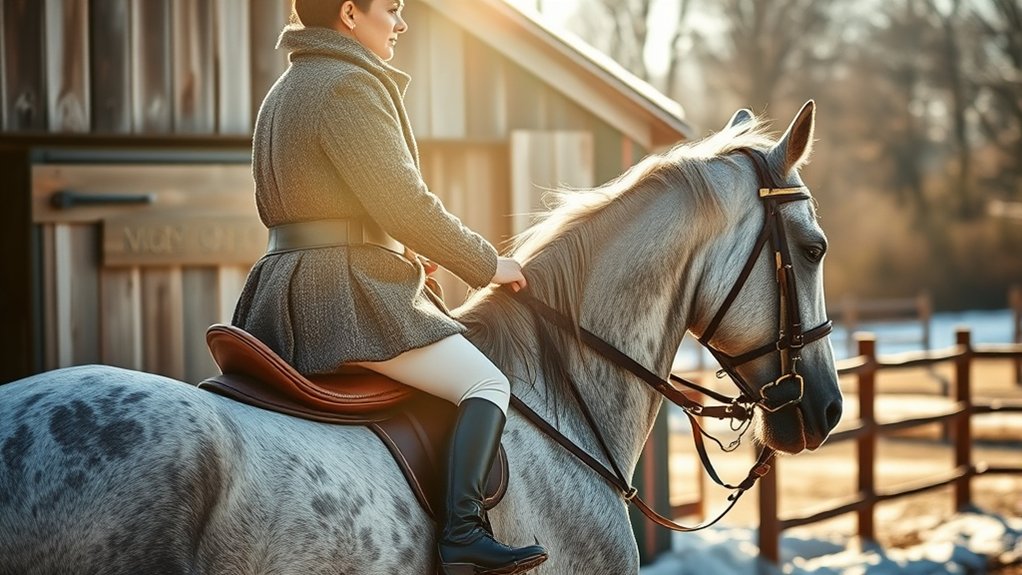
When you sign up for a standard horseback riding lesson, you’ll receive all-inclusive instruction covering riding techniques, horse handling, and safety protocols. Each lesson provides a trained, experienced lesson horse, so you can focus on developing your riding skills within a controlled environment.
The session typically includes grooming and tacking up the horse, sometimes with instructor guidance, reinforcing essential horse care practices. You’ll spend 30 to 60 minutes actively riding, depending on the program’s structure.
Safety gear, such as helmets, is either provided or required to ensure your protection. Furthermore, basic horse care education is integrated to deepen your understanding of equine needs, enhancing your competence and confidence during riding.
This thorough approach ensures you gain practical skills while prioritizing safety and responsible horse handling.
What To Wear and Bring to Your First Riding Lesson
For your first riding lesson, you’ll want to wear some essential gear like fitted long pants and sturdy closed-toe shoes. These will help keep you safe and comfortable while you’re riding. And don’t forget a certified helmet that fits snugly—it’s really important for your safety.
Besides what you wear, it’s a good idea to bring a few things with you. Gloves can help improve your grip. Sunscreen will protect your skin. And having some water on hand will keep you hydrated.
A small towel might come in handy too, just to keep things comfortable throughout your lesson.
Essential Riding Apparel
Although the thrill of your first riding lesson is exciting, wearing the right apparel is essential for safety and comfort. Start with a fitted, long-sleeved shirt and riding pants or breeches to protect your skin and ensure freedom of movement.
Equip yourself with necessary tack, including sturdy, closed-toe boots featuring a small heel to prevent your foot from slipping through the stirrup.
While the helmet is covered under safety gear requirements, ensure your helmet fits well and meets standards.
Gloves are advisable to enhance grip on the reins and shield your hands from friction.
Furthermore, pack a water bottle and sunscreen or a hat to maintain hydration and protect against sun exposure.
Proper apparel complements your safety gear and necessary tack, optimizing both protection and riding performance.
Safety Gear Requirements
Choosing the right apparel sets the foundation for a safe riding experience, but the gear you bring and wear during your lesson plays an equally important role.
For all riding lessons, a properly fitting helmet that meets safety standards is mandatory and must be worn at all times while mounted.
Closed-toe, sturdy footwear with a small heel, such as riding boots, prevents slipping and supports your ankles effectively.
Long pants, like jeans or riding breeches, shield your legs from chafing and improve saddle grip.
Gloves are recommended to enhance your rein grip and protect hands from blisters.
Furthermore, if your instructor or facility specifies, bring personal safety gear like a body protector or riding vest.
Adhering to these safety gear requirements ensures a secure, focused riding lesson experience.
Helpful Lesson Accessories
When you prepare for your first riding lesson, wearing fitted, long-sleeved shirts and riding pants or breeches guarantees ideal comfort and safety.
Essential lesson accessories include a properly fitted helmet that meets safety standards. Most riding centers provide helmets or require you to bring your own.
Sturdy, closed-toe boots with a small heel are vital to prevent your foot from slipping through the stirrup.
Gloves enhance grip on the reins and protect your hands, improving control during riding.
For outdoor lessons, pack sunscreen, water, and a small towel to maintain hydration and comfort.
These lesson accessories make sure you’re well-prepared and safe, allowing you to focus fully on mastering horsemanship skills during your time at the riding center.
Tips for Finding Affordable, Quality Riding Lessons
If you want to keep horse riding lessons affordable without sacrificing quality, consider purchasing lesson packages or multi-lesson discounts. These lower the per-session cost considerably.
Look for beginner-friendly barns that offer discounted group lessons. This way, you get cost-effective instruction in a social setting.
Compare rates across various riding schools and instructors to find quality lessons within your budget.
Also, volunteer programs at barns can give you access to affordable or even free riding opportunities. This helps enhance your practical experience.
Scheduling lessons during off-peak times, like weekdays or non-peak seasons, often results in lower rates without compromising instruction quality.
How Much Does Trail Riding Cost Compared to Lessons?
Although trail riding and horseback riding lessons both involve spending time on horseback, their costs differ considerably because of their distinct purposes and formats.
Trail riding typically costs between $70 and $400 per person, influenced by ride duration and setting.
Group rides, especially one-hour ones, tend to be more affordable at $70 to $80 per person.
Private, full-day rides can reach $400 and often require advanced booking.
Lessons, on the other hand, focus on skill development and usually cost between $30 and $110 per hour, depending on location and instructor expertise.
Unlike trail riding, which is priced per outing as a recreational activity, lessons represent a recurring investment in your riding proficiency.
Understanding these differences helps you budget appropriately for your equestrian pursuits.
How Much Does Owning a Horse Cost Annually?
Owning a horse demands a significant financial commitment, with average annual expenses around $2,667 covering essentials like feed, veterinary care, farrier services, and stable fees.
When evaluating horse ownership, the annual cost can vary widely based on your involvement level.
Basic upkeep may total approximately $5,290 annually, including tack, riding apparel, and routine repairs starting around $500.
If you plan to participate in local competitions, expect an additional $400 yearly, while rated shows can escalate costs up to $8,000 or more.
High-level training, specialized equipment, and personal preferences can push annual costs beyond $48,000.
Understanding these variables enables you to plan your budget effectively and manage horse ownership expenses with precision.
How to Save on Horseback Riding and Ownership
You can save money on riding by opting for lesson packages or joining group sessions—these usually bring down the cost per ride.
Another great idea is to volunteer at barns or take advantage of community riding programs, which often provide affordable access to horses and equipment.
Also, try scheduling your lessons during off-peak times to get better rates.
And don’t forget to budget carefully for the ongoing costs of owning a horse; this way, you can keep your overall spending under control without any surprises.
Affordable Lesson Strategies
When aiming to reduce horseback riding expenses, purchasing lesson packages or multi-lesson discounts offers a direct way to lower the per-session cost. Leveraging lesson packages allows you to lock in reduced rates over time, while group lessons provide a more economical alternative to private sessions without sacrificing instruction quality.
To maximize savings, consider these strategies:
- Enroll in group lessons to share costs with other riders.
- Opt for shorter, 30-minute lessons that meet skill needs while cutting fees.
- Volunteer or work at the barn to earn discounted or free lessons and gain practical experience.
- Schedule lessons during off-peak hours or weekdays when rates tend to be lower.
These approaches help you maintain consistent training while balancing your budget effectively.
Cost-Effective Horse Ownership
How can you manage the substantial costs involved in horse ownership without compromising on quality care and riding opportunities? To maintain a budget-friendly option for horseback riding, focus on strategic expense management.
Purchase lesson packages or join group sessions to reduce per-ride costs.
Use barn lesson horses and engage in volunteer programs to minimize ownership fees.
Buy equipment in bulk and schedule lessons during off-peak times or weekdays to capitalize on lower rates.
Keep activities local to avoid premium charges associated with popular venues or peak seasons.
Furthermore, allocate funds carefully for initial tack, riding apparel, and ongoing veterinary care.
Discount Opportunities and Tips
Strategic expense management naturally leads to exploring discount opportunities that further reduce horseback riding and ownership costs. You can effectively lower expenses by targeting these areas:
- Purchase lesson packages or multi-lesson discounts to reduce the cost per session.
- Opt for group lessons instead of private ones to access more affordable instruction.
- Volunteer or work at a barn to gain discounted lessons and practical experience.
- Schedule lessons during off-peak seasons, weekdays, or less busy hours to benefit from lower rates.
Also, compare prices across riding schools to find the best value without compromising quality.
Frequently Asked Questions
What Are the Health Benefits of Horseback Riding?
Horseback therapy and equine fitness offer you significant health benefits. You’ll improve cardiovascular health with a low-impact aerobic workout that boosts endurance.
Your core strength, balance, and coordination will enhance as you maintain posture and control.
Riding reduces stress by releasing endorphins, which helps your mental wellbeing. Moreover, it tones muscles in your back, legs, and abdomen while increasing outdoor exposure.
This exposure elevates your mood and vitamin D levels.
How Do I Choose the Right Riding Helmet?
Choose the right riding helmet by prioritizing horse safety, selecting certified riding gear, and guaranteeing a snug fit.
Look for ASTM/SEI certification to guarantee impact protection.
Make sure the helmet sits about one inch above your eyebrows, with adjustable straps for security and ventilation for comfort.
Replace your helmet every five years or after any fall.
This careful selection ensures you protect yourself effectively while enjoying horseback riding.
Can Horseback Riding Help With Anxiety or Stress?
Yes, horseback riding therapy can effectively reduce anxiety and stress. Through equine-assisted relaxation, you engage in mindful interaction with horses, which lowers cortisol levels and promotes emotional regulation.
The physical activity involved releases endorphins, enhancing mood and reducing tension. By participating in structured equine therapy programs, you experience a calming, grounding effect that improves your overall mental well-being.
This makes horse riding a scientifically supported method for managing stress and anxiety.
What Are the Best Breeds for Beginner Riders?
Looking for horse breed suitability as a beginner rider? Which breed suits your skill level best? Quarter Horses, Morgans, American Saddlebreds, Welsh Ponies, and Appaloosas are excellent choices due to their calm temperaments and trainability.
When applying beginner rider tips, focus on horses known for patience and easy handling. Selecting the right breed guarantees a safer, more enjoyable learning experience.
This helps you build confidence and develop proper riding techniques efficiently.
How Do I Prepare Physically for Horseback Riding?
To prepare physically for horseback riding, focus on horseback fitness by strengthening your core, legs, and cardiovascular system. Incorporate exercises like planks, lunges, and cycling to boost balance, control, and stamina.
Don’t overlook flexibility training to prevent injuries.
Also, make certain you have riding gear essentials, such as proper boots, helmet, and gloves, to support safety and performance.
Staying hydrated and well-nourished will optimize your energy and focus during rides.
Conclusion
If you’re wondering how much horse riding costs, you’ll find that lesson prices vary widely, just like the horses themselves. Whether you choose private lessons, group rides, or trail experiences, location and season play a big role in cost.
Owning a horse adds another layer of expenses. By understanding these factors, you can make informed decisions and find affordable ways to enjoy horseback riding without breaking the bank.