How to Tie a Horse in a Trailer in 5 Steps
To tie your horse in a trailer securely, first choose a tie point at or just above the withers to avoid injury. Use a strong rope and fasten a quick-release knot for safety.
Adjust the tie height so your horse can lower its head comfortably, then leave about 10-12 inches of slack to allow natural movement. Finally, double-check the knot’s security and your horse’s calmness before travel.
Follow these steps closely, and you’ll guarantee a safe and comfortable trip.
Select the Right Tie Point to Secure Your Horse in the Trailer
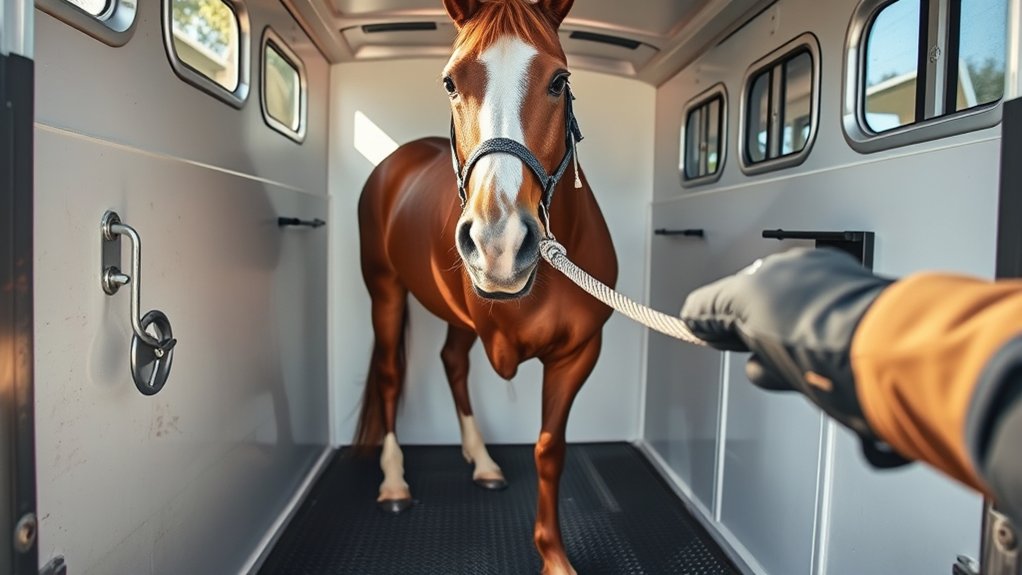
Where exactly should you tie your horse in the trailer? You need to select a tie point at or slightly above the horse’s withers to prevent injury and guarantee safety.
Always use a secure ring or attachment on the horse trailer that can withstand the horse’s movements without breaking.
The tie point should be easily accessible and at a height allowing the horse to comfortably lower its head.
Avoid tying to low or unstable spots that might cause the horse to become tangled or fall.
Before you tie a horse, check the area carefully to make sure it’s free of sharp edges or protrusions that could harm your animal during transit.
Using the right tie point with your lead rope is essential for safe, effective restraint.
Tie a Horse in a Trailer Using a Strong Rope and Quick-Release Knot
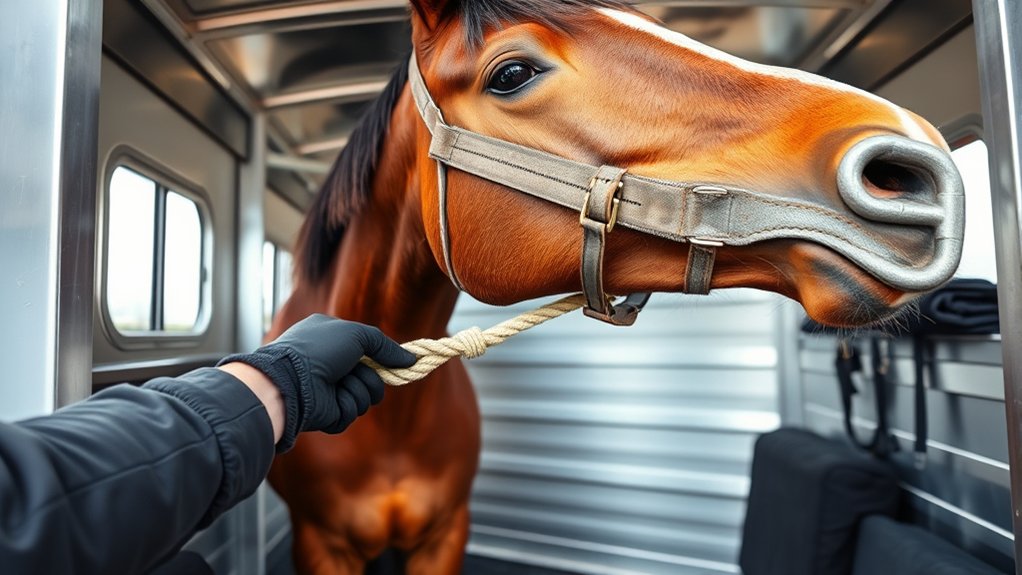
When securing your horse in a trailer, always choose a strong lead rope and tie it using a quick-release knot to guarantee safety. Use a sturdy rope, wrap it around the trailer’s tie ring, and form a slip knot such as a rabbit ear knot.
Make sure the knot is tight enough to prevent the horse from pulling free but easy to untie quickly in emergencies. Regularly inspect the rope and knot before travel to maintain security.
| Step | Action | Purpose |
|---|---|---|
| 1 | Select strong lead rope | Ensure durability |
| 2 | Wrap around tie ring | Secure attachment point |
| 3 | Tie quick-release knot | Enable fast release |
| 4 | Tighten knot properly | Prevent escape |
| 5 | Check knot before travel | Confirm safety |
Adjust Tie Height to Match Your Horse’s Withers for Safety
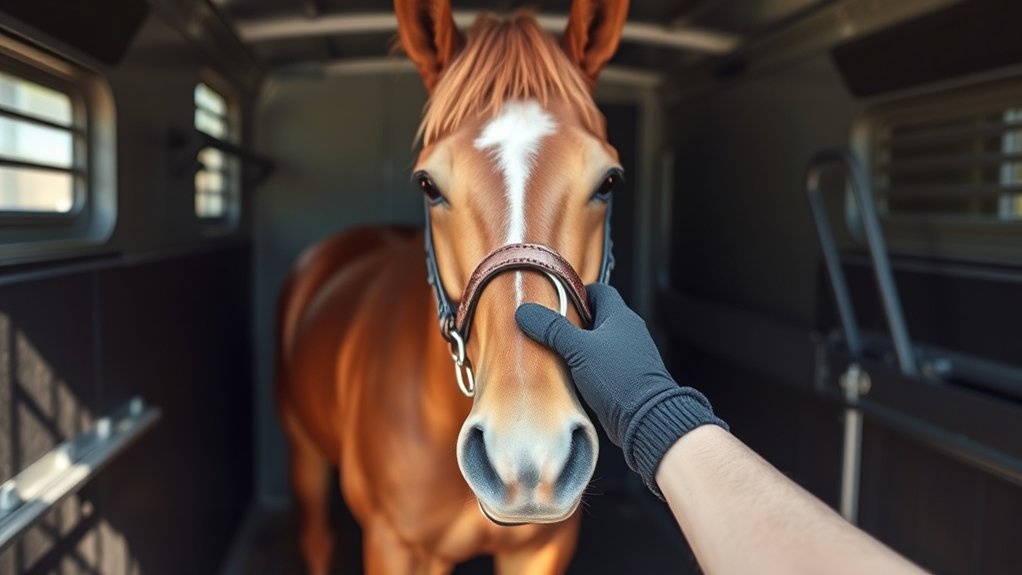
Although securing your horse properly is essential, you must also adjust the tie height to match your horse’s withers to guarantee safety. When you tie the horse, use the highest available attachment point on the trailer, usually near the top of the side walls, to prevent pulling back or slipping.
This position aligns with the horse’s withers, allowing your horse in a trailer to stand naturally without strain. If the tie ring is too low, use a longer rope or extension to reach the proper height. Make sure the horse can comfortably lower its head during transit.
Properly adjusting tie height reduces stress and injury risk while loading your horse and during travel. It ensures a safer experience for both you and your horse.
Leave Enough Slack When Tying Your Horse for Comfort
Adjusting the tie height to match your horse’s withers sets the foundation for a safe setup, but you also need to leave enough slack in the lead rope to keep your horse comfortable.
When tying a horse, leave about 10-12 inches of slack to let your horse lower its head naturally and move without restriction. This balance is vital for horse safety and comfort.
Keep these points in mind:
- Allow enough slack for the horse to turn or shift weight freely
- Avoid excessive slack that risks tripping or tangling
- Make certain the horse’s head rests at a natural height to prevent strain
- Regularly check and adjust slack during transit
Proper slack in the lead enhances comfort while maintaining control and safety.
Double-Check Your Tie and Horse Before Heading Out
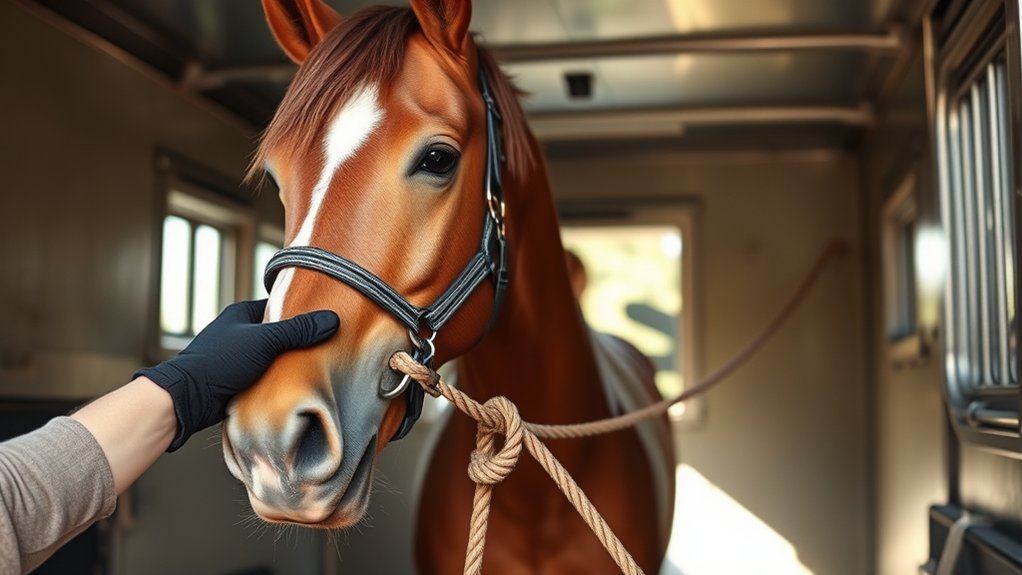
Before you hit the road, always double-check that your horse is securely tied with a quick-release knot and standing calmly inside the trailer. This final check is essential for tying your horse safely and guaranteeing trailer safety.
Inspect tie rings, safety snaps, and remove any loose objects inside the trailer. Confirm your horse is properly aligned and calm to prevent injuries.
| Step | Why It Matters |
|---|---|
| Secure quick-release knot | Emergency release capability |
| Calm horse inside trailer | Prevents panic and injury |
| Check equipment & trailer | Ensures stable transport |
Frequently Asked Questions
What Type of Trailer Is Safest for Transporting Horses?
You’ll want a trailer with divided stalls and solid walls to guarantee horse safety during transport. Choose equipment options like secure, heavy-duty tie rings and quick-release knots for reliable tie techniques.
Enclosed trailers with proper ventilation and non-slip flooring minimize stress and injury risks. Make sure the trailer fits your horse well to prevent unnecessary movement.
Always inspect locking mechanisms to keep both you and your horse safe on the road.
How Long Can a Horse Be Safely Tied During Transport?
You can safely tie your horse during transport for up to 4 hours, but you should monitor horse behavior closely.
Use proper tying techniques like quick-release knots and guarantee the tie is at the correct height with adequate padding to prevent injury.
Safety considerations mean taking regular breaks if the trip is longer than 2 hours.
Always check your horse for signs of stress and adjust accordingly to keep them calm and secure.
What Should I Do if My Horse Panics While Tied?
Stay steady, speak softly, and soothe your spooked steed using horse calming techniques. First, use tying safety tips. Always secure with a quick-release knot so you can untie swiftly if panic strikes.
Apply anxiety reduction methods by gently reassuring your horse with calm, consistent commands and slow movements. If your horse thrashes, move to a safe spot to avoid injury.
Practice emergency untie drills regularly to react rapidly and keep both you and your horse safe.
Can I Use a Halter Instead of a Rope for Tying?
You shouldn’t use just a halter instead of a rope for tying. For proper tying safety, always attach a sturdy lead rope to the halter.
Use reliable horse knot techniques like the quick-release knot to guarantee you can free your horse quickly if needed.
Also, make sure your trailer’s tie ring installation is secure and positioned safely.
This combination helps prevent injury and keeps your horse secure without risking sudden breakage.
How Do I Clean and Maintain Trailer Tie Rings?
You should establish regular cleaning routines for your trailer tie rings by scrubbing them with a wire brush or mild detergent to remove dirt and buildup.
To guarantee rust prevention, apply a protective coating like WD-40 after cleaning.
Always inspect for corrosion or wear that affects material durability. Tighten any loose attachments and replace damaged rings immediately to keep them strong and safe.
This maintenance ensures reliable and secure horse tying points every trip.
Conclusion
Tying your horse tightly, thoughtfully, and tactfully transforms trailer travel into a tranquil trek. Selecting a sturdy spot, securing with a strong rope, and setting the tie at the right height safeguards your steed.
Slacking smartly ensures comfort, while a swift safety check seals success. By balancing bravery with basic best practices, you’ll build a bond of trust, turning every trailer trip into a timely, trouble-free tradition.