What Animals Eat Horses?
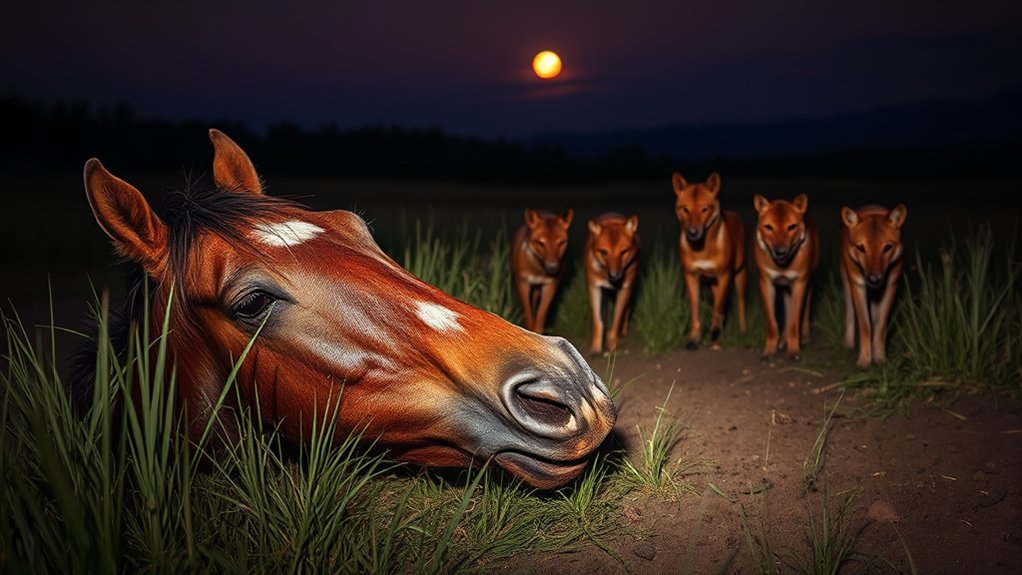
You’ll find that mountain lions are the main predators of horses, mainly targeting foals or weak individuals using stealth and patience. Wolves, bears, and coyotes may also prey on vulnerable horses but do so less often.
Foals and injured horses are most at risk because they can’t escape easily. Understanding these predators and their behaviors helps you protect your herd effectively. If you want to know how to spot signs and keep your horses safe, there’s more to explore.
What Animals Naturally Prey on Horses?
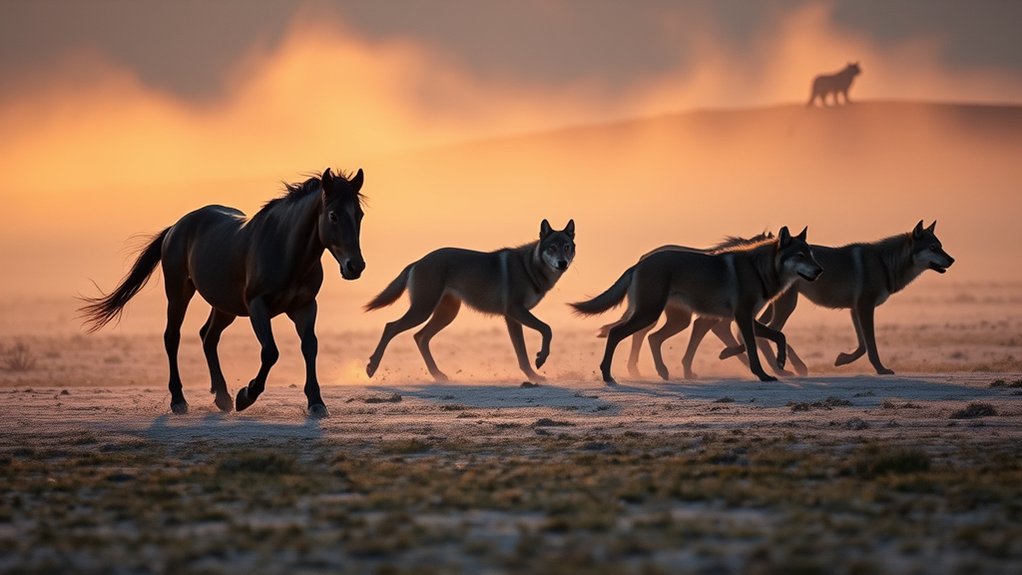
Although horses are large and powerful animals, several predators naturally prey on them, especially targeting the young, injured, or weakened. Mountain lions are among the primary natural threats, often focusing on juvenile or vulnerable horses.
Despite their strength, horses, especially the young or vulnerable, are preyed upon by mountain lions.
You should also be aware that wolves, depending on the region, have historically preyed on horses, though their impact varies widely.
Bears, particularly grizzlies, may occasionally hunt young or weakened horses when opportunities arise.
Coyotes rarely attack adult horses but can target foals or injured individuals under certain circumstances.
While predation on horses by native predators remains generally low, it still plays an essential role in regulating wild horse populations, maintaining ecological balance without overwhelming the species.
Understanding these dynamics helps you appreciate the natural interactions horses face in the wild.
How Mountain Lions Hunt Wild Horses
When you watch mountain lions hunting wild horses, you’ll see they really depend on stealth and patience. They sneak up on their prey, staying hidden and moving slowly before they make their move.
Usually, they go after the younger or weaker horses because those are easier targets.
They tend to attack from behind, which helps them avoid getting hurt themselves. Knowing how mountain lions hunt like this gives you a better understanding of their important role in the ecosystem.
It’s pretty fascinating once you see how they work.
Predation Patterns
How do mountain lions manage to hunt wild horses, especially given the horses’ size and speed? These predators primarily target juvenile horses, which make up about 77% of their diet in some regions.
You’ll find that a single mountain lion can kill nearly 20 young horses over ten months, showing their essential role in controlling populations.
They use their powerful hindquarters and agility to leap from trees or dense cover, relying on stealth and stalking at dawn or dusk when horses are less alert.
This natural predation pattern helps maintain a balanced ecosystem by preventing overpopulation of wild horses.
Understanding these predators’ impact gives you insight into the delicate balance between mountain lions and their wild horse prey.
Hunting Techniques
Because mountain lions depend on stealth and precision, they stalk wild horses silently from dense cover. They use their sharp senses of smell and hearing to detect prey from afar. Their hunting techniques focus on patience and careful observation.
They often target juvenile or weaker horses, such as foals, who can’t escape as quickly. You’ll notice they prefer dawn and dusk for hunting, when low light improves their chances.
When the moment is right, they launch powerful bursts of speed, reaching up to 50 miles per hour, to ambush their prey.
Mountain lions may leap from concealment directly onto a horse’s back, aiming for the neck or throat to deliver a swift, effective kill. These hunting techniques highlight their role as skilled predators in the wild horse ecosystem.
Wolves, Bears, and Coyotes as Occasional Horse Predators
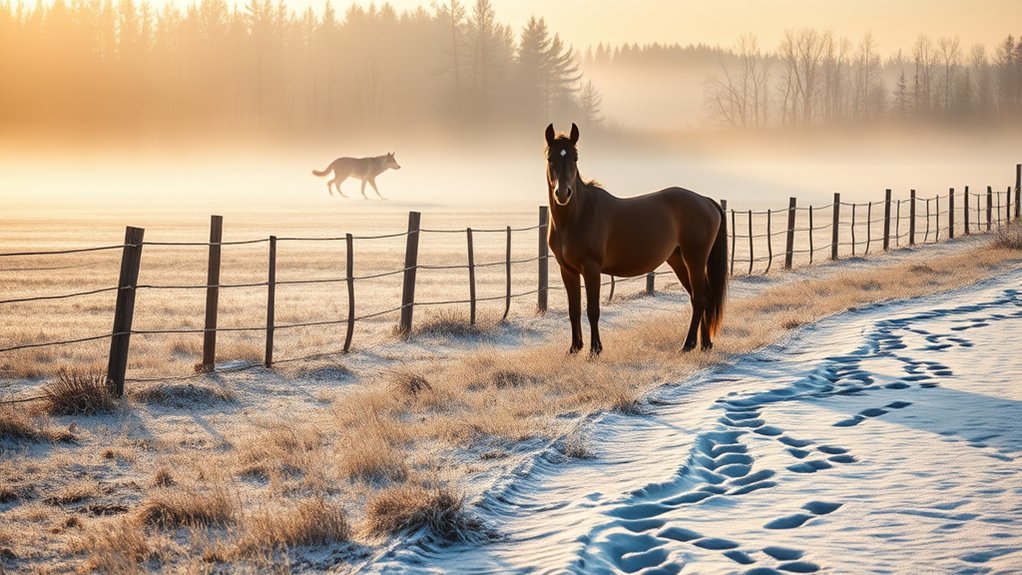
Although predation on horses by wolves, bears, and coyotes is uncommon, these animals can pose a threat to vulnerable horses, especially foals, injured, or weakened adults. You should know that wolves, in particular, may prey on wild horses where their habitats overlap.
Bears, including grizzlies and black bears, tend to attack horses when food is scarce. Coyotes usually focus on young or injured horses due to their smaller size.
Here are key points to contemplate:
- Wolves hunt horses mainly in open areas with limited human presence.
- Bears attack horses occasionally, often driven by food scarcity.
- Coyotes prefer easier targets like foals or weakened horses.
Understanding these predators helps you protect horses in vulnerable environments.
Why Foals and Weak Horses Are Most Vulnerable to Predators
Predators like wolves, bears, and coyotes often focus on foals and weak horses since these animals can’t keep up or defend themselves effectively. Juvenile horses in their first months lack the strength and agility to escape, making them prime targets.
Predators sense weakness through scent or behavior and zero in on vulnerable prey to boost their hunting success. You can see why survival hinges on a foal’s or weak horse’s ability to avoid detection.
| Vulnerable Horses | Reason | Predator Advantage |
|---|---|---|
| Foals | Limited speed | Easier to catch |
| Injured horses | Reduced defense | Less resistance |
| Sick horses | Noticeable signs | Easier to track |
| Juveniles | Inexperience | Poor escape tactics |
Understanding this helps you see the harsh reality predators impose on vulnerable horses.
How Predators Regulate Wild Horse Populations and Ecosystems
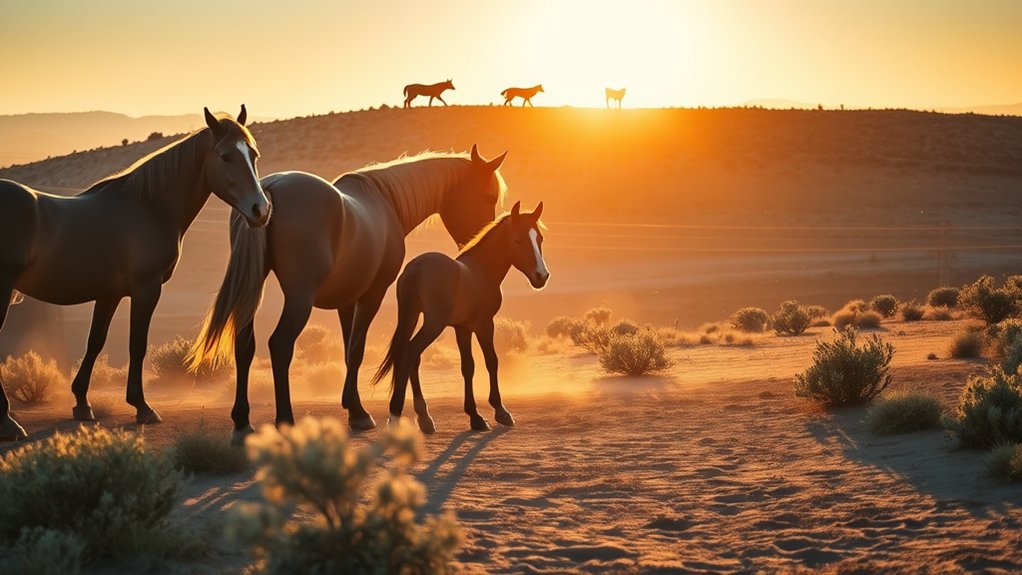
How do wild horse populations stay in balance with their environment? Natural predators play an essential role by regulating numbers and maintaining ecosystem health. You’ll find that:
- Mountain lions primarily target juveniles, killing multiple foals within months. This curbs rapid population growth.
- Bears, wolves, and coyotes also contribute by preying on vulnerable horses. This supports the natural balance.
- These predator-prey dynamics prevent overpopulation, reducing habitat degradation and ensuring resources aren’t exhausted.
How Predators Influence Wild Horse Movement and Behavior
When predators like mountain lions are around, wild horses tend to change how they move to stay safe. You’ll see them avoid areas where predators have been active recently because those spots feel risky.
They also change their behavior by spreading out more and sticking to open spaces. Open areas help them spot danger early, which gives them a better chance to escape if needed.
Predator Effects on Movement
Although wild horses often roam freely across vast landscapes, they constantly adjust their movements in response to threats lurking nearby. Predators like mountain lions and wolves shape where and how horses move to stay safe.
You’ll notice these key predator effects on movement:
- Horses avoid areas with high predator activity, especially during dawn and dusk when predators hunt most actively.
- They shift grazing to open or safer habitats, reducing the chance of surprise attacks.
- Horses stay close to cover or escape routes when they detect predator signs like tracks or scat.
These adaptations help wild horses balance feeding needs with safety, dispersing over larger areas.
Understanding these movement changes shows how predators indirectly maintain ecosystem health by influencing horse behavior and habitat use.
Behavioral Changes From Predation
Because predators like mountain lions pose a constant threat, wild horses change their behavior and movement to stay safe. You’ll notice that these predators of wild horses cause them to avoid open spaces, where they’re more exposed.
Instead, wild horses often stick close to dense cover or human-made structures to reduce risk. You’ll also see increased vigilance and stress behaviors, which affect how they graze and rest.
Curiously, wild horses may shift to more nocturnal activity to elude daytime predators. The fear of predation also encourages them to form tighter groups, altering their social dynamics and grazing patterns.
Understanding these behavioral changes helps you appreciate how predators of wild horses play a critical role in shaping their survival strategies.
Habitat Use and Avoidance
The constant threat from predators like mountain lions doesn’t just change how wild horses behave. It also shapes where they choose to roam. When you observe wild animals like horses, you’ll notice they avoid open spaces, staying near dense brush or rocky areas for cover. This natural instinct helps reduce their risk of attack.
Specifically, you’ll see wild horses favor habitats with natural hiding spots and avoid exposed grazing areas. They also alter daily routines and grazing patterns to stay concealed from predators.
Plus, they increase vigilance, which affects their social interactions and movement.
Understanding these survival strategies highlights how predators indirectly influence wild horse habitats. By shifting where they feed and rest, wild horses adapt to threats while balancing safety with their need to find food and water.
How Human Activities Disrupt Predator-Horse Relationships
When you consider how human activities shape ecosystems, it becomes clear that actions like wildfires, fencing, and land mismanagement severely disrupt the balance between predators and wild horses. These activities destroy wildlife habitat and migration routes, limiting predator presence that naturally regulates horse populations.
Barbwire fences not only injure wild horses but also interfere with predator-prey dynamics, causing unnatural population growth.
Furthermore, human-led removal of predators such as mountain lions, wolves, and bears reduces their ecological role, upsetting natural controls on horse numbers.
Outdated land management policies often prioritize livestock over predator conservation, further weakening these relationships.
As a result, habitat fragmentation and predator eradication lead to ecological imbalance, making it harder for you to maintain healthy, balanced wildlife habitats where horses and predators coexist naturally.
Identifying Signs of Predator Presence Around Your Horse Property
You should regularly check for predator footprints and scat around your horse property. That way, you can catch early signs that predators might be nearby.
Also, keep an eye on your horses’ behavior. If they suddenly seem nervous or have unexplained injuries, it could mean a predator is close.
Tracking Predator Footprints
Although predators can be elusive, tracking their footprints and other signs around your horse property gives you a valuable early warning system.
Predator tracks, especially large paw prints with visible claw marks, stand out from domestic animal tracks by size and shape.
To stay alert, focus on these three key steps:
- Check mud or snow near fences and water sources regularly for fresh footprints, indicating recent predator activity.
- Observe your horses for unusual behaviors like agitation or vocalizations that might signal nearby predators.
- Use trail cameras strategically to capture images of predators, confirming their presence and movement patterns.
Recognizing Predator Scat
How can you tell if predators have been lurking near your horse property? One clear sign is predator scat. Fresh droppings are usually found near trails, water sources, or bedding areas.
Pay attention to their size and shape. Mountain lion scat, for example, measures 2-4 inches, is segmented, and often contains fur, bones, or hoof fragments from recent prey like horses or deer.
Undigested hair and bone pieces in the scat indicate active predation.
Regularly inspecting your property for these signs helps you identify predator presence early. Spotting predator scat near your horses means it’s time to increase vigilance and implement deterrent measures to protect your animals effectively.
Recognizing these signs is vital for maintaining your horses’ safety.
Monitoring Behavioral Indicators
When horses start acting unusually nervous, alert, or refuse to graze, it often signals predator presence nearby. Monitoring these behavioral indicators is key to detecting predator activity early and protecting your horses effectively.
Here’s how you can stay vigilant:
- Regularly check your property for fresh tracks or scat near pastures and water sources. These are clear signs of active predators.
- Use security cameras to capture nighttime activity. Many predators, like mountain lions and bears, are most active after dark.
- Observe your horses daily for sudden changes in behavior, such as increased alertness or refusal to graze. These often indicate predator threats.
Consistent monitoring helps you respond promptly with safety measures, ensuring your horses remain safe and secure.
Protecting Horses From Predators: Effective Strategies
Since horses are vulnerable to predators like mountain lions and wolves, you can take several effective steps to protect them. Employing guardian animals such as llamas, donkeys, or livestock guardian dogs acts as natural protectors, deterring predators from approaching.
Securing foals and young horses in barns or enclosed shelters at night further reduces their risk when predators are most active.
Installing motion-activated lights and electric fencing around pastures creates physical and visual barriers, discouraging attacks.
Regularly inspecting your pastures for predator signs like tracks or scat lets you identify threats early and respond promptly.
Moreover, removing attractants like leftover feed, fallen fruit, and accessible compost minimizes the chance of drawing predators near your horses.
These strategies collectively enhance your horses’ safety against predators.
Balancing Predator Conservation With Horse Safety
Although predators like mountain lions and wolves play a crucial role in maintaining ecological balance by controlling horse populations, you still need to prioritize your horses’ safety.
Balancing predator conservation with horse safety requires careful strategies that respect both wildlife and equine well-being. Here’s what you can do:
- Understand predator behavior by monitoring signs of activity around your property.
- Use non-lethal deterrents such as electric fencing and guardian animals to protect your horses effectively.
- Manage habitats thoughtfully to minimize encounters between predators and vulnerable horses, especially juveniles.
Frequently Asked Questions
Can Domestic Dogs Pose a Threat to Horses?
Yes, domestic dogs can pose a threat to horses, especially if they’re feral or unsupervised. While they’re not wild predators, their aggressive or herding behavior can stress or injure horses, particularly vulnerable foals.
You should manage dogs carefully around horses to prevent harm. Unlike true wild predators, dogs’ threats are usually behavioral, but you still need to control them to keep your horses safe and reduce risks of injury or stress.
Do Any Birds of Prey Target Horses?
You won’t often see bird predation targeting horses because adult horses are too large and strong. However, some birds of prey, like golden eagles, may occasionally go after vulnerable foals or injured horses.
Great horned owls and hawks usually focus on smaller animals, so they rarely pose a threat to horses.
While large raptors might scavenge horse carcasses, active bird predation on healthy adult horses is extremely rare.
How Do Horses Defend Themselves Against Predators?
When danger creeps in like a shadow at dusk, you defend yourself with speed and sharp senses.
Horses rely on keen eyesight and acute hearing to detect predator behavior early, then use agility to escape, often running zigzag patterns.
You also communicate threats through whinnies, rallying your herd to increase vigilance.
If cornered, you fight back by stamping, kicking, or rearing, turning defense into a fierce shield against predators.
Are There Diseases Transmitted From Predators to Horses?
You should know that diseases transmitted from predators to horses are rare and considered low Predator Risks. While predators like mountain lions or wolves might carry parasites, they rarely pass infections directly to horses.
You might worry about rabies or leptospirosis, but such cases are extremely uncommon.
What Role Do Humans Play in Horse Predator Control?
Imagine standing at the edge of a wild pasture, where you see horses grazing peacefully. Yet predators lurk nearby. You play a crucial role in wildlife management by regulating predator numbers through hunting, relocation, and habitat control.
Your actions help balance ecosystems, protect horses from attacks, and maintain natural harmony. However, you must act carefully, ensuring your interventions support both horse safety and predator conservation.
Fostering coexistence is essential.
Conclusion
Just like the delicate dance between lions and zebras on the savannah, horses and their predators share an ancient, complex balance. You’ll want to stay vigilant, especially protecting vulnerable foals, while respecting nature’s role in regulating wild populations.
By understanding these dynamics and using smart strategies, you can safeguard your horses without disrupting the ecosystem. It’s a careful harmony that requires both empathy and action to maintain.