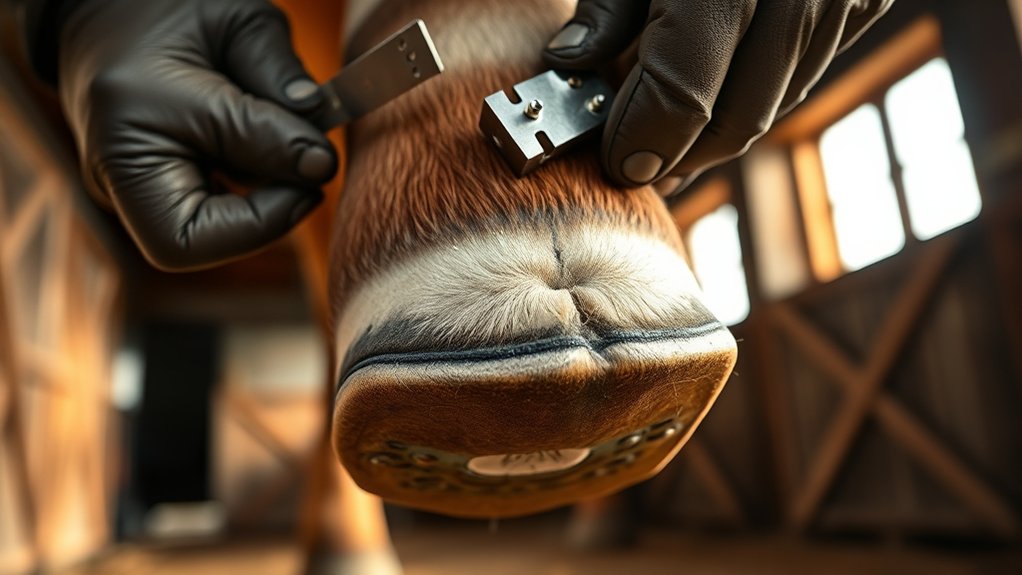
How Do Horseshoes Work?
Horseshoes protect your horse’s hooves by acting as a durable shield against rough terrain and abrasion. This helps prevent wear and injury. Made from steel, aluminum, or synthetic materials, they’re precisely shaped and nailed to the outer hoof wall to fit securely.
Shoes also improve traction with textured surfaces or studs, which enhances stability and performance. This specialized support maintains hoof health and balance during movement. Understanding the farrier’s role and horseshoe types reveals how this system optimizes your horse’s comfort and safety.
What Are Horseshoes and Why Do Horses Wear Them?
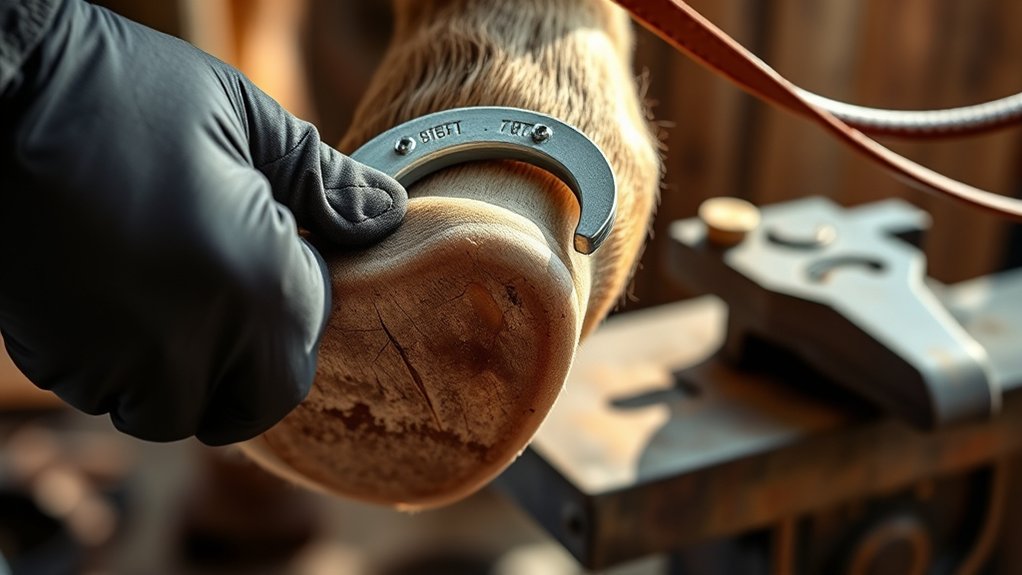
Although horseshoes might seem simple, they play a critical role in protecting a horse’s hooves from wear and injury. You’ll find horseshoes are curved metal plates securely attached to the outer hoof wall, which is insensitive, so the horse feels no pain during application.
Horseshoes, simple yet vital, shield a horse’s hooves from damage without causing any pain.
Their primary function is to provide essential protection, supporting hoof health by preventing excessive wear and damage, especially when horses work on rough or hard surfaces.
Horseshoes also improve traction, which is essential for performance and safety.
Different designs cater to specific activities like racing, jumping, or therapeutic needs, optimizing hoof support accordingly.
What Materials Are Horseshoes Made From?
Horseshoes provide protection and support in various environments, but their effectiveness depends heavily on the materials used in their construction. Steel is the most common material for horseshoes, prized for its exceptional durability and strength. This makes it ideal for general riding and heavy work.
You’ll also find aluminum horseshoes, which offer reduced weight. This benefits racehorses and performance disciplines that demand speed and agility.
For specific needs, materials like rubber and plastic deliver cushioning and shock absorption. These are useful in therapeutic settings or soft terrain.
Less common metals such as copper, magnesium, and titanium are selected for their unique properties, including corrosion resistance or lightweight strength.
Ultimately, choosing the right horseshoe materials hinges on your horse’s activity level, environment, and hoof protection requirements, ensuring ideal performance and safety.
How Do Horseshoes Protect Horse Hooves?
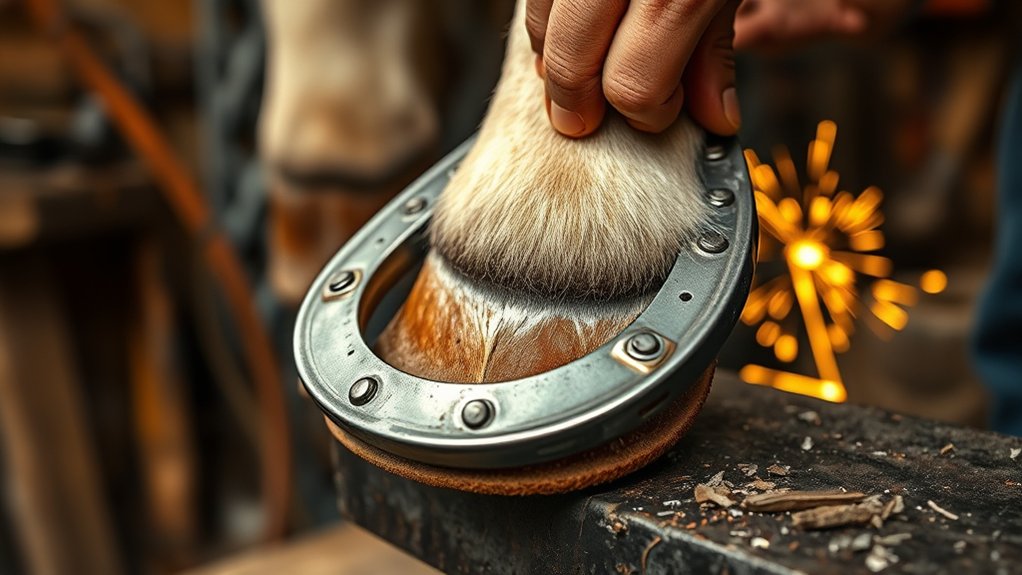
You rely on horseshoes to prevent your horse’s hooves from wearing down too quickly by creating a tough barrier against rough surfaces. They basically act like a shield for the hooves.
Plus, horseshoes improve traction with special features that help reduce slipping on different types of terrain. This means your horse can walk or run more safely.
And when the shoes are fitted properly, they support the more sensitive parts of the hoof—like the frog and the sole—helping to protect them from getting hurt by impacts. So overall, horseshoes keep hooves healthier and stronger.
Preventing Hoof Wear
When your horse moves across abrasive or uneven terrain, the metal horseshoe absorbs and distributes the impact. This prevents excessive wear on the hoof’s outer wall.
Horseshoes offer essential protection by covering the vulnerable outer hoof and reducing direct abrasion from rough surfaces.
They evenly distribute your horse’s weight, minimizing uneven hoof wear and erosion.
Properly fitted horseshoes shield the hoof from damage caused by sharp rocks and hard roads. This helps maintain the hoof’s shape and length to prevent overgrowth and related issues.
The secure attachment via nails ensures continuous protection during movement.
With horseshoes, you can:
- Protect against harsh terrain damage
- Maintain consistent hoof shape
- Prevent rapid hoof wear
- Ensure balanced weight distribution
This precise hoof protection helps keep your horse sound and comfortable.
Enhancing Traction Grip
How exactly do horseshoes enhance your horse’s grip on slippery or uneven terrain? They improve traction by incorporating textured surfaces, studs, or cleats that actively engage with the ground.
Traction-enhancing horseshoes often feature metal studs, caulks, or borium, which penetrate soft or slick surfaces, providing increased stability and reducing slipping risks.
Specialized designs include deep treads or cleats tailored for icy, muddy, or turf conditions, ensuring ideal grip. This enhanced traction prevents slips and falls, especially during rapid maneuvers or challenging terrain navigation.
Properly fitted horseshoes with traction devices not only boost your horse’s grip but also improve confidence and safety during work or competition. They’re essential for maintaining hoof protection while maximizing performance on varied surfaces.
Supporting Sensitive Structures
Although horseshoes are often valued for enhancing traction, their primary role includes protecting the hoof’s sensitive structures from damage and excessive wear. When you fit a horseshoe properly, it supports the hoof by distributing weight evenly, reducing stress on critical areas like the coffin bone and digital cushion.
This support prevents injury and maintains the hoof’s structural integrity.
Horseshoes protect sensitive structures by shielding the frog and sole from direct impact and excessive wear. They create a rigid barrier against sharp rocks and hard surfaces.
They also prevent slips that could damage delicate internal tissues and support natural hoof biomechanics to avoid deformities.
How Do Farriers Measure, Shape, and Fit Horseshoes?
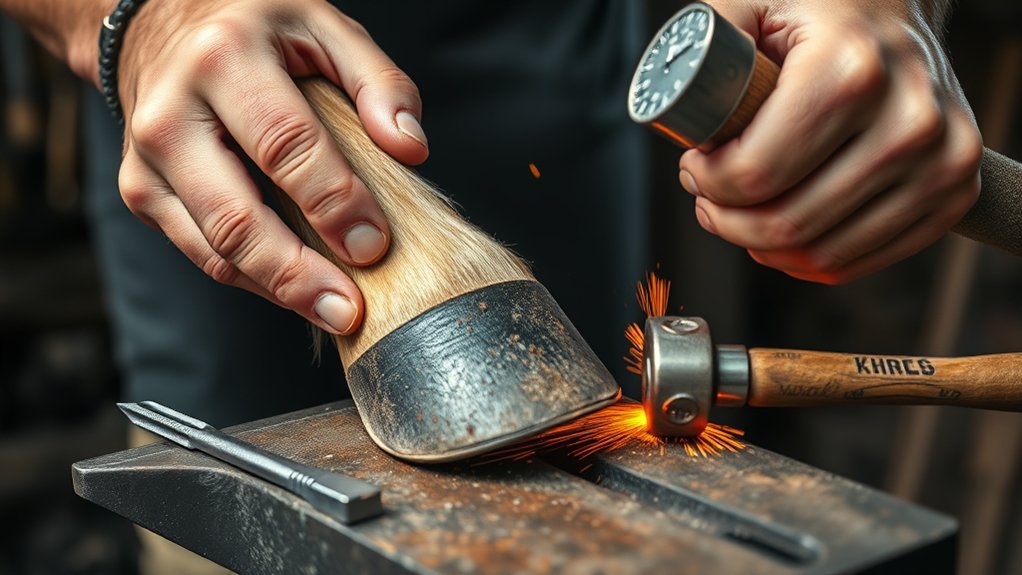
Because every horse’s hoof is unique, farriers start by measuring the hoof with specialized tools like calipers or hoof gauges to determine the exact shoe size needed.
After measuring, they focus on shaping the horseshoe by forging or bending it to precisely match the hoof’s contour and the required support. Proper shaping guarantees ideal weight distribution and comfort.
Next, fitting involves placing the shaped shoe on the hoof to check alignment with the hoof wall and sole. Accurate fitting prevents discomfort and injury.
Farriers then prepare for attachment by identifying precise nail placement points, typically along the white line.
Finally, they smooth rough edges with a rasp, eliminating potential chafing and ensuring the shoe sits comfortably during movement.
What Happens During the Shoeing Process?
Once the farrier has measured, shaped, and fitted the horseshoe, the actual shoeing process begins with trimming the horse’s hooves to achieve ideal shape and balance. You’ll notice the farrier carefully trims to maintain proper alignment and weight distribution.
The farrier begins shoeing by trimming hooves for perfect shape, balance, and weight distribution.
Next, the farrier selects or forges a horseshoe tailored to the hoof’s size and needs. The horseshoe is then nailed into the insensitive outer hoof wall, guaranteeing the horse feels no pain.
Finally, the farrier bends the nails over and files them smooth, preventing injury.
During this process, you can appreciate how the farrier:
- Guarantees hoof health through precise trimming
- Customizes horseshoes for perfect fit
- Attaches shoes securely without discomfort
- Finishes edges smoothly for safety and durability
When Do Horses Need Shoes Most?
When horses work on hard, rocky, or abrasive surfaces, their hooves endure excessive wear that demands protective shoeing. You’ll find hoof protection essential in these conditions to prevent damage and maintain soundness.
Horses engaged in high-impact activities like jumping or racing also need shoes to enhance support and traction, reducing injury risk.
If a horse suffers from hoof ailments such as laminitis, navicular syndrome, or cracks, specially fitted shoes provide relief and protection tailored to their condition.
During heavy workloads or challenging terrains, shoeing preserves hoof integrity by minimizing stress.
Even horses with naturally weak or sensitive hooves benefit from shoes that improve stability and shield against damage during regular activity on hard surfaces.
Proper shoeing guarantees ideal hoof function and durability.
Why Don’t Wild Horses Need Shoes?
You’ll notice wild horses naturally wear down their hooves just by moving around a lot on different types of ground. This constant movement actually helps keep their hooves strong and in good shape.
Because of the environment they live in, their hooves adapt naturally, so they don’t really need extra protection like shoes.
When you think about how their hooves wear down and how they interact with the terrain, it makes sense why wild horses don’t need shoeing at all.
Natural Hoof Wear
Although wild horses don’t wear shoes, their hooves remain healthy due to constant movement across varied terrain that naturally wears down their hooves. This natural hoof wear prevents excessive growth and maintains ideal shape through environmental interaction.
Unlike domestic horses, wild ones rely solely on this natural maintenance, which supports balanced hoof growth without artificial intervention. You can appreciate how this process works:
- Continuous abrasion shapes and trims the hooves naturally
- Hoof growth matches wear rates, preventing overgrowth
- No imbalanced pressure from artificial shoes, reducing injury risks
- Freedom of movement allows hooves to adapt dynamically
Understanding natural hoof wear highlights why wild horses don’t need shoes. They maintain hoof integrity through their environment and movement, ensuring soundness without human aid.
Terrain and Activity
The natural wear of wild horses’ hooves directly results from their constant movement across diverse terrains and varied activity levels. You’ll notice that wild horses regularly traverse rocky, uneven ground, which conditions and strengthens their hooves through natural abrasion. This continuous activity prevents excessive hoof growth and maintains ideal hoof shape without the need for artificial protection.
Unlike domesticated horses, wild horses don’t require shoes because their environment provides the necessary mechanical wear and stimulation to promote healthy hoof shedding. Their hooves adapt dynamically to terrain challenges, reducing risks of cracking or splitting.
How Do Horseshoes Improve Traction and Performance?
How exactly do horseshoes enhance a horse’s traction and performance? They optimize footing and biomechanics, making sure your horse moves efficiently and confidently. Traction devices like studs or caulks really improve grip on slippery or uneven terrain, cutting down slip risks.
Specialized shoes, such as racing plates, cut weight which boosts speed and overall performance. Proper fitting corrects gait irregularities and maintains hoof balance, further enhancing athletic ability.
Consider how horseshoes:
- Increase friction between hoof and surface using grooves and studs
- Enhance stability for sharper turns and controlled movement
- Reduce shoe weight to maximize speed and endurance
- Align and balance the hoof to optimize biomechanics
What Are Common Horseshoe Types and Their Uses?
You’ll find that steel and aluminum horseshoes serve different needs. Steel offers great durability, making it a solid choice for everyday use.
On the other hand, aluminum is much lighter, which helps horses move faster and with more agility.
Some horseshoes come with traction features like studs. These are especially useful when your horse needs better grip on slippery or challenging surfaces.
Then there are specialized sport shoes, like racing plates, which are designed to boost performance for specific disciplines.
Steel vs Aluminum
Although steel and aluminum horseshoes serve the same fundamental purpose, their distinct properties cater to different equine needs. Steel horseshoes offer superior durability and strength, making them ideal for heavy-duty work and providing maximum support and traction.
Aluminum horseshoes, being lighter, enhance speed and agility, which is why you’ll often see them in racing and high-performance disciplines. Both materials are expertly shaped by a farrier to fit your horse’s hoof and activity demands precisely.
Consider these factors when choosing between steel and aluminum horseshoes:
- Steel’s robustness supports endurance and rugged terrain
- Aluminum’s lightness boosts speed and quick movements
- Both materials maintain structural integrity under stress
- Selection depends on workload, terrain, and specific performance needs
Understanding these differences helps you optimize your horse’s comfort and effectiveness.
Traction Enhancing Features
When maneuvering slippery or uneven terrain, horseshoes equipped with traction-enhancing features play a crucial role in maintaining stability. You’ll find studs, caulks, or cleats embedded strategically on the heel or toe areas, providing optimum grip and preventing slips.
Specialized materials like borium or carbide-tipped nails further boost traction on icy or muddy surfaces. These horseshoes excel in demanding activities such as jumping or eventing, ensuring your horse’s safety and performance.
| Horseshoe Type | Traction Feature | Typical Use |
|---|---|---|
| Studded Shoes | Metal studs on toe/heel | Muddy or icy terrain |
| Caulked Shoes | Rounded caulks | Soft, uneven ground |
| Borium-tipped Shoes | Embedded carbide nails | Rocky or hard surfaces |
| Cleated Shoes | Raised cleats | Deep mud or slippery fields |
| Grip Shoes | Combination of features | Multi-terrain stability |
Specialized Sport Shoes
Because different equestrian disciplines demand specific hoof performance, specialized sport horseshoes have been engineered to meet these needs. You’ll find various types tailored to enhance performance and protect the hoof under distinct conditions.
Racing plates, made from lightweight aluminum shoes, reduce hoof weight while ensuring necessary protection for speed.
Jumping shoes incorporate caulks or studs to increase traction on diverse surfaces.
Traction shoes focus on grip, using studs or calks to prevent slipping on ice or mud.
Furthermore, therapeutic shoes like heart bar or eggbar types support injured hooves during activity.
Common specialized sport shoes include:
- Racing plates for speed and lightweight hoof protection
- Jumping shoes with added traction elements
- Traction shoes for slippery terrains
- Therapeutic shoes aiding recovery and stability
Why Are Horseshoes Considered Lucky and Part of Tradition?
Since horseshoes have long been crafted from iron, a material historically believed to repel evil, they’ve become powerful talismans in many cultures. You’ll find that horseshoes symbolize luck and protection because iron was thought to ward off malevolent spirits.
The crescent shape plays an essential role. It’s traditionally associated with capturing and retaining positive energy. When you hang a horseshoe above a door with its ends pointing upward, you’re following a widespread tradition intended to catch and hold luck, preventing it from spilling out.
This custom stems from horseshoes’ historical function of protecting horses, linking them to strength and safety. Understanding these origins clarifies why horseshoes remain enduring symbols of luck and tradition in various societies around the world.
Frequently Asked Questions
How Long Do Horseshoes Typically Last Before Needing Replacement?
Horseshoes typically last between 4 to 8 weeks before needing replacement. You’ll want to monitor hoof growth because it affects how snugly the shoe fits over time.
Proper shoe fitting is essential to avoid discomfort or injury. Material durability also plays a role since tougher materials last longer on abrasive terrain.
Make sure to have a farrier regularly inspect the shoes for wear, cracks, or looseness to determine the ideal replacement timing.
Can Horseshoes Cause Any Health Problems for Horses?
Horseshoes can sometimes throw a wrench in your horse’s hoof health if the shoe fit isn’t spot-on. Ill-fitting shoes raise the injury risk by causing pressure points, cracks, or even infections.
Nailing too close to sensitive areas can damage tissues, while poor shoeing disrupts natural hoof expansion.
To keep your horse comfortable and sound, you’ve got to monitor shoe fit closely and maintain regular hoof care to avoid hidden problems.
Are There Alternatives to Traditional Horseshoes for Hoof Protection?
Yes, you have several alternative hoof protections to traditional horseshoes. You can opt for barefoot hoof care, which relies on precise trimming and conditioning to maintain hoof health without shoes.
Synthetic hoof shoes offer another option; they mimic metal shoes’ durability but allow more natural hoof movement.
Furthermore, you might try hoof boots for temporary protection during work or trail riding.
These alternatives reduce risks linked to nails and metal plates while supporting hoof function.
How Do Weather Conditions Affect the Effectiveness of Horseshoes?
Oh, sure, horseshoes thrive best when you bathe them in mud and ice!
In reality, hoof moisture can make shoes slip, reducing grip. Temperature impact causes metal to contract in cold, altering fit, while heat can degrade rubber or plastic variants, harming weather durability.
Snow buildup diminishes traction, so you’ll need specialized shoes or traction devices.
Wet or icy conditions challenge shoe stability, so you must choose carefully to maintain peak performance.
What Maintenance Is Required for Horseshoes After They Are Fitted?
After horseshoes are fitted, you need to perform regular hoof trimming to maintain proper shape and balance.
Nail care is essential; check for loose or bent nails that could cause discomfort or shoe detachment.
Schedule shoe reapplication every 4 to 8 weeks as hooves grow and change.
Promptly address any damage or wear to prevent injury.
Consistent cleaning and inspection help you spot issues early, ensuring the shoes remain effective and comfortable.
Conclusion
Now that you know how horseshoes work, you can see they’re more than just metal plates. They’re essential gear that protects hooves, boosts traction, and enhances performance.
Farriers carefully measure and fit each shoe to keep horses comfortable and safe. While wild horses manage without, domesticated ones rely on shoes to stand their ground.
As the saying goes, don’t put all your eggs in one basket. Horseshoes combine tradition with technical precision to support equine health and function.