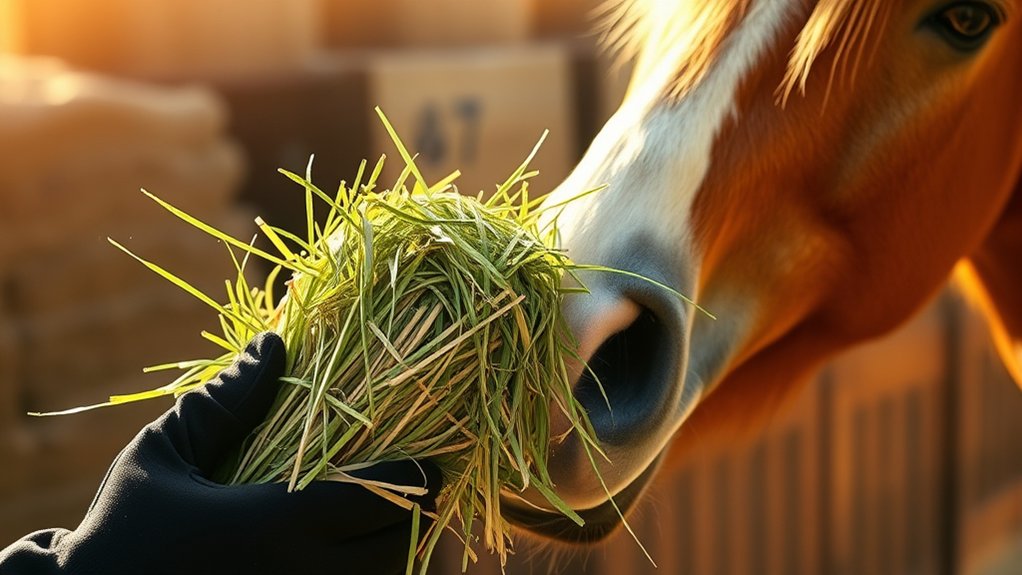
What Is Timothy Hay Good for Horses?
Timothy hay is great for your horse because it provides essential fiber and moderate protein, supporting healthy digestion and natural chewing. Its low sugar and starch content helps maintain weight and keeps metabolic issues at bay.
This hay suits easy keepers, seniors, and horses with dental or digestive sensitivities by promoting steady gut function. You’ll also find different cuts and forms to match your horse’s specific nutritional and health needs. Explore more to make the best choice.
What Is Timothy Hay and Why Is It Popular?

Although many types of hay exist, Timothy hay stands out as a high-quality, cool-season grass hay prized for its balanced fiber, moderate protein, and low sugar content.
Timothy hay is a premium cool-season grass valued for its balanced fiber, moderate protein, and low sugar.
When you include timothy hay in your horse diet, you provide a high-quality forage that supports digestive health through its essential fiber and calcium content.
Its soft texture and slightly sweet aroma encourage steady intake, which is crucial for maintaining consistent nutrient absorption.
You’ll find timothy hay especially beneficial for horses with metabolic concerns, obesity, or dental issues due to its safety and palatability.
What’s in Timothy Hay? Protein, Fiber & Sugar Explained
What makes Timothy hay nutritionally valuable for horses? Its balanced nutritional profile includes 8-12% crude protein, essential for muscle maintenance and overall health.
Timothy hay’s fiber content is particularly high, often 60-70% neutral detergent fiber (NDF), which supports digestion and gut motility. The fiber mainly consists of long stems, encouraging natural chewing behavior.
Furthermore, Timothy hay contains low sugar and non-structural carbohydrate (NSC) levels, typically below 10%, making it a safe choice for horses prone to metabolic issues.
Keep in mind, protein and sugar levels may vary depending on harvest timing and growing conditions, influencing the hay’s exact nutritional profile. Understanding these components helps you provide optimal nutrition tailored to your horse’s needs.
How Does Timothy Hay Support Digestive Health?

Because Timothy hay contains high levels of fiber and long stems, it actively supports your horse’s digestive health by promoting gut motility and stimulating saliva production.
Timothy hay’s fiber and long stems enhance digestive health by boosting gut movement and saliva flow.
The high fiber content in Timothy hay encourages steady digestion, mimicking natural grazing behavior that enhances digestive enzyme activity.
This forage’s moderate energy and low non-structural carbohydrate levels reduce the risk of gastrointestinal disorders, such as ulcers, by preventing sudden digestive upset.
Timothy hay promotes healthy digestion by ensuring consistent manure quality and preventing impaction colic through complete feed passage.
Moreover, its low sugar content benefits horses susceptible to insulin resistance or metabolic issues, further supporting ideal digestive health.
Why Does Timothy Hay Help Maintain a Healthy Weight?
You’ll find that Timothy hay has a moderate amount of calories, giving your horse just enough energy without causing extra weight gain.
Plus, it’s packed with fiber, which helps your horse feel full and keeps their digestion running smoothly. This way, Timothy hay naturally helps manage your horse’s appetite.
Moderate Calorie Content
Although managing your horse’s weight can be challenging, Timothy hay offers a reliable solution due to its moderate calorie content. This balanced energy density supports effective weight management without risking obesity, making it especially suitable for easy keepers and horses prone to metabolic issues.
Timothy hay’s moderate calorie content ensures your horse receives adequate nutrients while maintaining nutritional balance. It also supports digestive health by providing fiber with low sugar levels, preventing excessive energy intake.
Consider how Timothy hay benefits your horse’s weight management:
- Provides consistent, moderate calories for steady weight maintenance.
- Supplies balanced nutrients ideal for light to moderate work or rest.
- Supports digestive health while preventing overfeeding in easy keepers.
Timothy hay is a strategic choice for maintaining healthy weight in diverse equine populations.
High Fiber Benefits
When you feed Timothy hay, its high fiber content actively promotes steady digestion and gut motility. These play a crucial role in maintaining your horse’s healthy weight.
The long-stem, coarse fibers mimic natural grazing, encouraging thorough chewing and increased salivation that support effective digestion and gut health.
This process aids in smooth nutrient absorption and prevents digestive disturbances such as ulcers and impaction colic, both essential for stable weight management.
Furthermore, Timothy hay’s moderate energy levels provide adequate calories without contributing to excess weight gain. This makes it ideal for horses requiring controlled energy intake.
Its low sugar and starch content further reduce metabolic risks, especially in insulin-resistant horses.
Controlled Energy Intake
Because Timothy hay contains moderate energy levels, it helps you maintain your horse’s weight without encouraging excess gain. Its controlled energy content supports effective weight management by balancing nutrient supply with energy needs.
Here’s why Timothy hay is beneficial:
- Low sugar and starch content minimize blood glucose spikes, reducing metabolic risks like laminitis.
- High fiber promotes gut fill and satiety, preventing overeating and controlling calorie intake.
- Adequate nutrition for horses in light to moderate work guarantees steady weight without excess energy.
Who Benefits Most From Timothy Hay?
You’ll find Timothy hay especially beneficial for easy keepers, seniors, and horses with metabolic challenges because it’s low in sugar and starch.
Plus, its high fiber and long-stem structure do a great job supporting digestive health and mimicking natural grazing patterns.
When it comes to feeding, think about using forms like chopped or soaked hay, especially if your horse has dental issues or is recovering from an illness.
These options can make it easier for them to enjoy the benefits without any trouble.
Ideal Horse Types
Although Timothy hay suits a wide range of horses, it particularly benefits easy keepers and those in light to moderate work due to its moderate calorie and high fiber content. You’ll find Timothy hay ideal for horses needing balanced nutrition without excessive calories.
Specifically, these ideal horse types benefit most:
- Senior horses and those recovering from illness, as Timothy hay supports digestive health with gentle, low-sugar forage.
- Horses with metabolic issues like insulin resistance or EMS, which thrive on its low non-structural carbohydrate content.
- Young, growing horses and broodmares, gaining nutritional balance essential for development and reproductive health.
If your horse struggles with weight management or digestive sensitivities, Timothy hay promotes satiety while maintaining preferable fiber intake for overall digestive function.
Feeding Considerations
When selecting forage for your horse, understanding the specific benefits of Timothy hay can guide you toward better feeding decisions. Timothy hay meets diverse nutritional needs with low sugar and starch, supporting digestive health and weight management.
It’s especially beneficial for easy keepers, seniors, and horses with metabolic concerns. This hay type provides moderate protein and fiber, promoting steady gut function and overall condition without excess calories.
| Horse Type | Nutritional Benefit | Emotional Impact |
|---|---|---|
| Senior Horses | Supports sensitive digestion | Peace of mind |
| Easy Keepers | Controls weight | Confidence in care |
| Metabolic Horses | Low sugar/starch | Reduced health worries |
| Light Work Horses | Balanced nutrition | Optimized performance |
When Is Timothy Hay Not Enough?

If your horse has elevated energy demands due to heavy work, growth, or reproduction, Timothy hay alone won’t provide sufficient nutrients. Its moderate protein content and limited calories may fall short for horses with high energy requirements or those that are pregnant or lactating.
You’ll need to supplement or replace Timothy hay when:
- Your horse requires additional calories and protein to support muscle development or milk production.
- Dental issues prevent adequate chewing, reducing hay intake and nutrient absorption.
- Young, developing, or performance horses need higher nutrient density than Timothy hay offers.
In these cases, relying solely on Timothy hay can lead to nutritional deficiencies. You should consider complementary feeds or alternative forage to meet your horse’s specific physiological needs effectively.
What Are the Different Timothy Hay Cuts and Their Uses?
Timothy hay is typically harvested in multiple cuts, each with distinct characteristics that affect its nutritional value and suitability for different horses. The first cut is coarse and stemmy, offering high fiber content that supports digestion and benefits horses requiring extended chewing time.
In contrast, second and third cuts are leafier and softer, enhancing forage quality and palatability. These cuts provide a richer nutritional profile, ideal for easy keepers or horses with dental issues needing a nutrient-dense horse diet.
Later cuts contain lower fiber but higher energy, supporting weight maintenance in moderately active horses.
Understanding Timothy hay cuts allows you to tailor forage quality precisely to your horse’s age, health, and activity level, optimizing digestion support and overall nutritional intake.
What Are the Best Timothy Hay Formats for Your Horse?
Although selecting the right hay format depends on your horse’s specific needs, understanding the available Timothy hay forms can help you make informed feeding choices. Different hay formats affect digestion, nutritional content, and overall horse health.
- Compressed bales provide long-stem fiber essential for proper digestion and are easy to transport. Always check freshness to maintain nutritional quality.
- Pellets and cubes offer consistent nutrition and are ideal for horses with dental issues. Soaking them improves digestibility and reduces choking risk.
- Chopped forage is soft and easy to chew, perfect for older or dental-impaired horses. It promotes hydration and minimizes waste.
Choosing the appropriate Timothy hay format guarantees suitable nutrient absorption and supports your horse’s health effectively.
How to Choose High-Quality Timothy Hay
When you’re picking out Timothy hay, start by giving it a good smell and feel. You want hay that’s fresh, smells nice and aromatic, and feels soft when you touch it.
It’s also a good idea to check how leafy it’s compared to the stems—more leaves usually mean better nutrition.
Don’t just settle for one bale either; look at a few to make sure the color, texture, and smell are consistent before you decide.
Smell And Texture
Because the smell and texture of hay directly reflect its quality and nutritional value, you should carefully assess these characteristics before selecting Timothy hay for your horse.
First, examine the aroma: high-quality hay emits a fresh, sweet scent, free from musty or sour odors that indicate spoilage.
Second, assess the texture: the hay should be soft and pliable, signaling proper curing and maturity; it should easily pull apart without crumbling.
Third, check for cleanliness and appearance: excellent hay has minimal dust, mold, or debris, which protects your horse’s respiratory health.
These factors combined ensure you’re choosing hay that maintains its nutritional integrity and palatability, ultimately supporting your horse’s well-being and digestive function.
Leafiness And Stem Ratio
Selecting high-quality Timothy hay requires careful evaluation of its leafiness and stem ratio, which directly influence its nutritional value and palatability. You should prioritize hay with a high leaf-to-stem ratio, as leaves contain more nutrients and enhance taste.
The leaves should be bright green, soft, and tender, indicating ideal maturity and superior digestibility. Conversely, stems should be relatively soft and not coarse or woody, since mature, coarse stems reduce digestibility and lower nutritional benefits.
Excessive stems or a coarse texture suggest the hay was harvested too late, diminishing its overall value. By focusing on these characteristics, you guarantee your horse receives Timothy hay that maximizes nutrient intake and is more enjoyable to eat, supporting better health and performance.
Inspect Multiple Bales
Evaluating leafiness and stem ratio provides a foundation for determining Timothy hay quality, but inspecting multiple bales guarantees consistency across your purchase. Conduct thorough bale inspection by comparing several bales to confirm quality consistency in color, texture, and smell.
Focus on these key aspects:
- Freshness: Choose bales with bright green color and a sweet, fresh aroma indicating excellent harvest timing and nutrient retention.
- Mold and dust: Examine both exterior and interior for mold, dust, or foreign materials that could harm your horse’s health.
- Leafiness: Gently pull apart flakes to assess leaf content and softness, as higher leafiness usually means better quality and palatability.
Avoid bales with musty odors or weather damage, ensuring you select uniformly high-quality Timothy hay beneficial for horses.
How to Feed Timothy Hay for Best Results
When introducing Timothy hay to your horse’s diet, you should gradually increase the amount over 7 to 10 days to prevent digestive upset and help your horse adjust smoothly. Measure feeding amounts by weight, not volume, to ensure proper intake since flakes vary in density.
Feed based on 1.5% to 2.0% of the horse’s body weight in dry matter daily, adjusting for activity level. For seniors or horses with dental issues, soak pellets or cubes to aid digestion health and hydration.
Monitor manure and eating behavior to confirm the hay meets nutritional needs.
| Factor | Recommendation |
|---|---|
| Introduction Period | 7-10 days |
| Feeding Amounts | 1.5%-2.0% body weight |
| Measurement Method | By weight, not volume |
| Special Cases | Soak pellets/cubes if needed |
Frequently Asked Questions
Can Timothy Hay Be Mixed With Other Forage Types Safely?
Yes, you can safely mix Timothy hay with other forage types, but you need to assess nutritional benefits carefully to meet your horse’s dietary needs. Follow feeding guidelines by introducing mixes gradually to prevent digestive upset.
Always perform quality assessment to avoid mold or dust. Store hay properly to maintain freshness and nutrient content.
Consider cost factors when combining forage types to guarantee your feeding program remains affordable without compromising quality.
How Should Timothy Hay Be Stored to Maintain Freshness?
To maintain freshness, you should prioritize proper hay storage by keeping Timothy hay in dry, well-ventilated areas that control moisture effectively. Use storage containers or covered shelters to prevent pest infestation and moisture damage.
Regularly monitor moisture levels with a moisture meter, ensuring content stays below 20%. Rotate bales frequently to promote airflow, which aids freshness preservation.
Avoid overstocking to reduce heat buildup and mold risk, ensuring best hay quality.
Does Timothy Hay Have Any Seasonal Availability Concerns?
You’d think Timothy hay grows like magic, but it faces real seasonal availability challenges. Seasonal harvesting mainly occurs in late spring to early summer, so winter supply can be scarce.
Weather effects like cold or wet conditions during growth reduce hay quality and yield. Harvest timing is vital, and crop rotation impacts soil health, influencing future harvests.
To secure consistent supply, you must plan storage and purchase well before shortages hit.
Can Timothy Hay Cause Allergies in Horses?
Yes, Timothy hay can cause allergy symptoms in some horses, especially if hay mold or dust is present. You might notice respiratory issues like coughing or nasal discharge if your horse is sensitive.
To reduce risks, you should prioritize hay testing and guarantee proper storage to prevent mold growth.
Implementing these allergy prevention steps helps minimize exposure to allergens, safeguarding your horse’s respiratory health effectively.
What Are the Environmental Impacts of Growing Timothy Hay?
Imagine a thirsty plant in a dry desert. Growing Timothy hay can be like that, demanding high water usage that strains local supplies.
You’ll find that its environmental sustainability suffers when soil health declines due to monoculture, and pesticide impact adds pollution risks.
Plus, harvesting machinery increases its carbon footprint.
To protect ecosystems, you need to manage water wisely, rotate crops, and minimize chemicals for greener hay production.
Conclusion
Timothy hay quietly champions your horse’s well-being by offering balanced nutrition that supports digestion and weight management without overwhelming their system. Its thoughtful fiber and protein content gently nurture their health, making it a reliable choice for many equine diets.
By selecting quality cuts and feeding thoughtfully, you’re not just providing hay, you’re delivering a subtle foundation for lasting energy and comfort in your horse’s daily routine.