How Fast Can A Morgan Horse Run – Facts & Figures
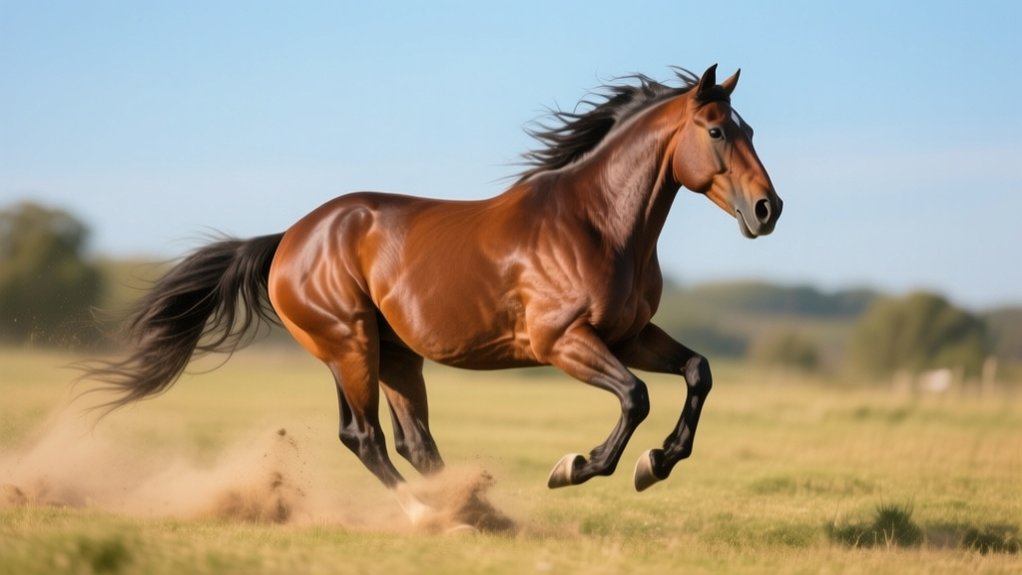
A Morgan horse can sprint up to 30 mph, but they only hold those peak speeds for short bursts of about 1-2 minutes. Their compact, muscular build and powerful hindquarters help them accelerate quickly and stay agile.
When it comes to longer distances, they usually slow down to a moderate pace around 8-12 mph. Things like age, health, and the environment play a big role in how well they perform.
Of course, the right conditions can really bring out their natural speed. You’ll find detailed insights on their endurance, how their speed is measured, and how they compare to other breeds just ahead.
How Fast Can a Morgan Horse Run at Top Speed?
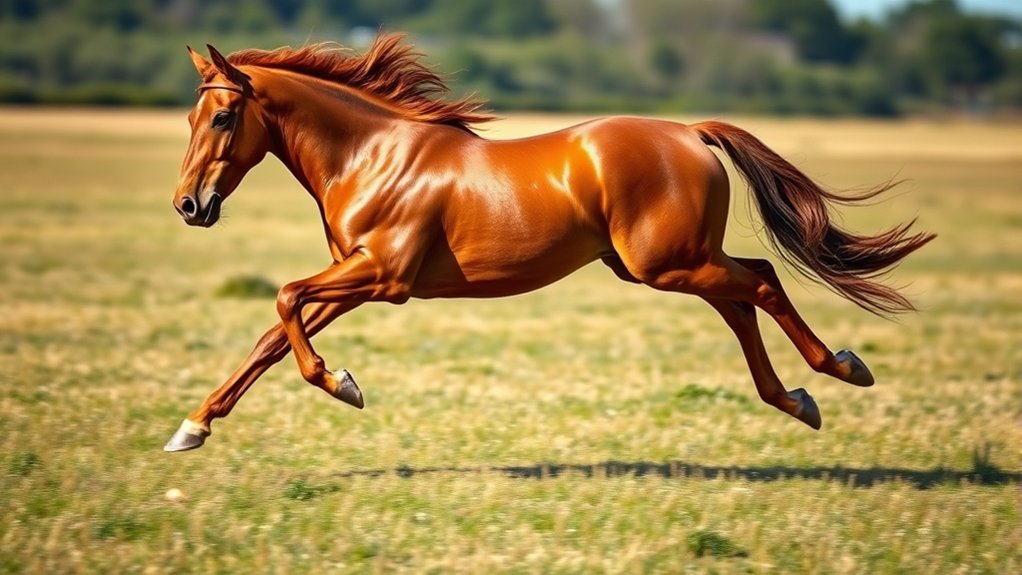
Although Morgan horses aren’t the fastest breed, they can reach top speeds of around 30 miles per hour (48 kilometers per hour). This speed lets you use Morgans effectively in both riding and driving disciplines where bursts of velocity are essential.
You’ll appreciate their agility and stamina, which allow Morgans to sustain these speeds over short distances rather than extended runs.
Their compact build and strong hindquarters provide the power necessary for impressive acceleration, making them well-suited to quick sprints.
When you push a Morgan horse to its limits, expect peak speed during brief efforts, as their endurance favors shorter, intense exertions over long-distance running.
Understanding these speed capabilities helps you optimize Morgan performance in various equestrian activities.
What Physical Traits Help Morgans Run Fast?
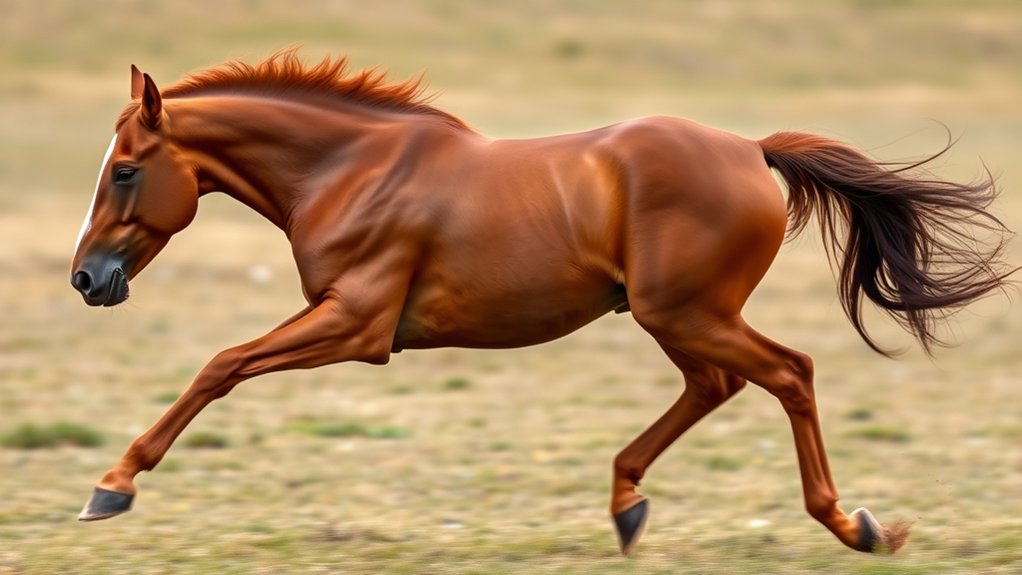
When you analyze the physical traits that enable Morgan horses to run fast, their compact and muscular build immediately stands out. You’ll notice their strong, well-arched neck supports balanced, powerful strides. Their deep chest and broad ribcage increase lung capacity, which is vital for oxygen intake during speed bursts.
The powerful hindquarters deliver significant propulsion, allowing rapid acceleration. Plus, Morgans have a lightweight yet sturdy frame, which helps optimize speed without sacrificing durability.
| Trait | Function | Benefit |
|---|---|---|
| Muscular Build | Strength & agility | Enhanced speed & control |
| Well-Arched Neck | Balanced stride | Efficient movement |
| Deep Chest | Increased lung capacity | Sustained oxygen supply |
| Powerful Hindquarters | Propulsion | Quick acceleration |
| Lightweight Frame | Reduced load | Greater speed potential |
How Long Can Morgans Maintain Top Speed?
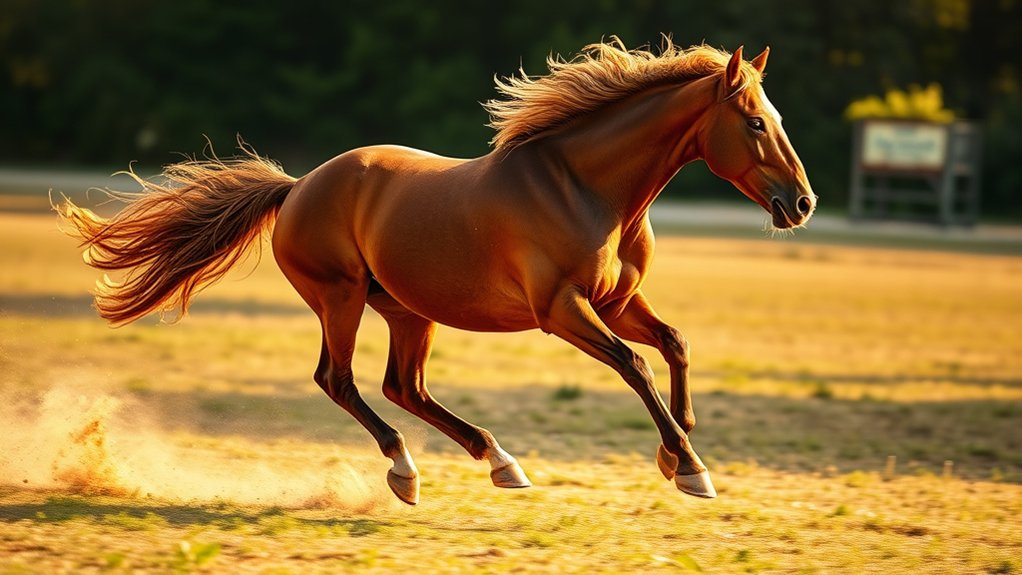
You can expect a Morgan horse to hold its top speed—around 30 miles per hour—for about 1 to 2 minutes when it’s going full gallop.
That sprint time isn’t set in stone, though; it really depends on things like the horse’s fitness level, age, and the kind of terrain it’s running on.
Sprint Duration Limits
Because Morgan horses possess a muscular build and strong cardiovascular systems, they can sustain their top speed of 25 to 30 miles per hour for roughly 1,000 to 1,500 meters. This sprint duration typically lasts less than 30 seconds, highlighting their capacity for rapid acceleration and brief, high-intensity exertion.
You’ll notice Morgans excel in short bursts rather than prolonged sprints due to limitations in muscular endurance and cardiovascular output. When racing, they often reach peak velocity within seconds but can’t maintain it long without fatigue setting in.
These physiological constraints define the sprint duration limits, emphasizing that while Morgans are powerful sprinters, their ability to hold maximum speed is optimized for short distances rather than extended high-speed runs.
Endurance At Top Speed
Although Morgan horses can reach top speeds of 30 to 40 miles per hour, they typically sustain this velocity for only about one to two minutes before fatigue affects performance. You should understand that their muscular build provides the power needed for these sprints, but the energetic demands limit duration at full throttle.
After this brief burst, Morgans shift to a moderate pace, usually around 8 to 12 mph, which they can maintain for several miles. The horse’s endurance shines during extended travel, allowing steady work for hours rather than sustained top-speed exertion.
Keep in mind that factors like terrain, fitness level, and rider control influence how long a Morgan can hold peak speed. But overall, their top-speed endurance remains brief, optimized more for short sprints than prolonged high-velocity efforts.
How Can You Safely Measure Your Morgan’s Speed?
When aiming to measure your Morgan horse’s speed accurately, it’s essential to use reliable tools such as a GPS device or a smartphone app during a controlled run. Start by warming up your horse thoroughly to avoid injury and assure consistent performance.
Perform the test on a flat, firm, and straight track, preferably a measured distance like 100 meters or a quarter-mile. Keep a close eye on your horse’s condition and stop immediately if you notice any signs of fatigue.
| Step | Details |
|---|---|
| Equipment | GPS device or smartphone app |
| Track | Flat, firm, straight, 100m+ |
| Safety | Warm-up, supervise, stop if tired |
This method guarantees precise speed measurement while prioritizing your horse’s wellbeing. It’s all about accuracy and keeping your Morgan safe at the same time.
How Does Morgan Horse Speed Compare to Other Breeds?
You’ll find that Morgan horses can reach speeds up to 30 mph. That puts them close to many light riding breeds, though they don’t quite hit the top speeds of Thoroughbreds and Standardbreds.
Thoroughbreds are known for their sprinting ability and higher peak speeds. But Morgans balance speed with endurance and versatility, which makes them unique.
When you compare Morgans to heavier draft breeds, they’re definitely faster and more agile. This makes them great for a variety of disciplines.
Morgan Speed Versus Thoroughbreds
While Morgan horses can reach speeds up to 30 miles per hour, they don’t match the sprinting capabilities of Thoroughbreds, which can hit 40 to 45 miles per hour. You’ll notice that Thoroughbreds are selectively bred for explosive speed and racing performance, enabling them to sustain higher velocities in short bursts.
In contrast, Morgans prioritize endurance and versatility. Their average racing speed ranges from 25 to 30 miles per hour, reflecting a balance between speed and stamina.
When you compare the two, Morgans excel in smooth gait and resilience rather than pure speed.
Comparison With Other Breeds
How does the Morgan horse’s speed stack up against other breeds? The Morgan reaches up to 30 mph, positioning it as a relatively fast light riding breed. It matches the Standardbred’s top speed, which excels in harness racing at 25-30 mph, showing similar agility and endurance.
But the Morgan falls short compared to the Thoroughbred, which can exceed 40 mph. This reflects the Thoroughbred’s specialization in sprint racing.
Draft breeds like the Shire, because of their substantial mass, max out near 15 mph, which is much slower than the Morgan.
What Training Improves a Morgan’s Running Speed?
When training a Morgan horse to improve running speed, incorporating sprint exercises and conditioning plays a crucial role. You’ll want to focus on building explosive power and stamina through targeted workouts.
Here are three key training approaches:
- Interval Training: Use short bursts of high-speed work followed by rest to enhance acceleration and anaerobic capacity.
- Progressive Intensity: Gradually increase training difficulty to strengthen muscles and improve cardiovascular endurance without overloading.
- Gait and Stride Optimization: Concentrate on refining gait mechanics and stride length to maximize natural speed potential.
Consistent application of these methods, combined with agility drills and speed work, will effectively enhance your Morgan’s running performance.
This way, it can reach its peak speed capabilities over time.
How Do Age and Health Affect Morgan Horse Speed?
You’ll notice that a Morgan horse’s speed hits its peak between ages 4 and 8. After that, it tends to gradually slow down as natural wear and tear take a toll on their bodies.
On top of age, health issues like lameness or respiratory problems can really bring their performance and recovery way down. That’s why keeping up with proper veterinary care and regular fitness routines is so important—it helps them maintain their speed even as they get older.
Age Impact On Speed
Although Morgan horses show impressive speed in their prime years, their performance naturally declines as they age. This happens because they lose muscle mass and stamina over time. You’ll notice that younger Morgans, especially those between 3 and 7 years old, hit their peak running speeds.
As they get older, a few things start to affect their speed. First, muscle loss means they don’t have the same explosive power or endurance. Then there’s joint and tendon wear, which can make movement tougher and sometimes uncomfortable, so they slow down.
But it’s not all downhill. With proper veterinary care and consistent exercise, older Morgans can keep better speed compared to those who don’t get the same attention.
Knowing how age changes their performance helps you set realistic training goals. It’s all about balancing how hard they work with enough recovery time to keep their speed as good as possible through the years.
Health Factors Influence
Because health directly influences physical capabilities, both age and overall condition play vital roles in a Morgan horse’s speed. After age 15, muscle mass decline and joint wear begin to impair performance, reducing stamina and top speed.
Illness or injury can further compromise a horse’s ability to run at peak velocity, often causing notable speed loss. You can help preserve a Morgan’s speed by ensuring proper nutrition and regular veterinary care. These maintain muscle function and joint health.
Consistent exercise and health monitoring are essential to detect issues early and sustain ideal physical condition. In sum, managing age-related changes and overall health is fundamental to maintaining a Morgan horse’s running capacity.
This helps it perform near its genetic speed potential throughout its life.
Recovery And Performance
When managing a Morgan horse’s recovery and performance, understanding how age and health impact speed is essential. Age-related muscle mass reduction and stamina decline directly affect a Morgan’s maximum speed.
Younger, healthy horses, typically 4 to 8 years old, deliver peak performance.
You should focus on these key factors:
- Age: Younger Morgans maintain ideal speed. Older horses show diminished maximum potential but can still perform well.
- Health: Conditions like lameness or respiratory issues drastically reduce running speed and recovery ability.
- Care: Consistent nutrition and veterinary attention sustain muscle condition and cardiovascular health. This support helps keep your horse performing well for longer.
What Environmental Factors Affect Morgan Horse Speed?
Since terrain and weather conditions directly influence a Morgan Horse’s biomechanics, you must consider these environmental factors to understand their impact on speed.
Terrain and weather directly affect a Morgan Horse’s biomechanics and ultimately influence its speed potential.
Soft or uneven ground increases muscular effort and injury risk, limiting the horse’s ability to reach peak velocity.
Extreme temperatures affect muscle contraction efficiency and aerobic capacity, reducing stamina and speed during both hot and cold conditions.
Additionally, wind resistance plays a variable role. Headwinds impede forward momentum, while tailwinds may enhance speed.
Ensuring access to a safe, dry, and flat surface is critical for ideal performance during training or racing, as it minimizes energy loss and biomechanical strain.
By controlling these environmental variables, you can better optimize a Morgan Horse’s speed potential in various conditions.
It’s all about creating the best possible setting for the horse to perform at its best.
What Are Morgan Horses Used For Based on Their Speed and Agility?
Understanding how environmental factors influence a Morgan Horse’s speed sets the stage for recognizing the practical applications of their agility and quickness. You can leverage their moderate speed, up to 30 mph, and sharp reflexes in various disciplines.
Here are three key uses based on their speed and agility:
- Competitive Trail and Endurance Riding: Their stamina and quickness make them excellent for maneuvering complex terrains efficiently.
- Driving and Reining: You’ll find their maneuverability ideal for the precise control required in driving competitions and reining events.
- Vaulting and Recreational Riding: Their agility supports dynamic movements in vaulting and provides a smooth, responsive ride for leisure purposes.
How Do Morgan Horses Perform in Racing vs Trail Riding?
Although Morgan horses can sprint up to 30 miles per hour in short-distance races, their true strength lies in endurance and consistent pacing over long trail rides.
When racing, especially in harness or sprint events, you’ll notice their quick bursts of speed make them competitive.
However, in trail riding, Morgans excel through their stamina, smooth gait, and reliable performance across extended distances.
Their balanced combination of speed and endurance enables them to adapt effectively to both disciplines.
But you’ll find they perform best in endurance and comfort rather than outright speed.
If you prioritize versatility, Morgan horses offer a well-rounded ability.
Their consistent, moderate pace is more suited to trail riding and endurance events than to short, fast races.
Frequently Asked Questions
What Is the Average Lifespan of a Morgan Horse?
You can expect a Morgan horse to live between 25 and 30 years on average. With proper care, including nutrition and veterinary attention, they might even reach their early to mid-30s. That’s pretty impressive longevity for a horse.
Taking good care of them really makes a difference. Regular check-ups and a balanced diet help them stay healthy longer. So, if you’re thinking about getting a Morgan, be ready to invest time and effort into their well-being.
How Much Does a Morgan Horse Typically Weigh?
You’ll find Morgan horses weigh between 960 and 1,100 pounds. Lighter mares tend to be on the lower end, while heavier stallions are closer to the higher end. This range reflects their muscular medium size.
Their weight can vary depending on factors like age, sex, and conditioning. Especially for those trained in riding or driving disciplines, these factors make a noticeable difference. So, it’s not just about the breed but also how they’re cared for and used.
What Colors Do Morgan Horses Come In?
Morgan horses come in bay, black, chestnut, and gray. The gray often lightens with age, which is pretty cool to see.
You’ll also find some rarer colors like palomino, buckskin, and pinto. These colors really add to their versatility across different riding disciplines. So, there’s a lot to appreciate in their variety!
Are Morgan Horses Good With Children?
You’ll find Morgan horses good with children; they’re calm, patient, and steady. Truly, a calm sea makes a skilled sailor.
Their gentle nature and manageable size make them ideal for young riders and family programs. Kids often feel comfortable and safe around them.
How Often Should Morgans Be Groomed?
You should groom Morgans at least 3 to 4 times weekly to keep their coat healthy. During shedding seasons, it’s best to groom them daily to manage all that extra hair.
Using curry combs and body brushes helps remove debris and distribute natural oils. Plus, it’s a great way to spot any skin issues early on.
Conclusion
When you watch a Morgan horse sprint, it’s like witnessing a finely tuned engine roaring at full throttle. Muscles ripple and hooves pound like thunder.
Their blend of speed, endurance, and agility makes them unstoppable on both racetracks and rugged trails. With their powerful build and resilient spirit, Morgans don’t just run; they dominate the terrain with precision and grace.
You’ll quickly see why they’re the ultimate equine athletes, engineered for speed and stamina.