What To Look For When Buying A Horse – Smart Tips
When buying a horse, focus first on its health by reviewing recent vet records and getting a thorough pre-purchase exam. Observe its temperament. Choose one calm and steady, especially if you’re a beginner.
Verify all paperwork and identification are current and accurate. Use quality photos and videos from sellers to assess behavior remotely.
Finally, build a trusted support network with professionals to guide your decision. Understanding these steps sets a strong foundation for a confident purchase, with more expert insights ahead.
How to Evaluate a Horse’s Health Before Buying

Before you commit to buying a horse, you’ll want to thoroughly evaluate its health to avoid costly surprises. Start by reviewing recent veterinary records and X-rays, ideally from the last six months, to check for soundness and hidden issues.
Thoroughly evaluate a horse’s health with recent vet records and X-rays before buying.
Watch the horse move at a walk, trot, and canter to spot any signs of lameness or uneven gait. You might want to request a professional flexion test to assess joint stability under stress.
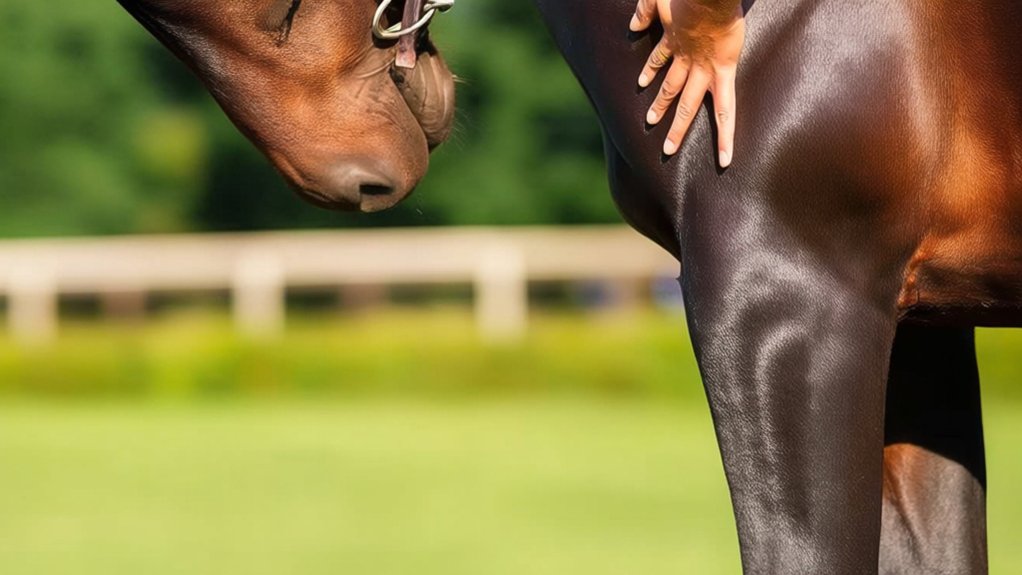
Don’t overlook a careful inspection of hooves and legs for swelling, cuts, or abnormalities that hint at past injuries.
Finally, consult an experienced equine veterinarian for a detailed pre-purchase exam. Their expertise will help you identify potential health risks and make an informed decision before investing in your new horse.
What Temperament Traits Matter Most for New Riders?
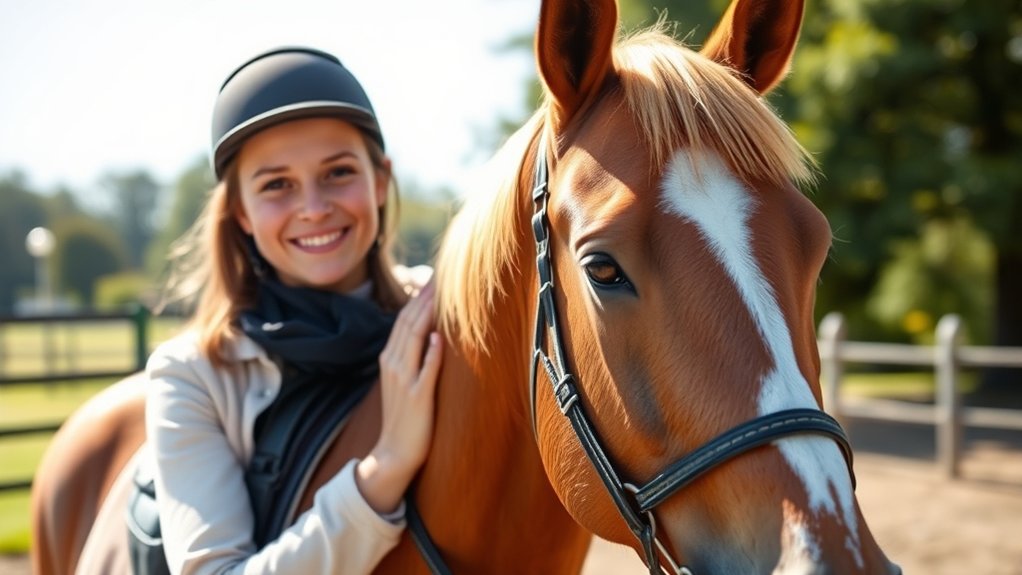
When choosing a horse for a new rider, you need to prioritize temperament traits that promote safety and confidence. Look for a calm, willing horse that remains steady in new environments and doesn’t react suddenly to noises. Horses that are naturally gentle and patient help beginners develop essential skills without stress.
Avoid overly sensitive or spooky horses, as their unpredictable reactions can overwhelm inexperienced riders. A consistently friendly and approachable demeanor is also vital. It builds trust and helps the rider feel secure.
Before buying, observe how the horse handles unfamiliar situations and assess its overall behavior. Focusing on these temperament traits guarantees you select a horse that supports a positive, safe, and confidence-building riding experience for any new rider.
How to Assess a Horse’s Training Level and Experience
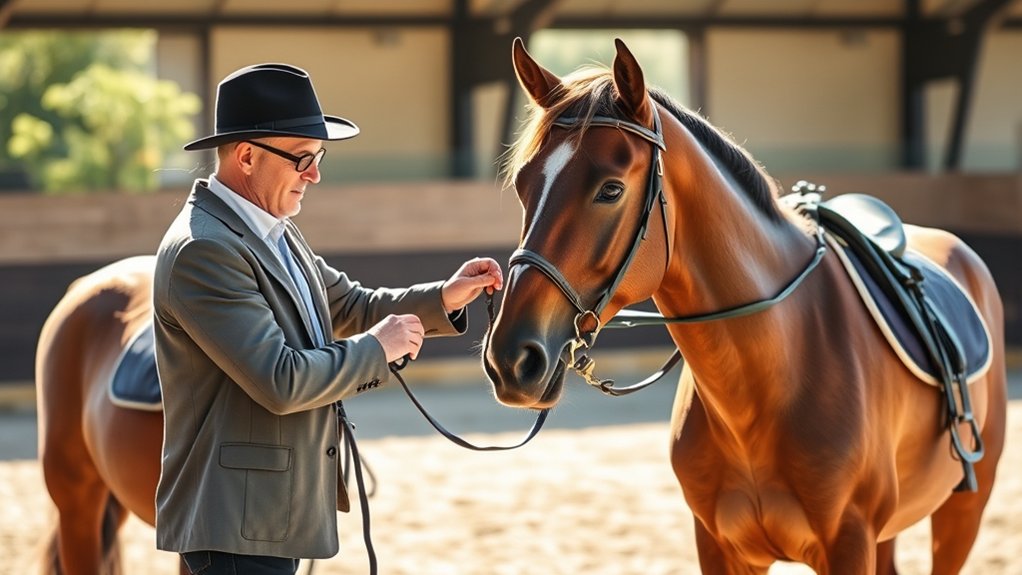
Although a horse’s temperament is crucial, evaluating its training level and experience guarantees you select one suited to your riding goals. First, determine if the horse is fully “broken in” with a consistent training record or still green and unstarted. Observe how it responds to basic commands and handling to gauge obedience and training depth.
Evaluating a horse’s training and experience ensures it matches your riding goals perfectly.
Ask for its history with prior trainers or riders to learn about its exposure to different disciplines and environments. Check if the horse has undergone various exercises like lunging, groundwork, or jumping, as this reflects versatility.
Finally, consult a professional trainer or veterinarian to assess the horse’s behavioral maturity and confirm its suitability for your intended use.
This way, you’ll make a smart, informed purchase that fits what you’re looking for.
What Happens During a Pre-Purchase Vet Exam?
Once you’ve gauged a horse’s training and experience, the next step is a pre-purchase veterinary exam to verify its health and soundness. The vet performs a thorough physical assessment, checking conformation, movement, and soundness.
They’ll conduct specific tests like flexion exams, ultrasounds, or radiographs to assess joint and structural health.
If concerns arise, endoscopic or other diagnostic procedures may evaluate respiratory or digestive systems. The vet also reviews medical history, vaccination records, and current health.
After the exam, you’ll receive a detailed report outlining any issues and the horse’s suitability for your intended use. This step lets you make an informed decision, ensuring the horse matches your needs and minimizes future health risks.
How to Verify Horse Documents and Legal Paperwork
Before finalizing your purchase, you need to verify the horse’s documents and legal paperwork thoroughly. Always request the bill of sale, Coggins test, and health certificate.
Make certain the Coggins test is current, usually valid for one year, and properly signed and dated.
The health certificate should be no older than 30 days and include recent veterinary exam details.
Double-check that all paperwork matches the horse’s identification, such as microchip or branding, to avoid misrepresentation.
Keep multiple copies of all documents for your records and legal protection.
Being meticulous with these steps ensures a smooth transaction and safeguards you from future disputes.
Plus, it gives you confidence in your new horse’s health and legal standing. It’s really worth taking the time to get this right.
Managing Costs: Purchase, Transport, and Ongoing Care
When you buy a horse, you’ll need to factor in not only the purchase price but also transportation and ongoing care costs. Transport can range from about $410 locally to over $600 for long distances, so plan accordingly.
Before purchase, budget around $95 for a health certificate and $200 to $300 for a pre-purchase vet exam to confirm the horse’s soundness.
Annual care expenses typically include $500 for vet, dental, and deworming, plus $200 for emergencies.
Feeding costs add roughly $600 per year, about $36 monthly for hay and $18 for grain.
Don’t forget equipment, farrier services, and training, which can exceed $1,000 annually depending on your horse’s needs.
Managing these costs upfront helps you maintain your horse’s health and well-being without surprises. It’s better to be prepared so you can enjoy your new horse without worries.
How to Arrange Safe Transport for Your New Horse
How do you guarantee your new horse arrives safely and stress-free? Start by hiring a reputable, insured transport company specializing in equine shipping, and check their references.
Confirm the trailer has proper ventilation, non-slip flooring, and secure partitions or ties to prevent injury during transit.
Make sure all paperwork, including health certificates and Coggins tests, are current and accompany your horse.
Plan your route carefully to minimize travel time and avoid rough terrain or extreme weather that could cause stress.
Finally, arrange for an experienced person to be present at both pickup and delivery to monitor your horse’s behavior and quickly address any issues.
Taking these steps assures your horse’s transport is safe, comfortable, and smooth from start to finish.
Building Your Support Team for a Successful Horse Purchase
You’ll want to connect with certified veterinarians and reputable trainers who can provide expert evaluations during your horse purchase. They really know their stuff and can help you avoid costly mistakes.
Also, don’t forget to check out online platforms like Facebook and YouTube. You can find videos and reviews from previous owners or professionals that give you a better idea of the horse’s temperament and condition.
Building a reliable network like this makes sure you get accurate insights. Plus, it helps the whole buying process go a lot smoother and less stressful.
Trusted Professional Contacts
Since purchasing a horse is a significant investment, assembling a trusted team of equine professionals is essential for a smooth and informed transaction. Start by using the ISELP member directory to locate certified veterinarians and specialists with sports medicine credentials.
Engage your personal and professional networks to verify seller credibility and collect honest feedback. Use digital platforms to review videos and documents remotely, making sure you do a thorough evaluation before purchase.
Building these connections early opens access to quality resources and continuous support.
| Professional Type | Role | Recommended Resource |
|---|---|---|
| Veterinarian | Health evaluation, imaging | ISELP member directory |
| Equine Specialist | Sports medicine, advanced care | Certified specialists |
| Seller Verification | Background checks, seller credibility | Personal/professional networks |
| Remote Assessment | Review photos/videos, documentation | YouTube, WhatsApp, Dropbox |
| Support Network | Ongoing advice and guidance | Industry contacts |
Leveraging Online Resources
Although buying a horse often requires in-person evaluations, leveraging online resources can considerably streamline your search and decision-making process. Use online directories like the ISELP member database to locate certified veterinarians and trusted professionals for evaluations.
Engage with social media groups on Facebook, YouTube, and WhatsApp to gather videos, reviews, and firsthand insights about horses you’re interested in.
Check platforms such as USDFScores.com to review show records and performance history remotely.
Build a reliable network of experienced owners, trainers, and vets through digital connections to verify seller credibility and gather honest feedback.
Finally, ask sellers to share high-quality videos showcasing the horse’s behavior, movement, and conformation. This makes remote assessments more accurate and helps you make informed decisions before visiting in person.
Frequently Asked Questions
How Do I Choose the Right Horse Breed for My Riding Goals?
You choose the right horse breed by matching its natural abilities and temperament to your riding goals. Consider size, discipline suitability, and health traits to guarantee the breed supports your long-term riding plans effectively and safely.
It’s all about finding a horse that fits what you want to do. Think about how big the horse needs to be and what kind of riding you’re into. Also, keep an eye on health traits to make sure your horse can keep up with you for years to come.
What Are Common Red Flags When Meeting a Horse for the First Time?
You’ll want to spot a horse that’s both alert yet calm, not overly nervous or dull. Watch for uneven gait, aggression, or unresponsiveness.
These red flags often signal health or behavioral issues you shouldn’t ignore. It’s important to pay attention to how the horse moves and reacts when you first meet. That way, you can avoid any potential problems early on.
How Long Should I Test Ride a Horse Before Deciding to Buy?
You should test ride a horse for at least 30 minutes over several days, including flat and varied terrain. This helps you assess consistency, behavior, and stamina before making your buying decision confidently.
Taking your time with the test rides lets you get a real feel for the horse’s personality and how it handles different conditions. It’s not just about one good ride but how the horse performs day after day. That way, you’ll know you’re making the right choice.
Can I Buy a Horse Remotely Without Seeing It in Person?
You can buy a horse remotely, but it’s like assembling a puzzle blindfolded. You’ll need detailed videos, trusted vets for exams, clear communication, and reliable sellers to minimize risks before making that confident purchase without seeing the horse.
It’s all about gathering as much info as possible. Ask lots of questions and don’t hesitate to request more footage or even live video calls. Having a good vet involved is a game changer—they can spot things you might miss.
Buying remotely isn’t impossible, but it does take extra effort. If you’re careful and patient, you can find the right horse without ever setting foot in the stable. Just be sure to trust your gut and the experts helping you along the way.
What Questions Should I Ask the Seller About the Horse’s Daily Routine?
Ask about the horse’s feeding schedule, turnout hours, grooming routine, exercise frequency, and stall care. Knowing these helps you understand its daily needs and health maintenance.
This will also help ensure the horse fits your lifestyle and care capabilities. It’s important to get a clear picture of what its day-to-day looks like. That way, you’re better prepared to meet its needs.
Conclusion
Buying a horse is like planting a seed. You need the right soil, care, and patience to see it flourish. By carefully checking health, temperament, training, and paperwork, you’re laying a strong foundation.
Don’t forget to budget wisely and build a trusted team around you. With these smart steps, you’re not just buying a horse; you’re nurturing a lifelong partnership that will grow stronger with every ride.