Can Horses See in the Dark: Complete Discription
Horses have always been admired for their awareness and quick reactions, especially in low-light situations where humans struggle to see clearly. Whether you watch a horse move confidently at dusk, navigate a dim stable, or react to sounds in near darkness, it naturally raises curiosity about their visual abilities. Many owners and animal lovers often wonder can horses see in the dark and how their eyesight supports survival, safety, and daily behavior. Understanding this topic helps you better care for horses, manage their environment, and appreciate how differently they experience the world after sunset.
Vision plays a major role in how a horse detects movement, avoids obstacles, and responds to potential threats when light fades. Unlike human eyesight, a horse’s eyes are designed to work efficiently in changing light conditions, offering advantages that explain their calm yet alert behavior at night. Exploring this subject gives valuable insight into equine instincts, night vision strengths, and the natural adaptations that allow horses to function confidently when daylight disappears.
How Well Can Horses See in the Dark Compared to Humans
When light levels drop, horses and humans experience the environment in very different ways. Horses are naturally equipped to function in dim conditions where human vision becomes limited and unreliable. Their visual system supports movement, awareness, and survival after sunset without the need for artificial light. Humans, by contrast, depend heavily on lamps or night vision aids to move safely in darkness.
This contrast matters in daily handling, riding, and stable management. Understanding how horses perceive low-light conditions helps explain their confidence at night, sudden reactions, and sensitivity to shadows. It also highlights why people often misjudge what a horse can or cannot see once daylight fades.
Night Vision Strength of Horses Versus Humans
Horses have a clear biological advantage over humans in low-light vision. Their eyes contain a much higher concentration of rod cells, which are responsible for detecting light and motion in dark environments. These cells allow horses to recognize shapes and movement even when fine details are missing.
Humans rely more on cone cells, which function best in bright light and support color and detail. As light fades, cone cells become less effective, causing human vision to decline rapidly. This difference explains why people struggle to see clearly at night without assistance.
Another major advantage for horses is the tapetum lucidum, a reflective layer behind the retina. This structure reflects light back through the retina, increasing the amount of light the eye can use. Humans lack this feature entirely, which significantly limits their ability to see in the dark compared to horses.
How Field of Vision Impacts Low-Light Awareness
A horse’s wide field of vision greatly improves its awareness in low-light conditions. Horses can see nearly all the way around their bodies, allowing them to detect movement from the sides and rear even in darkness. This panoramic vision helps them stay alert to potential threats.
Humans have a much narrower visual range, which becomes even more limiting at night. Anything outside direct focus is easily missed, especially when lighting is poor. This makes humans more vulnerable to obstacles and sudden movement in the dark.
Horses may not see sharp details at night, but they are extremely sensitive to motion. Even subtle changes in shadows or movement can trigger a response. This explains why horses sometimes react to things people cannot see, particularly in dim or unfamiliar environments.
Adjustment Speed From Light to Darkness
Horses and humans differ noticeably in how quickly their eyes adjust from bright light to darkness. Horses typically need more time to adapt when moving into dark areas, sometimes taking several minutes before their vision fully stabilizes. During this period, they may appear hesitant or cautious.
Humans usually adjust more quickly, but faster adjustment does not mean better vision. Even after adapting, human night vision remains limited in depth and motion detection. This can create a false sense of confidence in low-light settings.
Once horses complete their adjustment, their low-light sensitivity becomes highly effective. They can navigate uneven ground, recognize movement, and maintain awareness with minimal light. This difference highlights why gradual lighting changes are important for horses, especially in stables and nighttime handling situations.
Can Horses See in the Dark While Moving
Movement in low-light conditions adds another layer of complexity to equine vision. Horses are not only required to detect their surroundings in darkness but also to process visual information while their bodies are in motion. This ability affects how safely they walk, trot, or run at night. Compared to humans, horses rely less on sharp detail and more on motion detection, depth awareness, and instinctive responses. Understanding how movement interacts with night vision helps explain their confidence, hesitation, and sudden reactions in dark environments.
How Motion Detection Supports Nighttime Movement
Horses are exceptionally skilled at detecting motion in low-light conditions, which plays a key role when they are moving in the dark. Their eyes are designed to prioritize movement over fine detail, allowing them to sense changes in their environment even when visibility is poor. As a horse walks or runs, its visual system continuously scans for shifts in light, shadow, and movement.
This sensitivity helps horses avoid obstacles such as uneven ground, fencing, or approaching animals. While they may not clearly see object details, they can detect that something is present and react accordingly. Humans, in contrast, struggle to identify movement in darkness while in motion, often missing hazards unless light is available.
This motion-based vision explains why horses can travel confidently at night in open areas. Their instincts combine visual input with memory and spatial awareness, allowing smooth movement even when the environment appears dark to human eyes.
Depth Perception Challenges While Moving at Night
Although horses see well in low light, depth perception becomes more challenging when they are moving in darkness. Horses rely on binocular vision only in a narrow area directly in front of them. In daylight, this is usually sufficient for judging distances, but at night, reduced visual detail can affect accuracy.
When moving in the dark, horses may lift their feet higher or slow their pace to compensate. This behavior is a natural response to uncertainty about footing or object distance. Humans experience similar issues but with far less visual input to rely on, making nighttime movement more difficult.
Horses often depend on familiarity with their environment to overcome these depth limitations. In known pastures or trails, they move more confidently at night. In unfamiliar areas, hesitation is common, not due to fear, but because their vision prioritizes safety over speed.
Role of Memory and Environmental Awareness
Memory plays a significant role in how horses move in the dark. Horses have strong spatial memory, allowing them to remember the layout of pastures, stables, and paths. This mental mapping works alongside their night vision to guide movement when visibility is limited.
As a horse moves, it uses remembered landmarks combined with motion detection to navigate safely. Even when visual detail is reduced, memory helps fill in gaps. Humans rely more heavily on visual clarity, making memory less effective without sufficient light.
Environmental awareness also influences how confidently a horse moves at night. Sounds, ground texture, and airflow all contribute to spatial understanding. This multisensory approach allows horses to move with purpose in darkness, even when visual information alone would not be enough.
Night Vision Adaptation in Horses
Night vision adaptation allows horses to function effectively as light levels change from daylight to darkness. Their eyes are built to adjust gradually, supporting awareness, movement, and safety in low-light environments. This adaptation is not instant and depends on both biological structure and environmental conditions. Understanding how horses adapt their vision at night helps explain their behavior in dim stables, open pastures, and unfamiliar areas after sunset.
How Horse Eyes Adjust to Low-Light Conditions
When light begins to fade, a horse’s eyes slowly shift from daytime vision to low-light sensitivity. This process involves the activation of rod cells in the retina, which are responsible for detecting light and motion rather than detail or color. As cone cells become less effective, rod cells take over, allowing horses to see shapes and movement in darkness.
This adjustment can take several minutes, especially after exposure to bright light. During this time, horses may appear cautious or hesitant. Unlike humans, horses need a gradual reduction in light to adapt comfortably. Sudden darkness can temporarily limit their vision, even though their overall night vision is stronger.
Once fully adapted, horses become highly aware of their surroundings. They can detect motion at a distance, recognize obstacles, and respond quickly. This slow but effective adjustment reflects a vision system designed for survival rather than instant clarity.
Biological Features That Enhance Night Vision
Several unique eye structures support night vision adaptation in horses. One of the most important is the tapetum lucidum, a reflective layer behind the retina that increases light sensitivity. This structure allows light to pass through the retina twice, improving visibility in dim conditions.
Horses also have large eyes positioned on the sides of their heads. This placement increases their field of vision and helps them detect movement from multiple directions at night. While this reduces detailed forward focus, it greatly enhances overall awareness.
In addition, the high concentration of rod cells in a horse’s retina makes them more responsive to low light than human eyes. These biological features work together, allowing horses to adapt to darkness efficiently and maintain awareness even when visual detail is limited.
Environmental Factors That Affect Adaptation Speed
The speed of night vision adaptation in horses is influenced by environmental conditions. Lighting transitions play a major role, as sudden changes from bright to dark can delay full adjustment. Gradual dimming allows the eyes to activate rod cells more smoothly.
Familiar environments also support faster adaptation. Horses adjust more easily in spaces they recognize, such as their usual pasture or stable, because memory and spatial awareness compensate for reduced visibility. Unfamiliar areas may increase caution during adaptation.
Other factors include age, health, and stress levels. Older horses or those experiencing anxiety may take longer to adapt. Calm handling and consistent lighting conditions help support effective night vision adaptation without overwhelming the horse’s visual system.
Can Horses See in Complete Darkness
Complete darkness presents a unique challenge for all animals, including horses. While horses are known for strong low-light vision, the absence of any light changes how their visual system functions. Their eyes are designed to maximize available light rather than create vision without it. Understanding what happens when light is entirely absent helps explain horse behavior in enclosed spaces, unlit stables, and unfamiliar environments during nighttime hours.
Difference Between Low Light and Complete Darkness
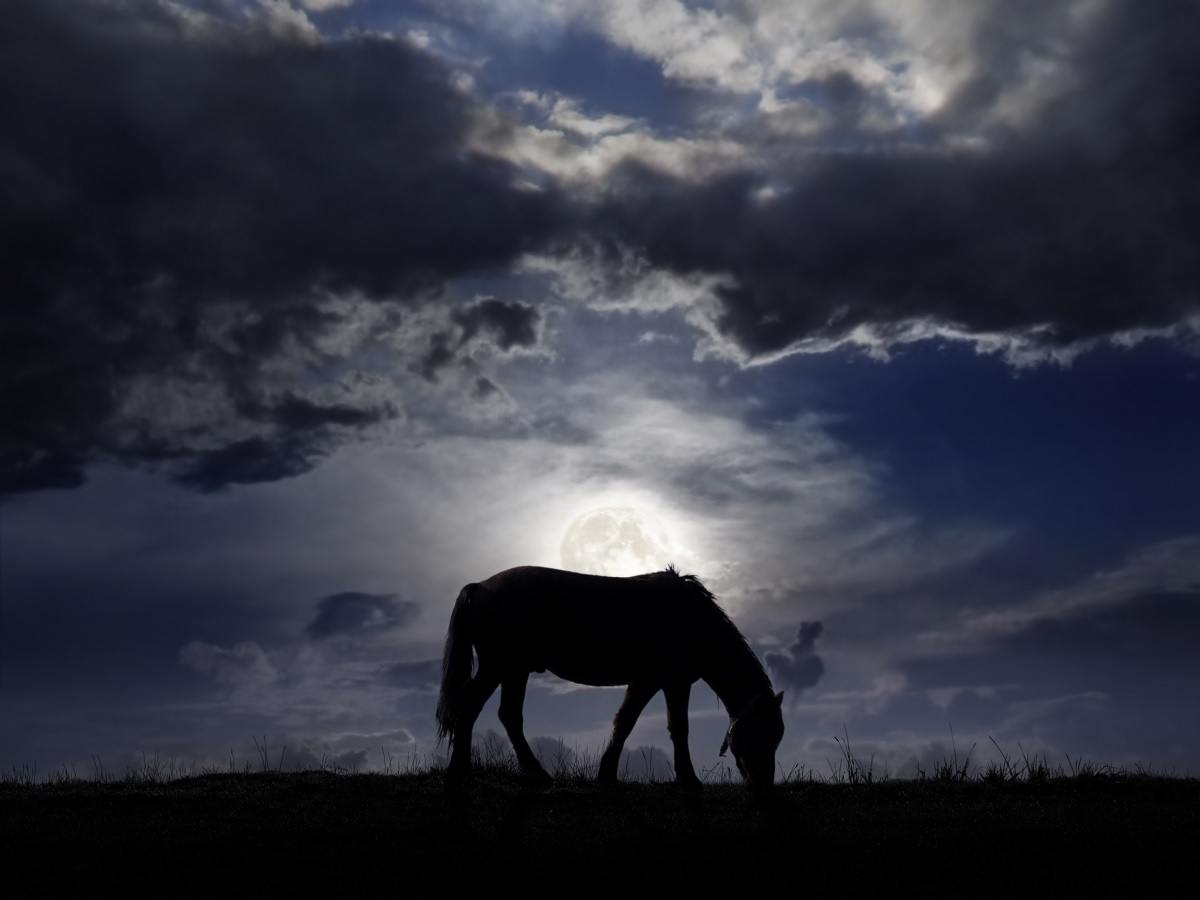
Horses perform exceptionally well in low-light conditions, but complete darkness is a different situation. Low light means there is still some illumination, such as moonlight, starlight, or distant artificial glow. Horses can use this minimal light effectively due to their sensitive rod cells and reflective eye structures.
Complete darkness means no light is available at all. In this condition, horses cannot see visually any better than humans. Vision requires at least a small amount of light to function. Without it, the horse’s eyes cannot detect shapes, movement, or depth.
This distinction explains why horses move confidently outdoors at night but may hesitate in pitch-dark barns or trailers. Their strong night vision depends on available light, not the ability to see without it.
How Horses Compensate When Vision Is Limited
When horses cannot rely on vision due to complete darkness, they shift to other senses to understand their surroundings. Hearing becomes more dominant, allowing them to detect movement, footsteps, or changes in sound direction. Their ears move independently, helping them locate noises accurately.
Touch also plays a role, especially through the hooves and skin. Horses can sense ground texture, vibrations, and air movement, which helps them judge space and safety. Smell adds another layer of awareness, helping them recognize familiar environments or nearby animals.
These sensory adjustments allow horses to remain alert even without visual input. While movement may slow, they are not helpless. This reliance on multiple senses explains why horses can still respond quickly in total darkness despite the absence of usable vision.
Behavior Changes in Total Darkness
Horses often behave differently in complete darkness compared to low-light conditions. You may notice hesitation, reduced movement, or increased alertness. These behaviors are natural responses to uncertainty rather than fear. Without visual cues, horses prioritize safety.
In familiar spaces, such as a known stall, horses may remain calm and still. In unfamiliar areas, they are more likely to stop and assess the environment using sound and scent. Sudden movements or noises can trigger strong reactions because vision cannot confirm the source.
This behavior highlights the importance of lighting management. Providing even minimal light can significantly improve comfort and movement. Horses do not need bright light, but complete darkness removes the visual advantage their eyes are designed to use.
How Horse Eye Placement Affects Seeing in the Dark
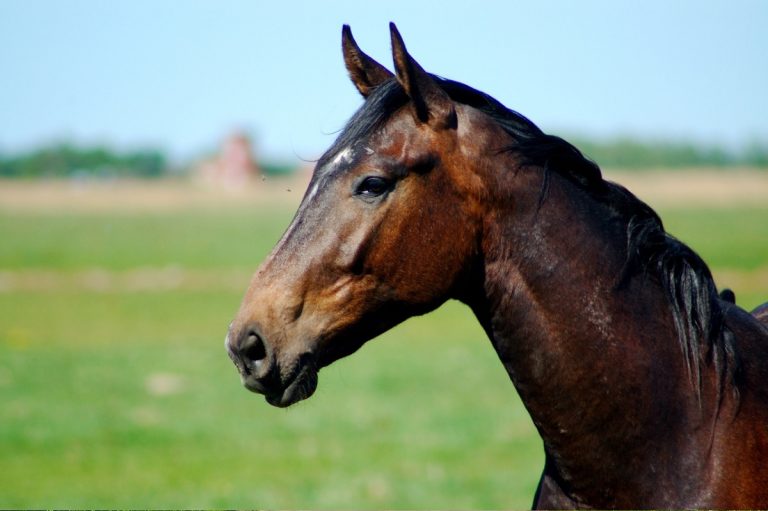
The placement of a horse’s eyes plays a major role in how it sees and reacts in low-light conditions. Positioned on the sides of the head rather than the front, horse eyes are designed for awareness rather than sharp focus. This unique placement directly influences how horses detect movement, judge surroundings, and respond to potential threats at night. Understanding this visual arrangement helps explain their strengths and limitations when navigating dark or dimly lit environments.
Wide Field of Vision and Night Awareness
Side-placed eyes give horses an extremely wide field of vision, allowing them to see nearly all the way around their bodies. This panoramic view is especially valuable in the dark, where detecting movement is more important than seeing fine details. Horses can sense motion from the sides and rear, even in low-light conditions, which helps them remain alert to potential danger.
Humans, with forward-facing eyes, rely heavily on focused vision directly ahead. At night, this narrow field becomes even more limiting. Horses, however, continue to scan their environment broadly, noticing subtle shifts in shadow or movement that humans may miss.
This wide visual coverage explains why horses may react to things you cannot see in the dark. Their eye placement supports survival by prioritizing awareness over detail, particularly when light is limited.
Blind Spots and Depth Perception at Night
While wide vision is an advantage, horse eye placement also creates blind spots that affect night vision. Horses have a blind spot directly in front of their nose and another behind their bodies. In daylight, they manage this by moving their heads, but in darkness, these blind spots can feel more pronounced.
Depth perception is also limited because horses have a relatively small area of binocular vision. At night, reduced visual detail makes judging distance more difficult. This can cause hesitation when stepping over unfamiliar objects or uneven ground in low light.
These limitations explain why horses may lift their feet higher or slow down at night. They rely on caution and movement adjustments to compensate. Eye placement supports broad awareness, but precise distance judgment becomes more challenging in the dark.
How Eye Placement Influences Nighttime Behavior
Horse eye placement strongly influences behavior in dark environments. Because horses can detect movement from many angles, they may startle easily at night when shadows or slight motions appear suddenly. This response is a natural outcome of heightened peripheral sensitivity.
Head movement becomes more frequent in low light, as horses shift their view to reduce blind spots. Turning the head allows them to bring objects into their limited binocular vision for better assessment. This behavior is often mistaken for nervousness but is actually a visual adjustment.
In familiar areas, eye placement works to a horse’s advantage, supporting calm movement and awareness. In unfamiliar or poorly lit spaces, the same visual system encourages caution, helping horses avoid danger when vision is limited.
Can Horses See in the Dark Inside Stables
Stable environments present unique visual challenges for horses at night. Unlike open outdoor spaces, stables often have limited natural light, enclosed walls, and sharp contrasts between bright and dark areas. These conditions affect how well horses use their night vision indoors. Understanding how horses see in dark stables helps explain their movement patterns, hesitation near doorways, and reactions to sudden lighting changes during nighttime care.
How Limited Light Sources Affect Stable Vision
Inside stables, light sources are often minimal or uneven. Small windows, open doors, or distant lights may provide some illumination, but shadows are common. Horses can use this low-level light more effectively than humans due to their sensitive rod cells and reflective eye structures. Even dim light helps them detect shapes and movement within their stalls.
However, stable interiors often create sharp contrasts between light and dark areas. Moving from a lit aisle into a dark stall can temporarily reduce a horse’s vision. Their eyes need time to adjust, and sudden changes can cause hesitation. Humans may adapt faster, but their overall night vision remains weaker.
This contrast explains why horses appear cautious indoors at night. Their vision works best with gradual lighting transitions rather than abrupt darkness.
Impact of Enclosed Spaces on Depth and Movement
Enclosed stable spaces affect how horses judge distance in the dark. Walls, doors, and stall partitions limit visual range, making depth perception more challenging in low-light conditions. Horses rely on a narrow area of binocular vision to judge distance, and reduced lighting can make this process less precise.
As a result, horses may move more slowly inside dark stables. You may notice them lifting their feet higher or pausing before stepping forward. This behavior helps prevent missteps or collisions with stable structures.
Humans often misinterpret this caution as fear. In reality, it is a natural adjustment to reduced visual information. Horses prioritize safety over speed, especially when navigating confined indoor spaces with limited light.
Role of Familiarity and Routine in Stable Darkness
Familiarity plays a major role in how well horses manage dark stables. Horses that spend significant time in the same stable learn its layout, including stall size, doorway placement, and common obstacles. This memory supports movement when vision is limited.
Routine also reduces stress in dark environments. When nighttime care follows consistent patterns, horses are less reactive to shadows or sounds. They combine memory with hearing and touch to understand their surroundings.
In unfamiliar stables, even strong night vision is less effective. New layouts and unexpected obstacles increase hesitation. Familiar environments allow horses to compensate for low light, making dark stables more manageable despite limited visual input.
FAQs
How Well Can Horses See In The Dark?
Horses have strong low-light vision, which allows them to see much better than humans when the sun goes down. Their eyes contain more rod cells that detect movement and light in dim conditions. This means he or she can notice shapes, motion, and obstacles even when visibility is low. While horses cannot see in complete darkness, even minimal moonlight or starlight is enough for them to move confidently. You will notice that a horse in dim light is alert, aware of its surroundings, and often able to navigate safely without stumbling.
Can Horses See In Complete Darkness?
Horses cannot see in total darkness because vision requires at least some light to function. In absolute darkness, he or she must rely on other senses like hearing, touch, and smell to understand the environment. Movement may slow, and caution increases, but horses are not helpless. They use these other senses to detect obstacles, locate familiar areas, and respond to potential threats. You will notice that even in total darkness, a horse can navigate carefully, but it cannot identify shapes or objects visually until some light becomes available.
How Does Eye Placement Affect Night Vision?
A horse’s eyes are positioned on the sides of its head, giving him or her a wide field of vision. This allows you to detect movement from almost all directions, which is essential at night. Side eye placement enhances peripheral awareness but limits sharp depth perception directly in front. In low-light situations, he or she relies on this broad coverage to stay alert, noticing subtle motion and shadows. You will see head movements as the horse shifts its focus to fill blind spots and better judge surroundings while moving in dim conditions.
Do Horses Adjust Quickly To Darkness?
Horses need time to adjust when moving from bright light to darkness. Their rod cells gradually take over, allowing him or her to see in low-light conditions. You may notice hesitation during the adjustment period, which usually takes a few minutes. Sudden changes in light can temporarily disorient a horse, but once adapted, movement becomes confident and precise. Unlike humans, who may adjust faster but still have poor night vision, he or she benefits from slow transitions to maximize awareness and detect motion even in limited lighting.
Can Horses See Inside Stables At Night?
Horses can see inside stables at night if there is even minimal light from windows or open doors. Their eyes are highly sensitive to low-light conditions, allowing him or her to detect shapes, movements, and obstacles within stalls or aisles. Shadows and sudden lighting changes may cause hesitation, but familiarity with the stable layout helps overcome this. You will notice that a horse moves more confidently in known areas, combining vision with memory, touch, and hearing to navigate safely when natural or artificial light is limited.
Are Horses Better Than Humans At Night Vision?
Horses are significantly better at seeing in low-light conditions than humans. Their eyes have more rod cells and a reflective layer called the tapetum lucidum, which enhances light absorption. This allows him or her to detect movement, shapes, and subtle changes even in dim environments. Humans lack this structure and have fewer rod cells, so vision deteriorates quickly as light fades. You will notice that a horse can navigate fields, pastures, or stables at dusk with ease, while humans struggle to see clearly without artificial lighting.
How Do Horses Compensate When Vision Is Limited?
When light is insufficient, horses rely on other senses to navigate. He or she uses hearing to detect nearby movement, smell to recognize familiar surroundings, and touch through hooves to feel the ground. This multisensory approach helps maintain safety and awareness in darkness. You may notice slower movement or cautious steps in poorly lit areas, which is a natural adaptation rather than fear. By combining limited vision with other senses, a horse can respond to its environment effectively, even when visual input alone is not enough to navigate safely.
Conclusion
Horses possess remarkable vision that allows them to navigate low-light environments more effectively than humans. Their eyes are designed with a high number of rod cells and a reflective layer called the tapetum lucidum, which enhances their ability to detect shapes and movement in dim conditions. While they cannot see in total darkness, even minimal ambient light, such as moonlight or starlight, enables them to perceive their surroundings and move with relative confidence.
Side-set eyes give horses a wide field of vision, helping them spot potential dangers at night, though depth perception can be limited in very low light. Understanding these adaptations provides insight into their natural behavior after sunset and why they may be more cautious in dark environments. Overall, when examining the question of can horses see in the dark, it becomes clear that their vision is well-suited for nocturnal navigation, though not without limitations.