What Does Post Time Mean in Horse Racing?
Post time in horse racing is the exact moment when betting closes and the race officially starts. It serves as a critical deadline for wagering and race operations. You can’t place bets after this time, ensuring fairness and integrity.
It’s scheduled carefully for smooth race flow, with horses moving to the gate just before. Delays may adjust post time, affecting bets and race timing. Understanding post time lets you better plan your betting and race day strategy.
What Does Post Time Mean in Horse Racing?

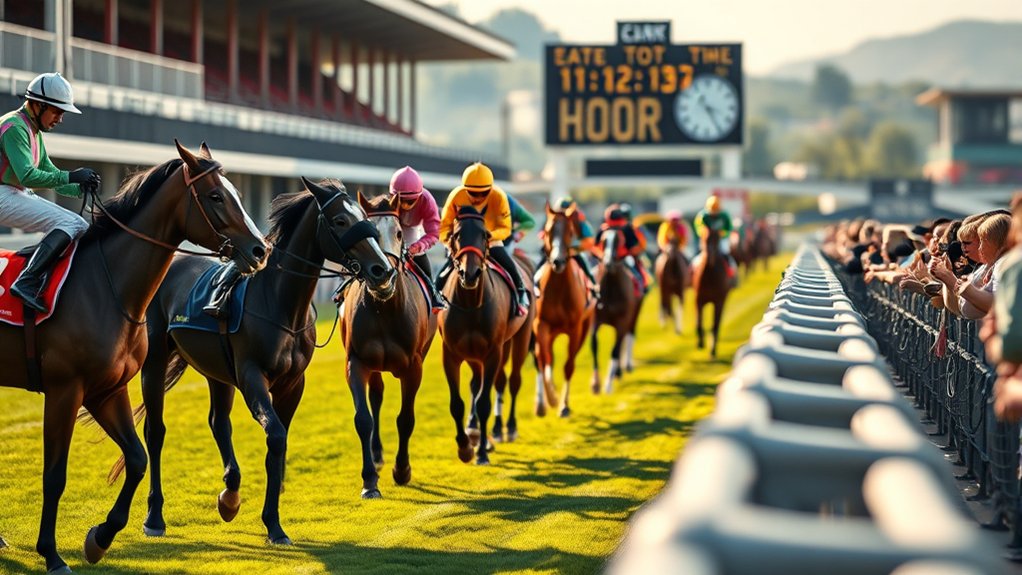
Although you might hear the term “post time” casually mentioned in horse racing, it specifically refers to the official scheduled start time when all horses must be loaded into the starting gates. Post time marks the exact moment betting closes and the race begins, making it a critical reference point for both officials and participants.
The term derives from the physical starting post where horses line up before the race. Each race has a designated post time announced in advance, tailored to optimize race day flow.
While post times are generally fixed, they can be adjusted due to weather, track conditions, or operational challenges, with updates promptly communicated to all stakeholders. Understanding post time’s role as the scheduled start time ensures you grasp the race’s precise timing and structure.
Why Is Post Time Crucial for Betting and Viewing?
You need to place your bets before post time because it marks the legal cutoff for wagering. This ensures all bets are accepted and accounted for accurately.
Plus, understanding this deadline helps you avoid illegal “past posting.”
It’s also a smart way to keep an eye on last-minute odds shifts that can impact your strategy.
And when you know the exact post time, you’ll be ready to watch the race live without missing any critical moments.
Betting Deadlines Explained
Since post time signals the official cutoff for placing bets, understanding its timing is critical for anyone involved in horse race wagering. Betting deadlines are strictly enforced; no wagers are accepted once the race begins to prevent illegal “past posting.”
You need to place your bets before post time because odds can shift dramatically in the final moments, impacting your potential payout. The betting window often closes a few minutes ahead of post time to allow for processing and settlement.
By tracking the countdown, you can make informed last-second decisions without risking missed opportunities.
Key points to remember about betting deadlines and post time:
- Bets placed after post time are void and illegal.
- Odds fluctuate up to the last second before post time.
- Betting windows close shortly before post time for administrative processing.
Timing Race Viewing
Why does post time hold such significance for both betting and viewing horse races? Post time signals when betting closes and the race officially starts at the starting gate. You need to know this exact moment to place last-minute wagers and catch odds shifts that impact decisions.
For viewers, aligning your arrival and viewing schedule with post time ensures access to key race day features and uninterrupted live broadcasts.
| Aspect | Importance |
|---|---|
| Betting Deadline | Close bets precisely at post time |
| Odds Monitoring | Track fluctuations until the starting gate opens |
| Viewing Arrival | Enter viewing areas before the race begins |
| Broadcast Timing | Sync with live coverage to avoid missing action |
Mastering post time precision maximizes your race day experience.
How Is Post Time Scheduled and Announced?

You’ll find that post time is carefully scheduled based on things like track conditions, race intervals, and logistical needs to keep the race day running smoothly.
The official times are shared in race programs, on websites, and through track announcers, so you always know when each race is set to start.
And if there are any delays, race officials quickly update the post time to make sure bettors and attendees stay informed.
Factors Affecting Scheduling
Although post times are planned well in advance, race officials must carefully balance multiple factors when scheduling each race. The post time for each event hinges on maintaining a structured race day timetable that optimizes flow and betting windows.
Officials typically space races 25-30 minutes apart, but adjustments are often necessary due to real-time conditions.
Key factors affecting scheduling include:
- Number of races and their sequence throughout the race day
- Track conditions influencing horse readiness and safety
- Unforeseen delays such as weather or technical issues requiring swift rescheduling
You’ll find that this meticulous planning guarantees smooth handovers between races, maximizes betting opportunities, and maintains operational efficiency.
Understanding these factors clarifies why post times, while fixed, remain flexible to preserve the integrity of the race day experience.
Official Announcement Methods
When race officials finalize post times, they guarantee these schedules are clearly communicated through multiple official channels to keep everyone informed and synchronized. The official post is first scheduled and published in advance via race programs, track websites, and official announcements.
You’ll hear the post time broadcast through loudspeakers and public address systems, ensuring on-site attendees are aware. Additionally, race announcers call out the upcoming race and its official post during live coverage, reinforcing timing accuracy.
Significantly, official post times are precisely recorded and displayed on screens throughout the venue. If conditions necessitate changes, updated post times are promptly posted on digital displays and online platforms.
This multi-channel approach ensures all participants, bettors, and officials operate with consistent, authoritative timing information before the race begins.
Adjustments For Delays
If delays arise, from weather disruptions to technical glitches or horse-related issues, track officials promptly modify the post time to maintain safety and fairness. Post time is initially scheduled and announced through track programs, websites, and official calls to keep everyone informed.
When delays occur, officials update the post time and communicate changes clearly to bettors, spectators, and trainers via message boards, announcements, or electronic displays. The original post time remains on record, but the actual race start shifts accordingly.
Key aspects of adjusting post time for delays include coordinating rescheduling to preserve fairness and integrity, providing timely updates through multiple official channels, and rescheduling subsequent races if necessary to align with the new post time.
You’ll see that precise management of delays ensures a smooth racing experience.
What Happens Before Post Time on Race Day?
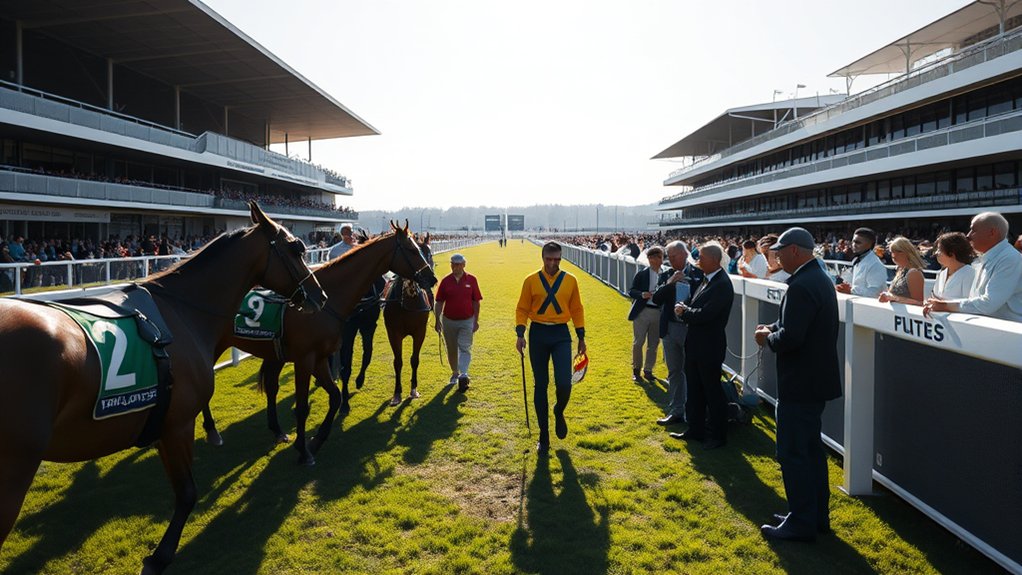
As race day unfolds, you’ll see horses led into the paddock about an hour before post time for saddling and warm-up exercises. This sets the stage for ideal performance. Jockeys mount roughly 20 minutes prior, while betting odds fluctuate in response to last-minute insights.
Around five minutes before post time, horses move toward the starting gate. This is when the term “horses are at post” applies. Final checks and gate loading occur moments before the race begins.
| Time Before Post Time | Activity | Purpose |
|---|---|---|
| 60 minutes | Horses are saddled | Equipment setup, warming up |
| 45 minutes | Warm-up exercises | Muscle readiness |
| 20 minutes | Jockeys mount | Final preparation |
| 5 minutes | Horses move to gate | Positioning for start |
| 0 minutes | Loading into gate | Race initiation |
How Do Delays Affect Post Time and Race Flow?
You’ll run into delays from things like weather, technical glitches, or even how the horses are behaving. These hold-ups push back the original post time and throw off the whole race schedule.
When that happens, track officials need to clearly communicate the new post times so everyone—participants and bettors alike—stays in the loop.
Managing these changes well is super important because they affect how the race flows, when people can place their bets, and the physical demands on both the horses and jockeys.
Causes Of Post Delays
Although race day schedules are meticulously planned, several factors can cause post delays that impact both post time and the overall flow of racing events. Weather conditions like rain or thunderstorms often make the track unsafe, leading to necessary delays.
Furthermore, horses or jockeys sometimes exhibit unruly behavior at the starting gate, complicating the loading process and pushing back the race start. Technical malfunctions with timing systems or starting gates also contribute to unexpected postponements.
Key causes of post delays include:
- Inclement weather compromising track safety
- Uncooperative horses or jockeys during gate loading
- Technical failures in timing or gate mechanisms
Understanding these factors helps you appreciate the complexities behind maintaining race safety and precision.
Impact On Race Schedule
When delays occur due to weather, track conditions, or horse-related issues, they push back the scheduled post time and disrupt the entire race day schedule.
You’ll notice that a postponed post time forces adjustments to subsequent races, which may be rescheduled or shortened to keep the event moving.
This ripple effect creates a backlog, causing longer waits between races for spectators and bettors alike.
Maintaining a precise race schedule is critical; any delay compromises the rhythm and flow of the event, impacting both viewing and wagering experiences.
Understanding how post time shifts affect the entire sequence helps you anticipate changes and manage expectations during race day disruptions.
Communication During Delays
How exactly do delays impact communication and the flow of a horse race? When delays occur, officials must adjust the official post time to maintain safety and ideal race conditions. Clear, precise communication becomes essential to keep you, the bettor or spectator, informed and synchronized with the revised schedule.
Race officials use public announcements, visual signals, and updated schedules to relay information effectively. These communications ensure fairness by aligning all participants despite disruptions.
Key points to consider during delays:
- Post time may be rescheduled, affecting race start and betting deadlines.
- Delays often result from technical issues or adverse weather conditions.
- Transparent communication maintains race integrity and participant coordination.
Understanding these factors helps you navigate the complexities that delays introduce to post time and race flow.
What Happens at the Starting Gate When Post Time Arrives?
As post time arrives, you’ll see horses led from the paddock to the starting gate in a process called “moving to the post.” Jockeys guide their mounts to their designated stalls, where starting gate operators carefully position and secure each horse to assure a smooth and safe start.
Horses often walk or jog slowly into their assigned stalls, staying calm before the race. Operators check that each horse is properly placed and that stall doors are securely closed and locked.
Once all horses are in position behind the gate, the official race starter takes over. They make sure all conditions are met before signaling the start, usually with a verbal command or starting pistol, kicking off the race promptly at post time with precision and authority.
Why Can’t You Bet After Post Time?
Once the horses are secured in the starting gate and the race begins at post time, betting windows close immediately to uphold the integrity of the event. You can’t bet after post time because wagers placed afterward, known as “past posting,” are illegal and voided. Closing betting windows at post time guarantees fairness and prevents unfair advantages.
Here’s why betting after post time is prohibited:
It avoids insider information influencing bets once the race starts.
It prevents exploitation of last-minute odds shifts.
Race officials monitor and disqualify any late bets to maintain a level playing field.
This strict cutoff at post time protects both bettors and the sport’s credibility, ensuring every wager is made under equal conditions before the race unfolds.
How Can Post Time Help You Bet Smarter?
Although post time might seem like a simple race start marker, understanding its exact timing empowers you to place bets strategically within the official window. This prevents disqualification from late wagers. By monitoring the countdown to post time, you can assess last-minute odds fluctuations and adjust your betting strategy accordingly.
Knowing the scheduled post time also helps you plan around potential delays, optimizing your wagering timing. In live betting environments, being ready to act at post time ensures you don’t miss favorable opportunities.
| Aspect | Benefit | Impact on Betting Strategy |
|---|---|---|
| Accurate Post Time | Avoids past posting disqualification | Enables timely bet placement |
| Countdown Monitoring | Tracks odds changes | Informs last-minute decisions |
| Scheduled Timing | Plans for delays | Adjusts wagering window |
| Live Betting Ready | Quick bet execution | Maximizes advantage at post time |
What Do “First Post” and Other Common Terms Mean?
When you understand terms like “first post,” you gain a clearer framework for steering the race day schedule. The first post indicates the exact post time for the initial race, setting the tempo for subsequent events. It comes from the physical starting post where horses line up, which makes this term essential for timing and logistics.
Key terms to know include:
- First post: The scheduled start time of the day’s initial race.
- Post time: The announced start time for any specific race.
- Post position: The gate number assigned to a horse before the race begins.
How Can You Use Post Time to Plan Your Race Day?
By knowing the exact post time, you can strategically plan your entire race day itinerary to maximize your experience and opportunities. The post time sets the schedule’s anchor, allowing you to allocate time for placing bets, viewing the paddock, and walking the track without missing the race start.
Furthermore, scheduling transport, meals, and activities around the post time ensures smooth coordination.
| Activity | Time Allocation |
|---|---|
| Arrive & Place Bets | 30-45 minutes before post time |
| Paddock Viewing | 15-20 minutes |
| Walking Track | 10-15 minutes |
| Final Odds Monitoring | Up to post time |
Using post time effectively sharpens your race day precision and maximizes engagement.
Frequently Asked Questions
How Do Different Time Zones Affect Post Time Announcements?
Different time zones affect post time announcements by requiring precise time zone conversions to guarantee accuracy. When you follow global scheduling, you must adjust posted race times from the track’s local time zone to your own.
If you don’t, you risk missing the race or placing bets late. Official programs and broadcasts include time zone abbreviations to help you convert correctly, so always verify the time zone to stay synchronized with the exact race start.
Are Post Times Ever Adjusted for Weather Conditions?
Think of post times as a clock’s steady heartbeat. Rarely do you see weather impact this rhythm. You won’t find post time adjustments made lightly because officials keep the original schedule fixed.
However, if weather conditions threaten safety or track integrity, delays or postponements might shift actual start times. These shifts become new official post times, but the original remains a reference point until formal change announcements occur.
This ensures clarity and precision in race management.
Can Post Time Vary Between Different Race Tracks?
Yes, post time can vary between different race tracks because each venue sets its race schedule and track timing based on factors like the number of races, track size, and local regulations.
You’ll notice that major tracks announce these times in advance, but weather or operational issues can cause adjustments.
How Is Post Time Communicated to International Bettors?
Coincidentally, when you’re gearing up for global betting, post time is communicated precisely through official race schedules displaying local time zones like EST or GMT.
You’ll find countdown timers and time zone-adjusted clocks on betting platforms, ensuring you don’t miss deadlines.
Race organizers update these times in real-time to handle delays.
To stay ahead, you must convert the post time accurately to your own time zone, guaranteeing your bets count before the race starts.
What Technology Is Used to Ensure Accurate Post Time?
You rely on advanced race timing technology to guarantee accuracy at post time. Electronic starting gates trigger synchronized track sensors and timing software the instant gates open, capturing the exact start.
High-speed photo-finish cameras and digital timestamping verify results, while GPS and RFID track horse positions.
Officials regularly calibrate equipment to maintain technology precision, accounting for environmental factors.
This precise system guarantees reliable, consistent post time measurements every race day.
Conclusion
Now that you understand post time, you might think it’s just a strict deadline but it’s actually your strategic advantage. Imagine a clock ticking down, signaling your final chance to place informed bets based on the latest odds and horse conditions.
Missing post time means losing that edge. By mastering this precise moment, you control your race day, making smarter bets and enjoying every thrilling second without confusion or delay.