How Much Is a Horse Trailer?
You can expect to pay from around $4,500 for a basic used horse trailer up to $65,000 or more for premium models with living quarters. Size, capacity, hitch type, and materials greatly influence price. Smaller 2-horse bumper pulls cost less than larger gooseneck trailers designed for multiple horses.
Build quality and custom features also add to the cost. Factoring in insurance, maintenance, and financing is essential to budget properly. Exploring key factors can help tailor the best choice for your hauling needs.
How Much Does a Horse Trailer Cost?
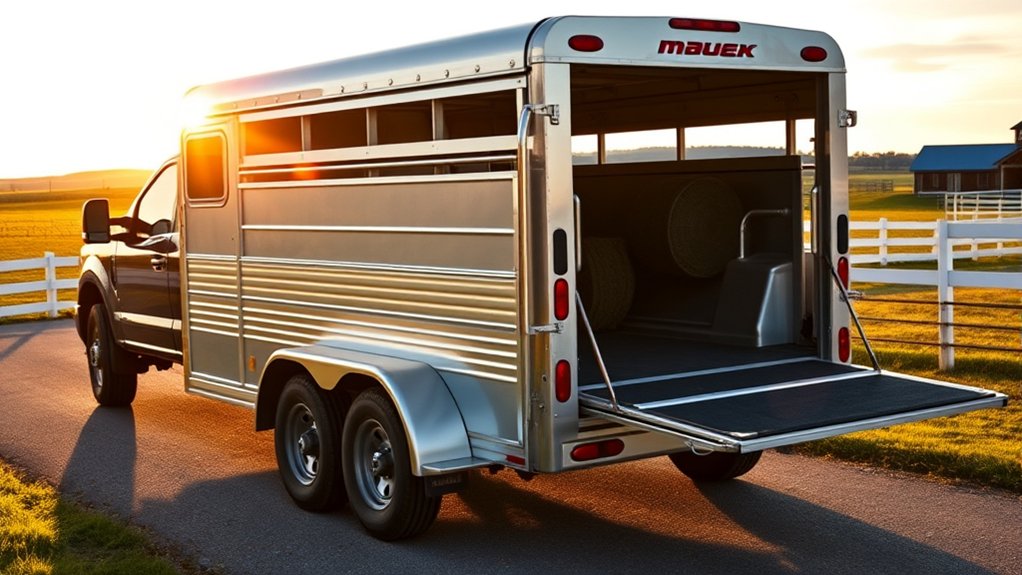
How much you’ll pay for a horse trailer depends largely on its type, size, and features. Basic used horse trailers start around $4,500, while standard 2-horse bumper pull models typically fall between $25,000 and $35,000.
Horse trailer prices vary by type, size, and features, starting as low as $4,500 for basic used models.
When you add high-end living quarters, expect price ranges to escalate considerably. New models with premium amenities can exceed $49,995 easily.
Factors influencing costs include construction materials like steel versus aluminum, build quality, and optional customizations.
For instance, premium 3-horse gooseneck trailers with living quarters often range from $40,000 to $65,000 or more.
Keep in mind that promotional offers, interest rates, and dealer incentives can affect the final purchase price and financing options, so you should evaluate these variables carefully when budgeting for your ideal horse trailer.
How Size and Capacity Affect Horse Trailer Prices
When budgeting for a horse trailer, you’ll notice that size and hauling capacity considerably influence the price. Smaller trailers, like 2-horse bumper pulls, usually start around $25,000. Larger 4-horse reverse load trailers can exceed $90,000 due to increased materials and complexity.
The capacity, how many horses and the weight limits, directly affects durability and features, impacting the overall price. More horses mean a bigger, stronger trailer, which costs more upfront but supports long-distance transport safely.
| Trailer Type | Capacity (Horses) | Typical Price Range |
|---|---|---|
| Bumper Pull | 2 | $25,000 – $35,000 |
| Gooseneck | 3 | $40,000 – $55,000 |
| Reverse Load | 4 | $60,000 – $90,000+ |
Selecting the right size balances cost with hauling needs.
How Materials and Build Quality Impact Price
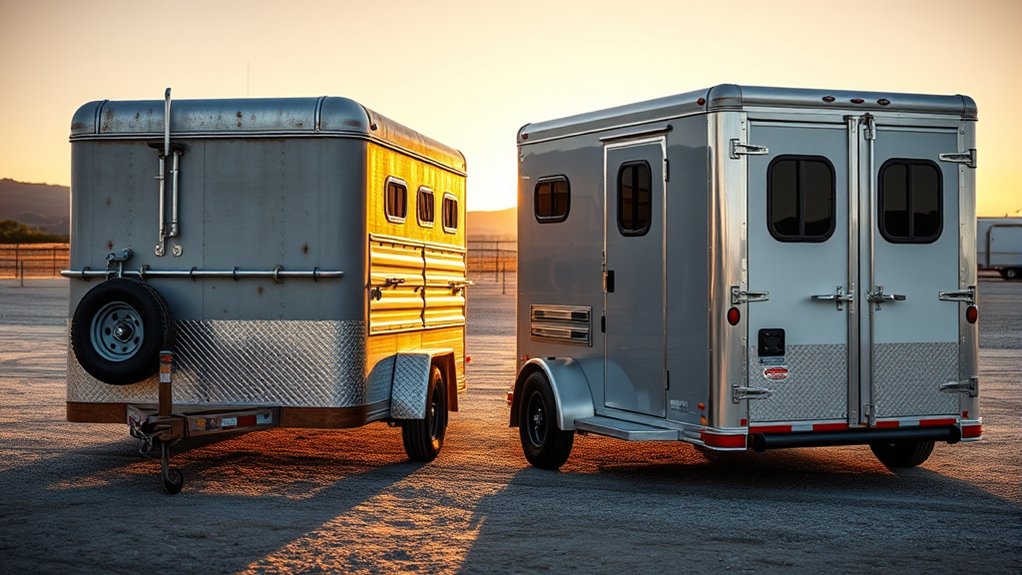
When you’re picking out a horse trailer, the materials used—like aluminum and steel—play a big role in both weight and price. Aluminum tends to be more expensive but offers great rust resistance.
On the other hand, steel might be heavier but usually costs less.
Then there’s the build quality to think about. Features such as reinforced frames and advanced ventilation not only make the trailer more durable but also add to the overall cost.
Material Types Comparison
Choosing among three primary materials, steel, aluminum, and specialized composites, significantly affects a horse trailer’s cost and performance. Your material comparison should focus on these key factors:
- Steel trailers generally cost less upfront but are prone to rust and corrosion without proper treatment.
- Aluminum trailers resist rust, weigh less, and improve fuel efficiency and towing capacity but carry a higher initial price.
- Specialized composites, like patented Z-Frame® rust-proof steel, increase durability and long-term savings despite a premium cost.
- Flooring materials such as Rumber add to upfront expenses but reduce maintenance and extend trailer lifespan.
Understanding these distinctions helps you balance initial investment against durability, maintenance, and operational costs.
Build Quality Importance
Although the choice of materials heavily influences a horse trailer’s price, the build quality ultimately determines its safety, durability, and maintenance requirements. Premium materials like aluminum and Rumber flooring elevate costs but enhance longevity and safety features.
Advanced construction methods such as Z-Frame® steel increase structural strength and resilience, reflecting superior build quality. You’ll find that investing in a high-quality trailer reduces long-term upkeep and improves resale value.
| Feature | Impact on Price & Performance |
|---|---|
| Aluminum Frame | Higher price; lightweight & rust-resistant |
| Z-Frame® Steel | Increased cost; superior strength |
| Rumber Flooring | Upfront cost; durable, low maintenance |
| Premium Materials | Raise initial cost; enhance safety features |
| Build Quality | Directly affects durability & maintenance |
Cost Versus Durability
Since materials and build quality directly affect both price and longevity, understanding their impact is essential when evaluating horse trailers. You’ll find that investing upfront can save you in the long run by enhancing durability and reducing maintenance costs. Consider these factors:
- Aluminum and Z-Frame® steel increase initial cost but offer superior rust resistance and structural integrity.
- Rumber flooring raises cost but extends lifespan and lowers upkeep compared to wood or rubber.
- Reinforced walls and high-quality hardware improve build quality, directly boosting trailer durability and value.
- Cheaper steel trailers cost less initially but often incur higher repair expenses due to rust and wear.
Balancing cost versus durability means prioritizing premium materials and solid build quality to maximize long-term savings and performance.
How Hitch Types Influence Horse Trailer Costs
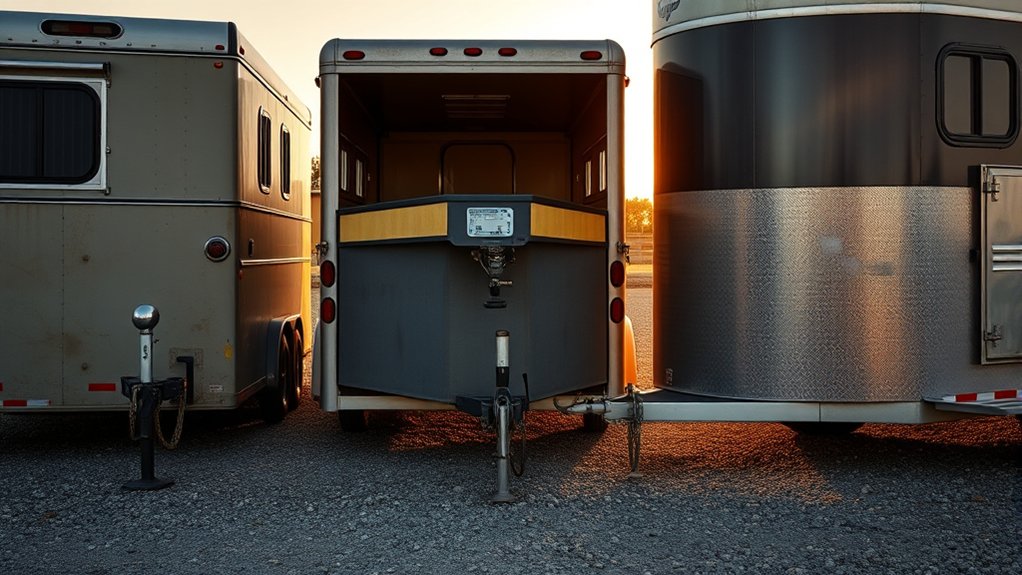
When you consider the hitch type, you directly impact both the purchase price and ongoing maintenance costs of a horse trailer. Bumper pull horse trailers are the most affordable, generally priced between $4,500 and $20,000, making them a cost-effective choice for many. Their simpler hitch design translates into lower maintenance and easier towing.
Choosing a bumper pull hitch means lower purchase price and simpler, more affordable maintenance.
In contrast, gooseneck trailers offer superior stability and higher weight capacity but typically cost $15,000 to $65,000. Their specialized hitch system requires more complex installation and upkeep, increasing expenses.
Fifth-wheel trailers, less common for horse transport, often exceed $50,000 due to their specialized design and hitch complexity.
Understanding these hitch types helps you balance initial investment with long-term costs, ensuring you select a horse trailer that fits both your budget and hauling needs.
Which Horse Trailer Features and Upgrades Affect Price?
When you’re picking out a horse trailer, you’ll quickly see that the materials used—like aluminum or Z-Frame® construction—make a big difference. Not only do they affect how durable the trailer is, but they also influence the price.
Then there’s the hitch type to think about. This can change how well the trailer tows and, of course, the cost too.
On top of that, if you decide to add living quarters upgrades, like dressing rooms or glideouts, you’re looking at a noticeable jump in the overall price. These features can really add up!
Materials And Build Quality
Although selecting a horse trailer largely depends on your budget, the materials and build quality you choose directly affect both price and long-term value. Understanding these factors helps you make an informed purchase that balances cost with durability.
- Aluminum trailers cost more because they use lightweight, rust-resistant materials that enhance longevity.
- Z-Frame® construction, a rust-proof, stronger alternative to traditional steel, noticeably raises the price.
- Rumber flooring, made from recycled tires, increases upfront cost but minimizes maintenance and boosts durability.
- Custom features like glideouts, dressing rooms, and short walls add to overall build quality and price.
Investing in premium materials and superior build quality not only improves durability but also guarantees better resale value over time.
Hitch Types And Impact
Since hitch type directly affects both your trailer’s stability and towing requirements, it plays a crucial role in the overall cost of a horse trailer. The two primary hitch types are bumper pull and gooseneck.
Bumper pull trailers attach to a standard hitch on your vehicle’s rear bumper, making them more affordable but less stable at high speeds or on uneven terrain.
Gooseneck trailers connect to a hitch in the truck bed, considerably enhancing stability and load capacity.
This upgrade typically adds $10,000 to $20,000 to the price due to its superior design and towing dynamics. Choosing a gooseneck also demands a compatible tow vehicle, potentially increasing ownership costs.
Understanding these hitch types helps you balance upfront investment with long-term performance and safety.
Living Quarters Upgrades
Beyond hitch types and towing considerations, the living quarters (LQ) you add to a horse trailer markedly influence its price and functionality. Upgrade costs for LQ vary widely, typically adding $10,000 to $50,000 based on size and features. Luxury amenities and technical enhancements can push costs even higher.
Key factors affecting price include:
- Luxury appliances and custom cabinetry – upscale finishes considerably raise upgrade costs.
- Glideouts, full kitchens, and bathrooms – these add $15,000+ to the base price.
- Short walls and dressing rooms – dressing rooms cost an additional $5,000 to $15,000.
- Advanced tech systems – solar panels and climate control add several thousand dollars.
Choosing the right combination tailors your living quarters to your needs while impacting your budget.
How Does Horse Trailer Brand Reputation Affect Value?
When you choose a horse trailer from a reputable brand like Double D, you’re investing in quality that retains 80-90% of its value even after five years. Brand reputation plays a critical role in determining resale value, as premium manufacturers build trailers with superior durability and craftsmanship.
These trailers depreciate more slowly compared to lesser-known brands, resulting in better long-term financial returns. Because reputable brands use high-grade materials and precise manufacturing processes, their trailers demand fewer repairs, reducing ownership costs.
Buyers recognize this reliability, often paying a premium that sustains strong market demand. By prioritizing a trailer’s brand reputation, you guarantee your investment holds its value, minimizes depreciation, and offers enhanced durability, key factors that protect your capital and provide peace of mind in the resale market.
How to Choose the Right Horse Trailer for Your Budget
Choosing the right horse trailer for your budget starts with clearly defining your hauling capacity requirements, such as whether you need a two-horse bumper pull or a three-horse gooseneck. Once you know your hauling capacity, consider these steps:
- Assess materials like steel, aluminum, or Z-Frame® to balance durability and maintenance costs.
- Prioritize essential trailer features like tack rooms or living quarters so you don’t overspend.
- Calculate ongoing ownership expenses such as insurance, maintenance, and registration to understand your total investment.
- Compare new versus used horse trailers for cost-efficiency, factoring in depreciation and repair risks.
Understanding Horse Trailer Financing Options
When you’re looking to finance a horse trailer, you’ll usually see loan terms that range from 3 to 7 years. The average APR tends to be around 7.5%, and most lenders will ask for about a 15% down payment.
Now, dealerships often have special payment plans that can make things a bit easier on your wallet. For example, some offer up to 60 days with no payments, which can help with your cash flow right after the purchase.
It’s really important to understand the different financing options and interest rates, so you can get a clear picture of the total cost. Keep in mind, interest can add 20 to 30% more to the overall price by the time your loan is paid off.
Financing Types Explained
How do you navigate the different financing options available for purchasing a horse trailer? Understanding horse trailer financing means looking at loan options that fit your financial profile and the trailer cost. Here’s a breakdown to guide you:
- Down Payment Requirement: Typically, expect a 15% down payment to secure financing.
- Loan Terms: Financing often spreads over 36 to 60 months, which helps keep monthly payments manageable.
- Special Offers: Some lenders give you up to 60 days with no payments if you qualify.
- Approval Criteria: Lenders check your income, credit scores, and collateral. These factors influence your eligibility and interest rates.
Knowing these things helps you compare horse trailer financing more easily. That way, you can pick the best loan option without surprises from hidden fees or high interest rates.
Interest Rates Overview
Understanding the details of financing terms naturally leads to examining interest rates, which play a significant role in the overall cost of your horse trailer loan.
Current interest rates are generally lower than in previous years, with average APRs around 7.5%, making financing more affordable.
Typical loan terms require a 15% down payment and span 5 to 7 years, which directly influences the total interest paid.
However, interest rates vary based on your credit score, loan amount, and lender policies, so it’s essential to compare multiple offers.
Some lenders even provide special promotional rates that can reduce your financing costs.
Payment Plans Available
Although purchasing a horse trailer can be a significant investment, flexible payment plans make it more manageable by allowing you to spread costs over several years. When exploring financing options, consider these key points:
- Most dealerships require about 15% down, with interest rates around 7.5%. This impacts your monthly payments.
- Special promotions often include up to 60 days with no payments or reduced interest rates, which eases initial costs.
- Over the loan period, financing can increase the trailer’s total cost by 20-30% due to accumulated interest.
- You can apply for credit online and may qualify for trade-in programs or special incentives. This improves affordability.
Understanding these details guarantees you choose a payment plan that fits your budget and trailer needs effectively.
Hidden Costs of Horse Trailer Ownership: Insurance, Maintenance & More
Because owning a horse trailer involves more than the initial purchase price, you’ll need to account for several hidden costs that impact your budget annually. Horse trailer insurance typically ranges from $350 to $450 per year, while maintenance costs, including tire replacement, brake repair, and flooring upkeep, can escalate from $900 to over $3,000.
Don’t overlook additional hidden expenses like towing vehicle wear, registration fees, and storage.
| Expense Category | Typical Annual Cost | Notes |
|---|---|---|
| Horse Trailer Insurance | $350 – $450 | Varies by coverage and location |
| Maintenance Costs | $900 – $3,000+ | Includes repairs and rust prevention |
| Additional Expenses | $1,300 – $3,000+ | Towing wear, registration, storage |
Budgeting accurately for these hidden costs keeps your trailer and horse safe and roadworthy.
Budgeting for Your Horse Trailer Purchase and Resale Value
When planning your horse trailer purchase, you’ll need to factor in not just the upfront cost but also how depreciation, maintenance, insurance, and taxes affect your overall budget over time. Accurately budgeting horse trailer costs means looking at total ownership expenses and potential resale value.
Consider these key elements:
- Purchase price plus upgrades. You can add up to $50,000 for living quarters or safety features, which might boost resale value.
- Financing impact. Interest at 7.5% APR with 15% down increases the total cost significantly.
- Annual maintenance, insurance, and registration fees add ongoing expenses.
- Resale value. Quality trailers from brands like Double D retain 80 to 90% of their value after five years, which helps reduce depreciation impact.
Frequently Asked Questions
How Do I Properly Clean and Maintain a Horse Trailer?
For effective horse trailer cleaning, start by rinsing the interior and exterior with water to remove debris. Use horse-safe, biodegradable cleaning supplies to scrub floors, walls, and dividers, focusing on corners and seams.
Regular trailer maintenance tips include inspecting and replacing worn flooring, applying rust-proof coatings to metal parts annually, and ensuring proper ventilation by cleaning roof vents and fans. These steps prevent rust, buildup, and moisture, extending your trailer’s lifespan.
What Safety Features Are Essential in a Horse Trailer?
You need to prioritize horse trailer design that incorporates non-slip flooring and effective ventilation systems, like roof vents and side windows, to comply with safety regulations.
Secure dividers with reliable latches help keep your horses stable during transit.
Also, guarantee safety-rated coupling and breakaway systems are in place for secure attachment.
Trailer customization can add emergency escape doors or windows, enhancing quick evacuation options, which is vital for protecting your horses in emergencies.
How Do I Prepare My Horse for Trailer Travel?
You’ll start by matching horse trailer dimensions to your horse’s size, ensuring ample space for comfort and safety.
Next, equip the trailer with essential horse trailer accessories like non-slip mats and secure partitions to minimize movement during transit.
Consider horse trailer weight to avoid overloading your vehicle.
Gradually acclimate your horse with short loading sessions.
Feed a light meal a few hours prior.
Always inspect the trailer’s mechanical components before travel.
Can I Tow a Horse Trailer With a Standard Pickup Truck?
Yes, you can tow a horse trailer with a standard pickup truck if your truck’s towing capacity exceeds the trailer weight plus your horses.
Most two-horse bumper pull trailers weigh 2,000 to 3,000 pounds, which is suitable for half-ton pickups with 5,000+ pounds towing capacity.
However, larger trailers often need a one-ton truck.
Also, verify your hitch type matches the trailer. Bumper pulls use ball hitches, while goosenecks require a fifth-wheel hitch for safe towing.
What Are the Common Signs of Wear to Check on a Used Trailer?
Don’t judge a book by its cover when inspecting a used trailer. Check the trailer hitch for rust or looseness, as it’s vital for safe towing.
Inspect rubber mats for cracks or wear, which can hide damage underneath. Test ventilation systems to verify they’re not clogged or broken, keeping your horses comfortable.
Also, look closely at the frame, welds, doors, and flooring for corrosion, cracks, or soft spots that signal structural issues.
Conclusion
When choosing your horse trailer, consider size, materials, and hitch type carefully. Factor in essential features, financing options, and hidden costs like insurance and maintenance.
Balance upfront price with long-term value, ensuring you get durability, safety, and convenience. By aligning your budget with your specific needs, you’ll secure a trailer that performs reliably, protects your horses, and retains resale value.
Smart planning, thorough research, and informed decisions lead to confident ownership and lasting satisfaction.